
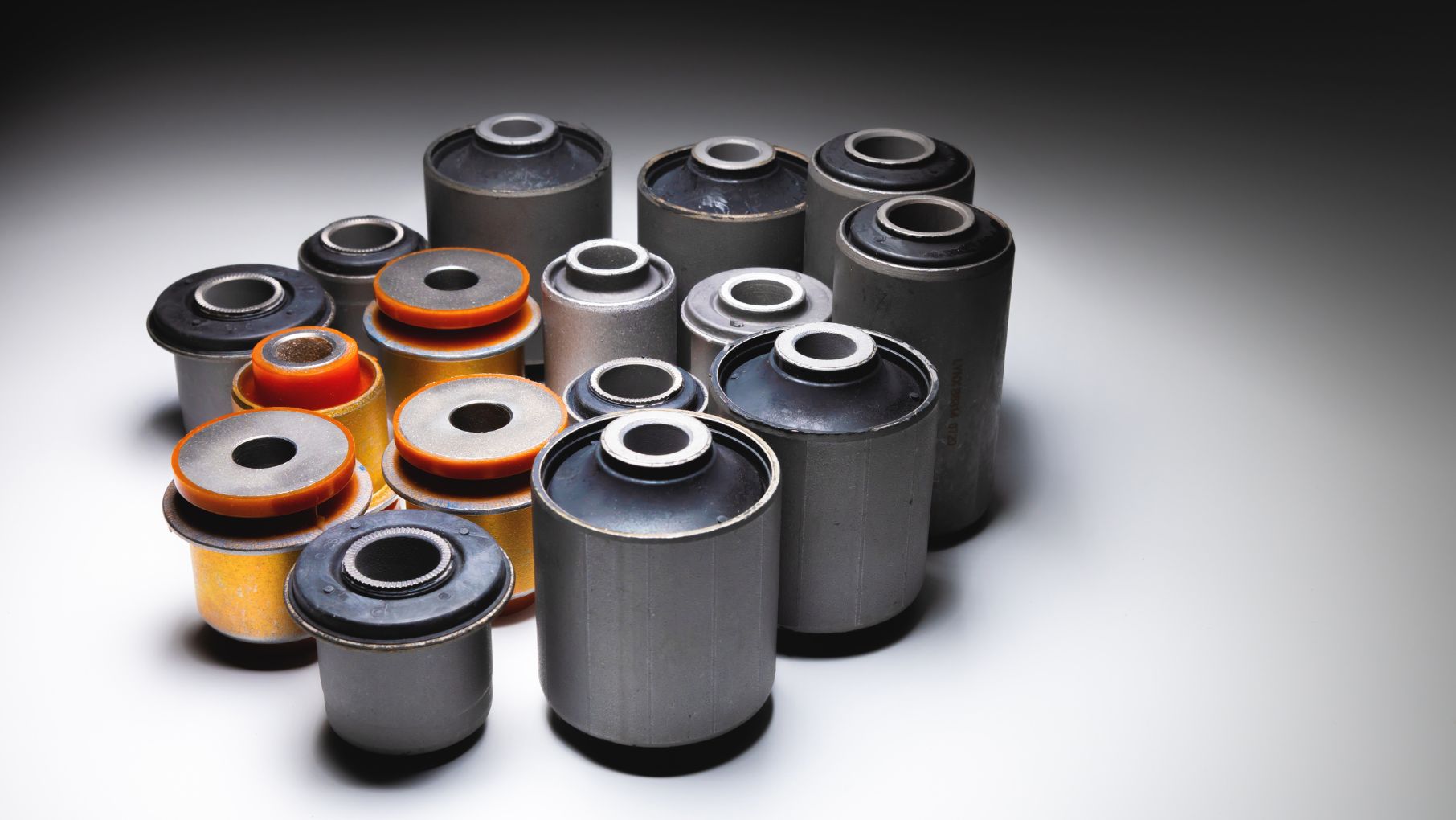
Polyurethane Suspension Bushings: Benefits, Limitations and Selection
After suspension repairs, drivers expect predictable handling, comfort and a long service life from replacement parts. This often raises the question of whether rubber bushings should be replaced with polyurethane alternatives. There is no single answer for every vehicle: the assembly design, product specifications and operating conditions all matter.
Polyurethane suspension bushings can reduce unwanted movement at suspension mounting points, but they do not automatically improve comfort or durability. Their benefits depend on correct compatibility and installation. Excessive stiffness, incorrect dimensions or installation errors can undermine the expected result.
How Suspension Bushings Work and What Polyurethane Changes
A suspension bushing forms a flexible connection between suspension components. It allows the movement intended by the design while reducing vibration transmission. In a conventional bonded rubber-to-metal bushing, movement is accommodated through deformation of the rubber bonded to the metal components.
Polyurethane replacements come in different designs: some have a bonded flexible element, while others use a separate inner sleeve that allows relative movement between the sleeve and polyurethane. Similar appearances therefore do not necessarily mean identical operating principles. This distinction matters because the design determines the installation and lubrication requirements.
Material hardness is also different from the stiffness of the complete assembly. The component’s shape, the thickness of the flexible material and the direction of loading all affect its behaviour. Colour is not a universal indicator of performance: its meaning must be checked in the specific manufacturer’s documentation. For example, Powerflex explains in its technical FAQs that even road-use kits may contain materials of different hardnesses and colours.
Polyurethane Suspension Bushings: Pros and Cons
The main advantage of a properly engineered bushing is its suitability for the loads acting on a particular connection. Polyurethane allows manufacturers to tailor the properties of the flexible element to its intended purpose. However, the material name alone does not establish product quality.
Potential benefits include:
-
Control of movement under load. Reduced unwanted deformation may contribute to more precise suspension responses.
-
Wear resistance. An appropriate material formulation and suitable design can provide good resistance to mechanical wear.
-
A choice of performance characteristics. Parts intended for everyday driving and motorsport may have different properties.
-
The option to replace the bushing separately. Where a manufacturer offers a compatible replacement, it may be possible to retain a serviceable control arm and replace only the bushing.
The limitations depend primarily on the specific design. A stiffer assembly may transmit more vibration to the body. A bushing with a moving inner sleeve may require a specified lubricant, while an incorrect fit can cause noise or accelerated wear.
Does polyurethane last longer than rubber? This cannot be established without data on specific products used under comparable conditions. Claims that a particular part lasts several times longer should not be applied to the material as a whole. Confirmed compatibility, warranty terms and experience with the exact part are more useful when assessing a purchase.
Which Suspension Bushings Are Best for Everyday Driving?
For a vehicle with standard suspension where comfort is a priority, a quality bonded rubber-to-metal bushing that meets the original specification remains a sound choice. A polyurethane replacement can be appropriate when it is designed for the relevant assembly and its characteristics suit the expected vehicle behaviour.
Comparing new polyurethane bushings with old, cracked rubber ones is misleading. Some of the improvement felt after repairs may come from eliminating wear rather than from a material advantage. A fair comparison requires serviceable parts with clearly defined specifications.
Will the ride become firmer after replacement? It may, but this is not inevitable. The outcome depends on which mounting points are changed and how much the replacement bushings differ from the original parts. Tyres, tyre pressures, springs and shock absorbers also affect ride comfort. Drawing a conclusion from the word “polyurethane” alone would therefore be an oversimplification.
How to Choose a Compatible Bushing
Vehicle make and model are not always enough. Control arms, equipment specifications and mounting dimensions may vary within a single model generation. If an aftermarket control arm has previously been fitted, its dimensions may also need to be checked separately.
Accurate selection requires:
-
vehicle model, year and variant;
-
installation position: front or rear suspension and the specific control arm or link;
-
the OEM part number of the bushing or relevant assembly;
-
mounting diameters, sleeve length and other dimensions specified by the manufacturer;
-
kit contents, intended application and installation instructions.
The PolyPro passenger car parts catalogue lets you select the relevant make and browse available products. Comparing part numbers and vehicle applications helps turn a general material choice into the selection of a specific component for your vehicle.
Polyurethane Suspension Bushing Reviews: What Makes Them Useful?
Reviews are useful when they include specific details: the vehicle, part number, installation position, distance covered since the repair and driving conditions. Impressions immediately after leaving the workshop describe the initial experience, but they do not establish durability.
It is particularly helpful to know what the owner is comparing the new bushings with: worn components, new rubber bushings or another polyurethane kit. It also matters whether shock absorbers, tyres or other parts were replaced at the same time. Without this information, it is difficult to attribute the entire result to the bushings.
Reports of squeaking also need context. They may indicate a problem with a particular product or its installation, but they do not prove that all polyurethane bushings are noisy. A convincing review includes the diagnostic findings and explains which cause was identified and resolved.
Installation and Maintenance: What Affects the Result?
Do polyurethane suspension bushings need lubrication? This depends on the instructions for the specific design. For example, the Powerflex installation instructions for PFR3-1114 specify applying the supplied grease inside the polyurethane bushing before inserting the metal sleeve. This procedure should not automatically be applied to every other product.
Preparing the mounting surfaces, positioning the bushing correctly and tightening fasteners to the specified requirements are just as important as part quality. The required suspension position during final tightening must be determined from the vehicle documentation and the replacement part manufacturer’s instructions. After the work, wheel alignment should be checked as appropriate for the components disturbed or replaced.
Choosing a bushing means finding a compatible product for a specific purpose. The PolyPro website offers searches by OEM number or part number, dimensions and vehicle application. These options help you move from comparing benefits and limitations to checking the required product and confirming the details before ordering.