
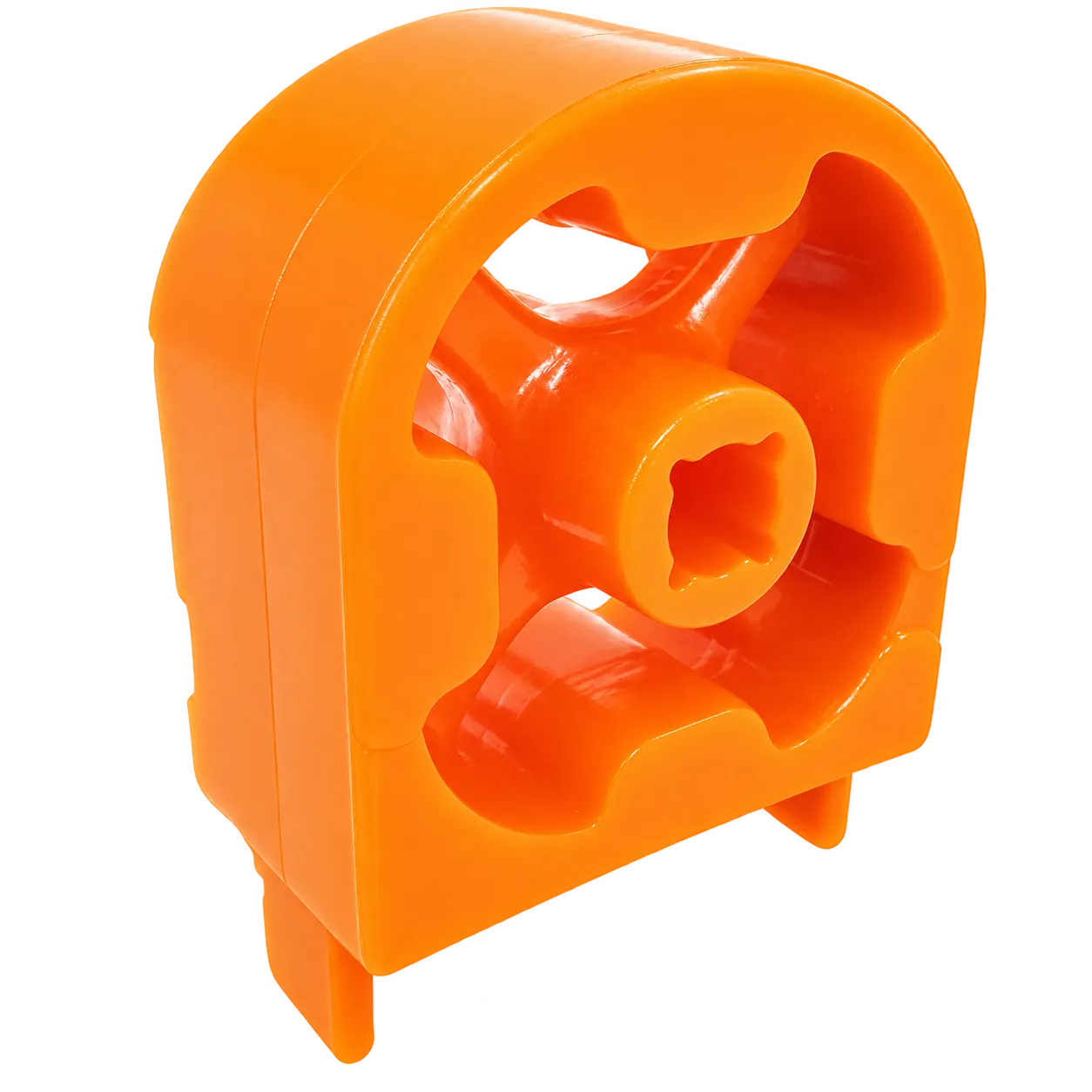
 Подушка глушника
Muffler mounting
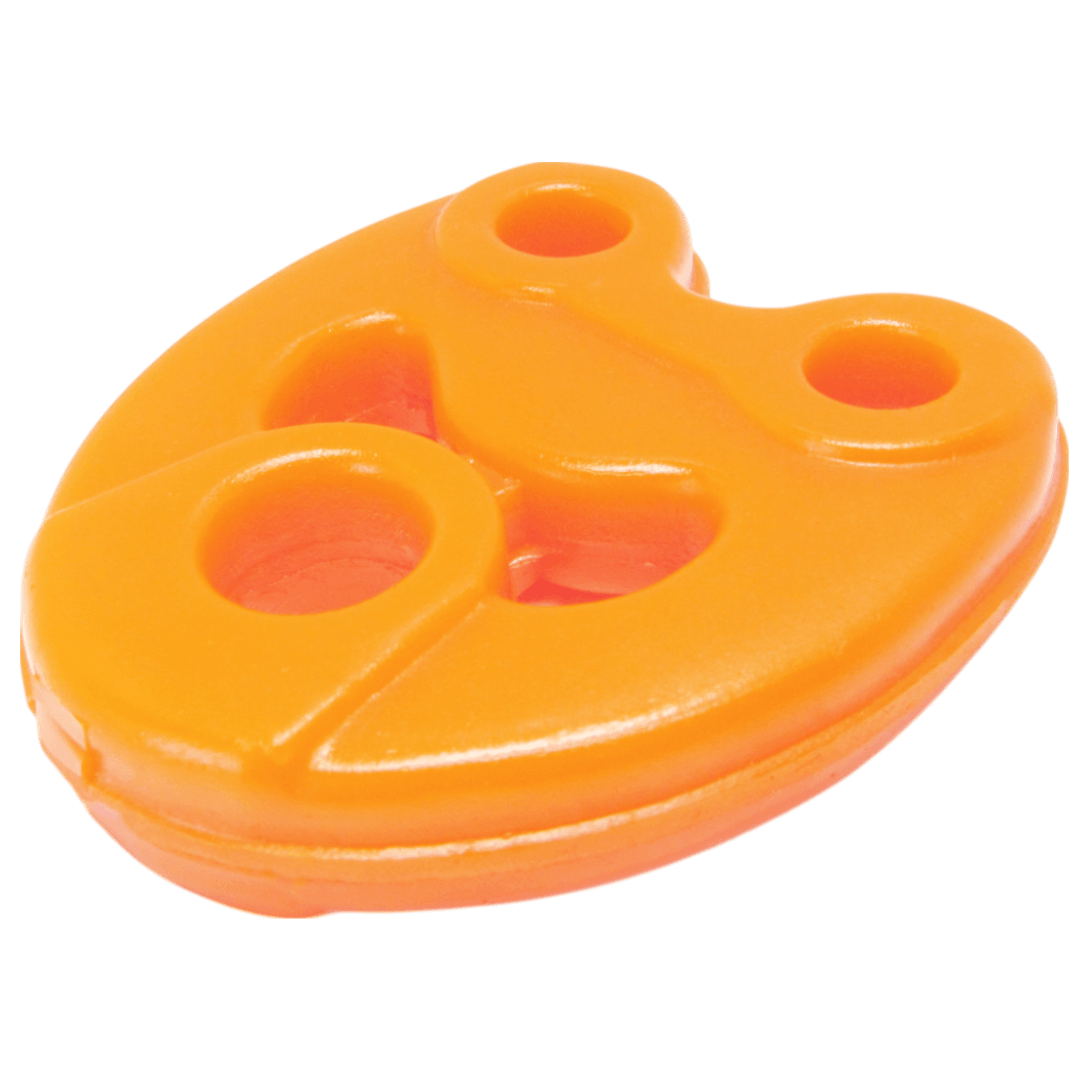
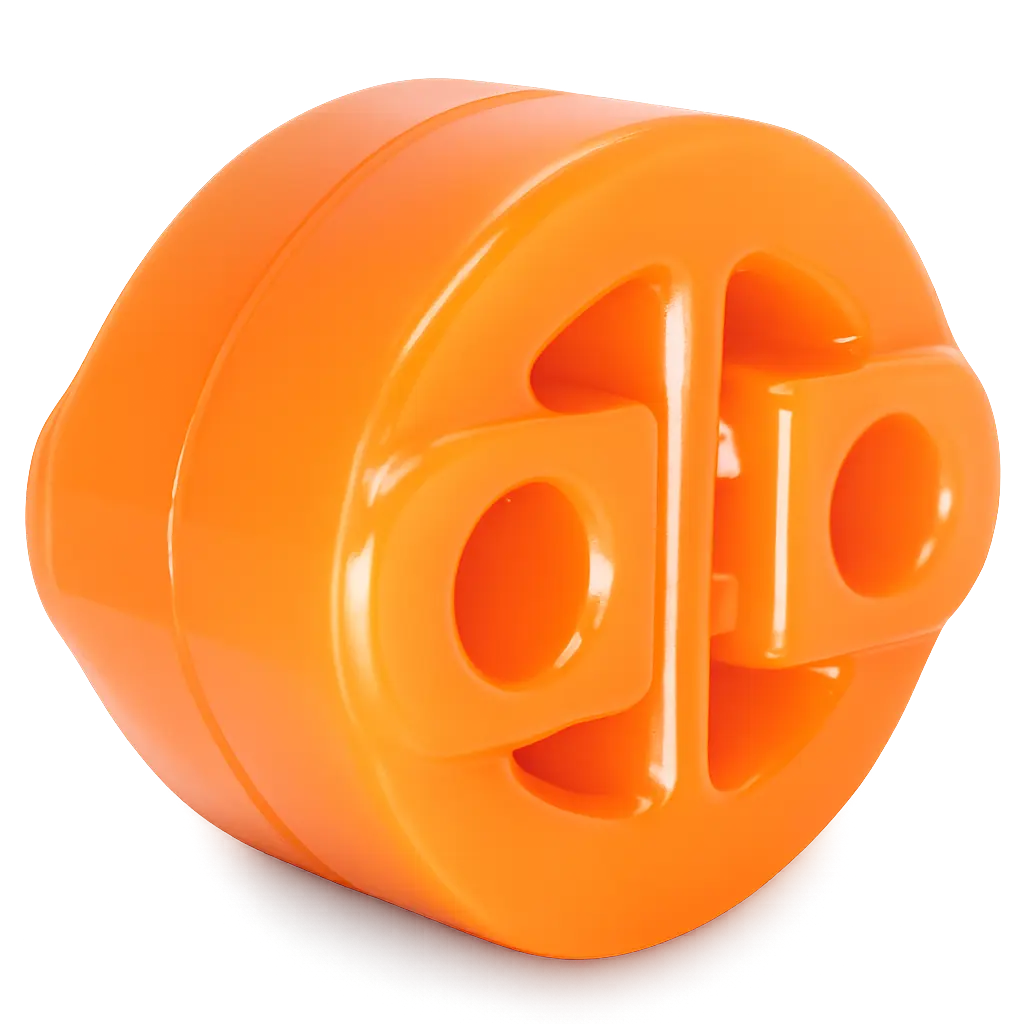
Exhaust Hangers & Mounts
An exhaust hanger is the flexible link that holds the exhaust system under the car and keeps its vibration out of the body. The same part is sold as an exhaust mount, hanger bushing, rubber donut or exhaust loop: a strap with two holes tying the pipe bracket to the body bracket. This category covers polyurethane exhaust hangers for cars, vans and trucks, cast at the PolyPro plant in Ukraine. The rest of our range is in the polyurethane parts catalog.
What an exhaust hanger does
An exhaust system is never bolted rigidly to the body. The pipe, resonator and muffler hang from three to five points, and at every point an elastic element sits between body metal and exhaust metal. It does three jobs: carries the weight of the system, isolates engine and pipe vibration from the cabin, and lets the pipe grow as it heats up. A hot pipe expands by several millimetres; with nowhere to move, the flex pipe or a weld seam cracks instead.
Names vary by catalog, but the hardware is simple: the rubber part is the loop, donut or strap, and the exhaust hanger hook is the steel rod welded to the pipe or the floor pan. A polyurethane hanger replaces only the elastic element: hooks, clamps and brackets stay stock, nothing is cut or welded.
Signs of a worn or broken exhaust hanger
A torn hanger rarely announces itself at once. The system drops an inch or two and goes crooked, the load shifts to the neighbouring points, and those tear within weeks. Check it with the engine cold: rock the muffler up, down and sideways — a healthy system springs back and clears the floor pan, the beam and the spare tire. Inspect every loop: rubber splits at the edge of the hole, and the crack shows only when you pull the eye sideways.
Symptoms that mean it is time to replace a hanger
- metallic knock under the floor over bumps and on take-off;
- a drone at certain engine speeds that stops if you support the pipe by hand;
- the exhaust hanging low on one side, or the tailpipe off-centre in the bumper cutout;
- bare, polished contact marks on the pipe, the rear beam or the floor pan;
- a torn, stretched or hardened loop, or a hanger rusted off at the bracket;
- exhaust smell in the cabin — a sagging system tears the flex pipe or a seam;
- a knock that survives a full set of new hangers: check the polyurethane motor mounts — an engine rocking on collapsed mounts drags the exhaust with it.
Polyurethane vs rubber exhaust hangers
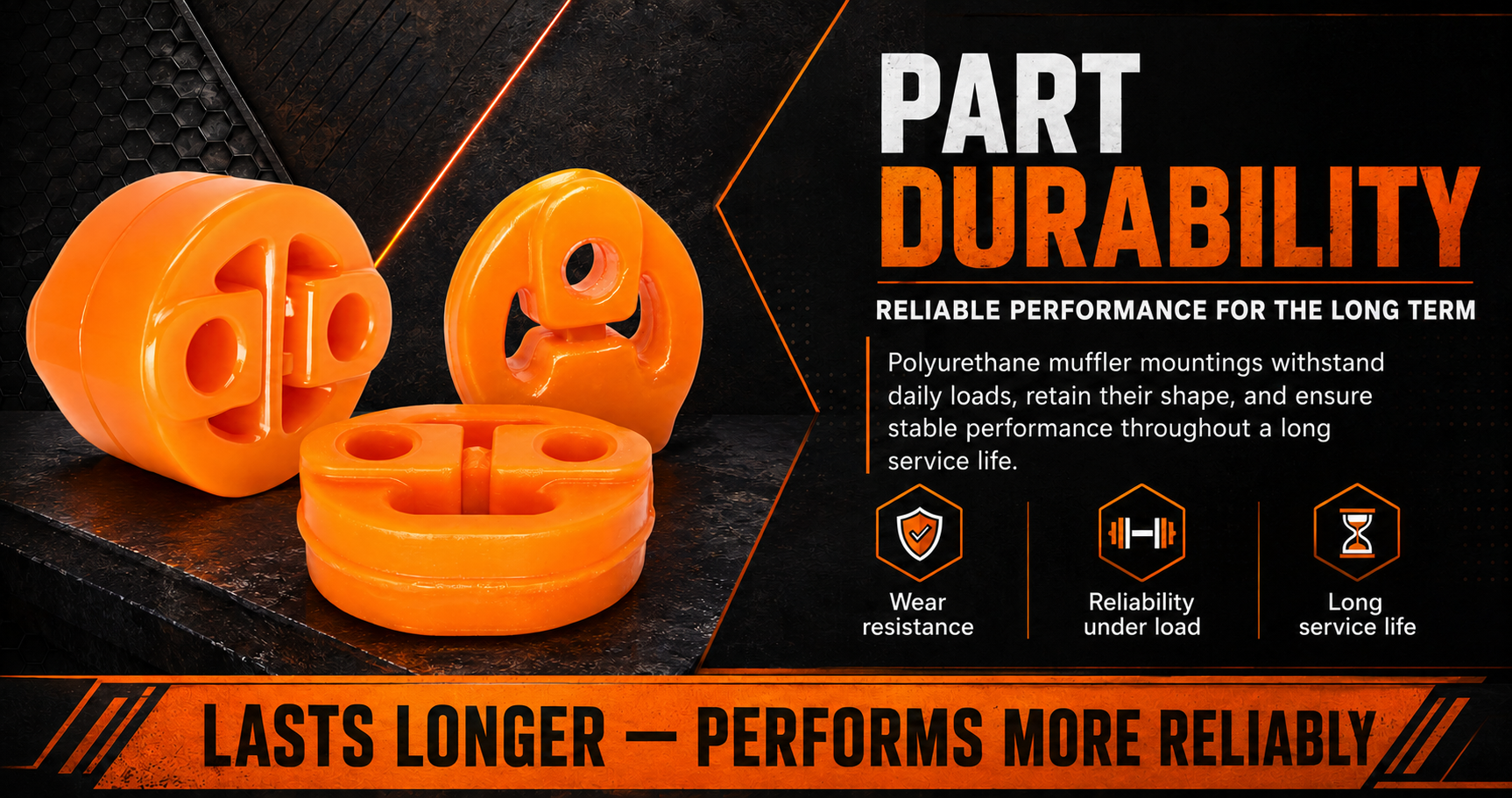
A stock rubber hanger works in the worst conditions rubber can face: a hot pipe beside it, road salt and water underneath, constant reversing load. It hardens, cracks, and one cold morning the eye splits at the hole — usually once the muffler has already started knocking. Polyurethane does not harden in the cold, does not swell in oil or fuel, shrugs off road salt and takes the heat radiating off the pipe without drying out. It lasts 3–5 times longer than the rubber part it replaces: one repair instead of three or four.
The second argument is geometry. A stretched hanger lets the muffler drop until the system touches the floor pan, and the owner goes looking for that knock in the suspension. Polyurethane barely stretches under load, so factory clearances stay put and the flex pipe is not pulled in tension. The trade-off: it is stiffer, so it passes slightly more pipe noise into the body — barely noticeable at standard durometer, audible at the firmer grade.
How to choose an exhaust hanger for your car
Three things decide the fit: hanger type, dimensions and durometer. You do not need to drop the system — the old part, even torn, gives you everything.
By type and dimensions
Identify the type first: a closed loop, a two-eye hanger or a strap that hooks over two rods. Then take three measurements — centre-to-centre distance between the holes, hole diameter (the diameter of the hanger hook), and strap width and thickness. That is what makes a universal exhaust hanger fit or not. Front and rear hangers on one vehicle often differ, so the fitting position is listed on each product card. Replace them as a set: once one point is renewed, the load moves to the next tired loop.
By durometer
Standard durometer suits a daily driver with a factory exhaust: carries the weight, damps vibration, adds no drone. The firmer grade is for heavier loads — vans, trucks, aftermarket systems with a large resonator, equipment used off pavement. It sags less and holds the exhaust geometry, but transmits more sound into the body. Shore hardness is listed on every product card; if in doubt, take the standard grade. Either way the loop goes over the hooks by hand or with hanger removal pliers — no press, no welding.
Product Photos




Why Buy Exhaust Hangers from PolyPro — Wholesale and Retail
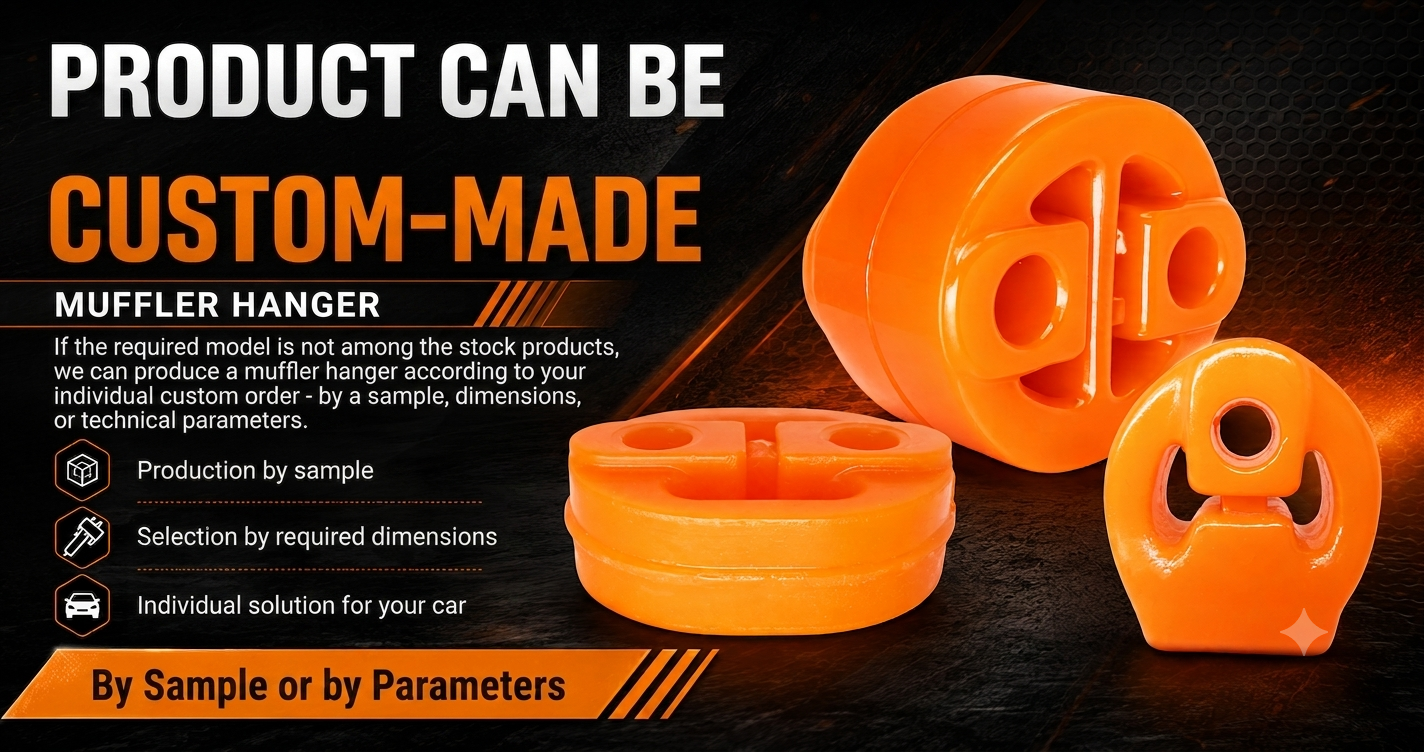
PolyPro casts polyurethane at its own plant in Ukraine, so there is no middleman markup and stock does not depend on imports. We sell retail and wholesale: a single hanger, a full set for every mounting point, or batches for a shop or fleet under our partner program. Parts outside the catalog are cast to order: custom polyurethane parts are made from a drawing, a sample or a torn original, from one piece up. That covers classic cars, trucks and machinery with no aftermarket support — unlike a DIY hanger cut from scrap, with no defined durometer. Everything carries a manufacturer warranty, and dimensions stay identical batch to batch — the moulds and the formulation are ours.
Frequently asked questions
Why do exhaust hangers break?
Rubber hangers fail from vibration, heat and road salt: the material hardens, cracks and finally tears at the edge of the hole, and the exhaust drops and knocks against the floor pan. Points closest to the engine and to the rear axle go first because they see the most movement. Polyurethane hangers take the same heat and load without tearing.
How do you remove a rubber exhaust hanger?
Support the muffler with a jack or a strap so the mount is unloaded, then cut the old loop off with a knife — trying to pry a hardened hanger off the hook usually bends the bracket. Fit the new one warm, with silicone lubricant or soapy water on the hook, and pull it into place with hanger removal pliers. No press, no welding, a few minutes per point.
Will a universal exhaust hanger fit my car?
It fits if three dimensions match: centre-to-centre distance between the holes, hole diameter for the hook, and strap width. Measure the old part — even a torn hanger gives all three. Send us a photo with a ruler if you are unsure and we will match it from stock or cast it from your sample.
How long do polyurethane exhaust hangers last?
They last 3–5 times longer than the rubber originals. Polyurethane does not harden in freezing weather, does not swell in oil or fuel, and is not destroyed by salt and moisture, so one replacement covers the mileage that would take three or four sets of rubber loops. PolyPro parts carry a manufacturer warranty.
Can you make custom exhaust hangers?
Yes. PolyPro casts exhaust hangers to order from one piece up, working from a drawing, a sample or the worn original. It is the practical route for classic cars, imported trucks, buses and machinery with no aftermarket support, and unlike a home-made hanger the durometer and dimensions are controlled. Send photos and measurements for a quote and lead time.
Can I order a single exhaust hanger instead of a set?
Yes. Retail orders go piece by piece, so you can change only the hanger that has torn and leave the rest of the line in place. If the whole exhaust is due, the same catalog covers every mounting point on the car. Hangers that are not in the catalog are cast from a drawing, a sample or the torn original, also from one piece.
Do you supply exhaust hangers wholesale to workshops and parts stores?
Wholesale is set up for repair shops, parts stores, fleets and resellers who buy regularly rather than once. Our partner program gives bonuses for turnover or for the volume of a single order, access to prices, stock and shipping dates, and shipment under the partner's own brand.