
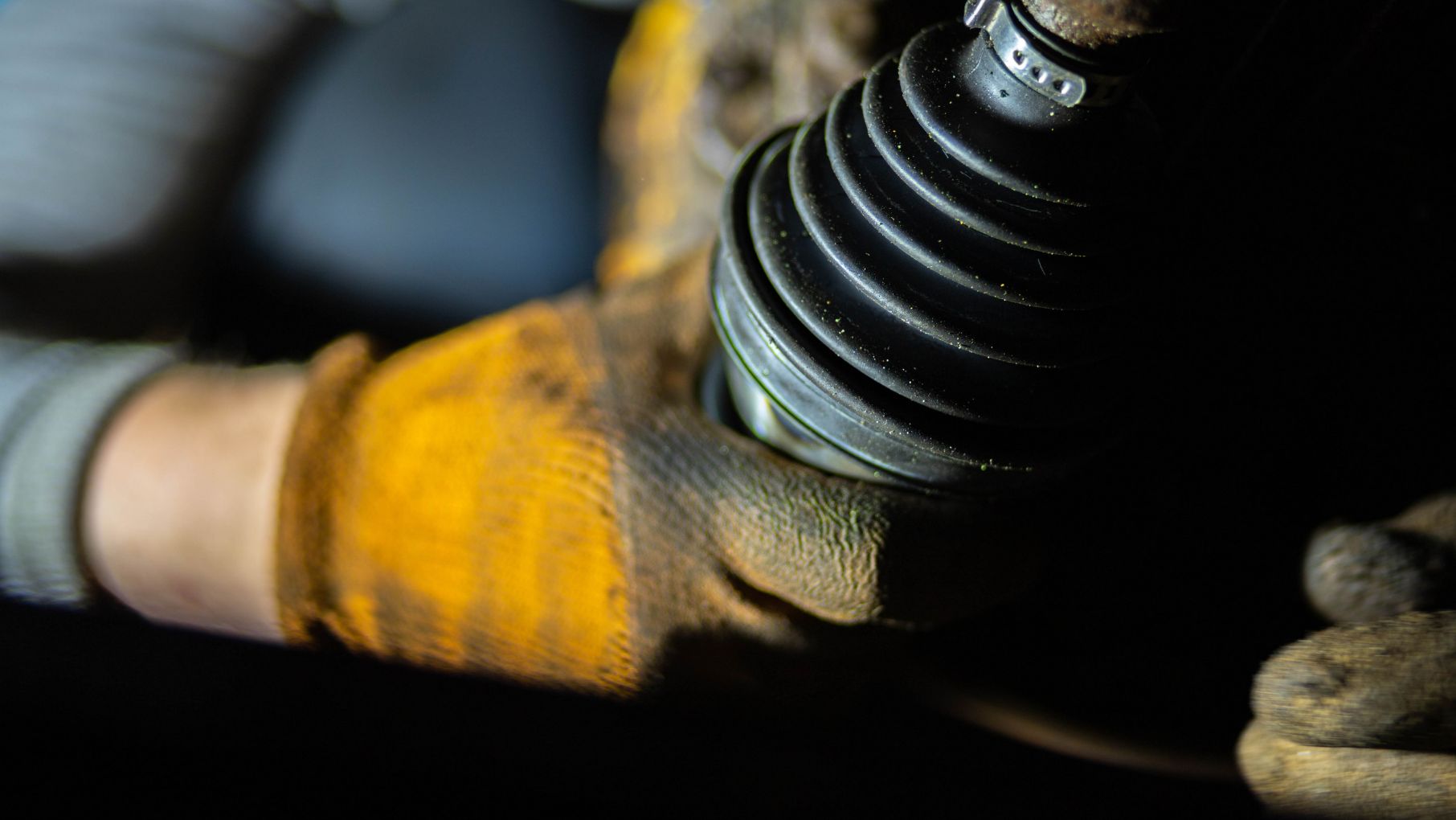
CV Joint Boots by Size: How to Choose the Right Fit
A CV joint boot protects the joint from water, dust and road debris while helping retain grease inside the assembly. Even a small crack or a loose fit compromises this protection, regardless of whether the boot remains in place. That is why choosing a replacement starts with checking dimensions and mounting details rather than visual similarity.
To select a CV joint boot by size, you need both mounting diameters, the height and a profile suited to the specific joint. Matching the main dimensions helps identify a suitable size, but final compatibility depends on the design of the entire assembly.
When to Select a CV Joint Boot by Size
Searching by vehicle make and model is convenient as long as the vehicle has components that match the original manufacturer’s design. After a driveshaft or CV joint has been replaced, the actual mounting surfaces may differ from those listed in the catalogue for the factory assembly. The manufacturer of the replacement part already fitted to the vehicle also matters.
Selection by measurement is particularly useful when the markings on the old boot have worn off, the part number is unknown or the catalogue lists several options. In these situations, vehicle details remain a useful reference, while measurements help verify the specific version fitted.
Can you find the right CV joint boot using the VIN alone? The VIN helps identify the vehicle’s factory specification, but it does not confirm the design of components fitted during previous repairs. For a vehicle with an unknown service history, combining catalogue information, photographs and measurements provides a comprehensive basis for selection.
Selecting a CV Joint Boot by Size: Which Dimensions Matter?
A CV joint, or constant velocity joint, transmits rotation between drivetrain components operating at varying angles. Its boot must maintain a seal throughout this movement. That makes the shape of the bellows section just as important as the opening dimensions.
The following specifications are needed for an initial comparison:
-
Small mounting diameter. Determines how the narrow end of the boot fits onto the shaft.
-
Large mounting diameter. Refers to the wide end that fits around the corresponding mounting surface on the joint housing.
-
Boot height or length. Must be compared in the condition and between the points shown in the manufacturer’s drawing.
-
Sealing edge profile. Includes lips, grooves and the shape of the sealing surfaces.
-
Bellows design and clamp positions. Must suit the operating conditions and fastening method.
Product listings may identify the diameters as d and D, and the height or length as H or L. However, always refer to the drawing for the specific product: matching letters are no substitute for knowing exactly where each measurement is taken. The outer diameter of the bellows is not a mounting diameter.
If you need to find a CV joint boot by size, initial measurements will help narrow down the options. Browse the PolyPro CV joint boot range to find a potential match and compare its listed dimensions with those of your assembly.
How to Measure a CV Joint Boot and Its Mounting Surfaces
A vernier or digital caliper is useful for measuring diameters. Clean the surfaces first to remove any dirt that could obscure the mounting area. Record measurements in millimetres and label them clearly: shaft diameter, mounting diameter on the joint housing and internal diameter of the boot opening. These are different measurements and should not be treated as interchangeable.
An old CV joint boot may be stretched, distorted or partially damaged, so its internal diameter may no longer reflect its original size. If an edge is damaged, measuring the actual mounting surface on the assembly becomes particularly important.
At the same time, the opening diameter of an unstretched boot is not necessarily equal to the diameter of the metal mounting surface. The intended interference fit depends on the design and material. Adding or subtracting a universal allowance of a few millimetres is not a reliable approach: the acceptable relationship between these dimensions must be confirmed for the specific product.
Measure the height of a removed boot without forcibly stretching or compressing it, unless the drawing specifies otherwise. If necessary, separately record the distance between the attachment points on the assembly. Photographs from the side and of both openings help show the shape, but they do not replace numerical measurements.
Why Matching Diameters Do Not Guarantee Compatibility
Two CV joint boots may have similar mounting diameters but differ in height, stiffness and bellows profile. The boot must operate within the available space without twisting, excessive stretching or contact with nearby components. A correct fit while stationary does not establish that it will also fit correctly during movement.
Inner and outer CV joints should not be treated as identical assemblies either. Their designs and movement patterns may differ. Some inner joints have a distinctive housing profile, making a simple comparison of two circular openings insufficient.
Selecting a CV joint boot by size therefore also involves identifying the joint’s location, housing shape and mounting surfaces. In its technical guidance, GKN stresses the importance of matching the boot to the specific joint, seating it correctly and avoiding twisting or excessive stretching during installation.
Will a universal CV joint boot fit? Only if its manufacturer specifies that it is suitable for the relevant design and dimensional range. The word “universal” alone does not confirm compatibility with every driveshaft.
Material, Grease and Clamps Also Affect the Choice
The material name alone does not fully establish whether a CV joint boot is suitable. What matters is the performance of the specific product, its compatibility with the grease, its operating temperature range and its ability to withstand the required deformation. It would be inaccurate to claim that every polyurethane CV joint boot is always better than a rubber one.
In its guidance on repair kits, GKN emphasises that the material must meet the assembly manufacturer’s requirements and that suitable fasteners must be used. A change of material should therefore be assessed for the specific application, rather than based solely on the material’s name or the boot’s colour.
Grease and clamps must also be selected for the particular CV joint. Overtightening will not compensate for an incorrect boot diameter, and an unsuitable clamp profile may prevent secure retention.
When Replacing Only the CV Joint Boot Is Enough
Replacing the boot separately is possible if the design allows this repair and the CV joint itself remains serviceable. A damaged boot is a reason to inspect the assembly, rather than automatic confirmation that fitting a new boot will be sufficient.
Contamination, grease loss or signs of wear may change the scope of the repair. A new CV joint boot will not eliminate play, repair damaged working surfaces or correct other joint defects. GKN’s driveshaft servicing instructions specifically call for inspecting the CV joint when replacing the boot.
The decision therefore depends on the joint’s condition and inspection findings, rather than simply on the availability of a replacement boot with similar dimensions.
How to Prepare a CV Joint Boot Selection Enquiry
An enquiry that includes measurements and photographs makes it easier to move from a general search to checking a specific CV joint boot size. Include the following information:
-
vehicle make, model, year and VIN, if available;
-
the side of the vehicle and whether the CV joint is inner or outer;
-
measured diameters and height in millimetres, with an explanation of the measurement points;
-
photographs of the boot, mounting surfaces and clamps;
-
the part number or markings on the installed CV joint or driveshaft, if still legible.
If you cannot determine some of the dimensions, mention this in your enquiry. Incomplete but accurate information is more useful than approximate figures without an explanation.
Visit the PolyPro CV joint boot selection catalogue to compare available sizes. If compatibility remains unclear, contact the shop for help with selection and include your measurements and photographs. This will help verify the fit, shape and fastening arrangement before you place an order.