
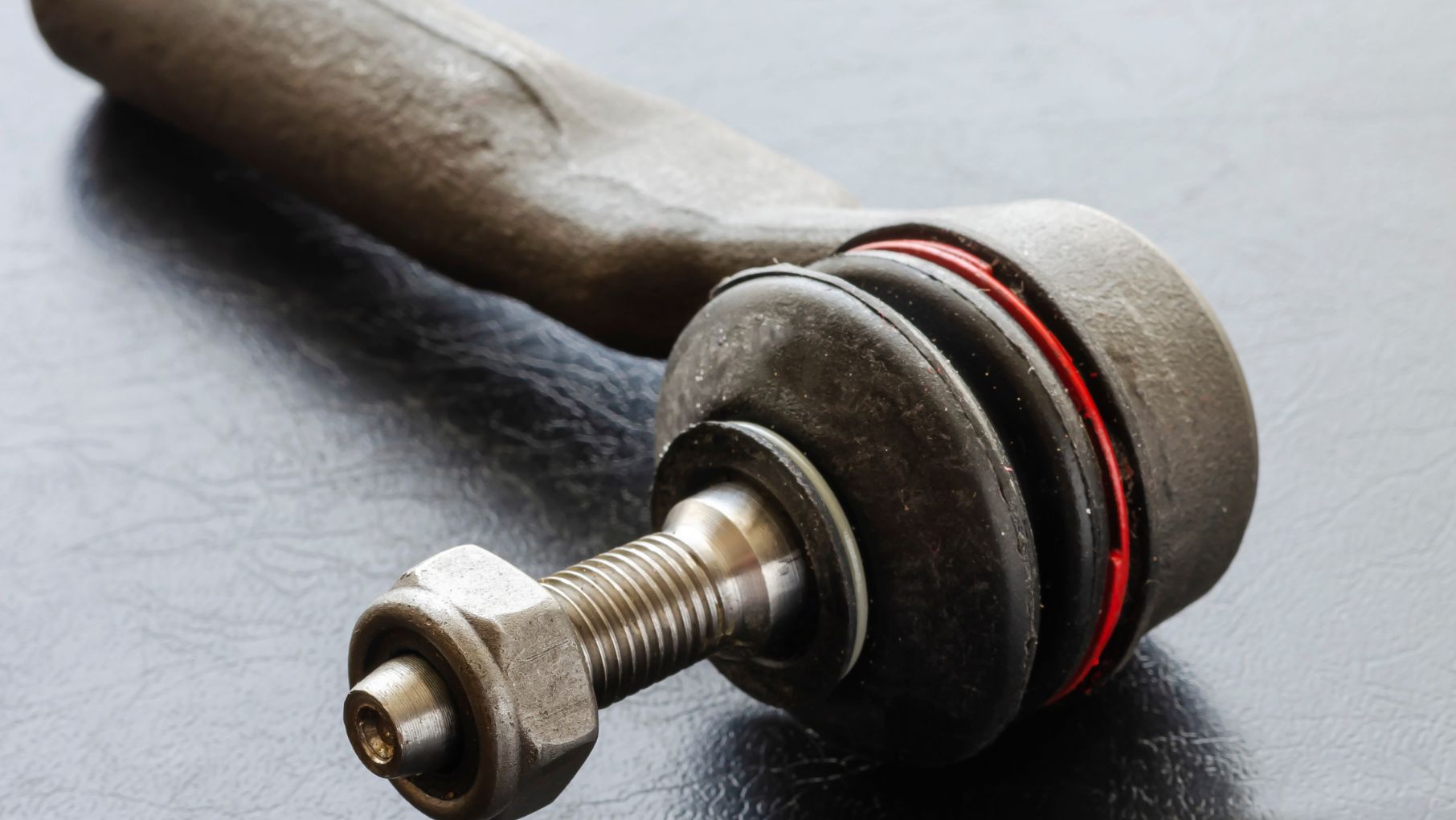
Ball Joint Boots: Dimensions and Retention Methods
A ball joint boot protects the joint from water, dust and road debris while helping retain grease inside. Selecting the correct replacement requires the mounting diameters on the housing and stud, the boot height and its retention design. Visual similarity alone is not enough: the boot must seal against the mounting surfaces and remain flexible throughout suspension movement.
Catalogue terminology may vary, but boots for different ball joints are not necessarily interchangeable. Even within the same vehicle model, the joints fitted may differ depending on the vehicle variant and the replacement part manufacturer.
Which Dimensions Determine Boot Compatibility?
Selection starts with the areas where the boot contacts the ball joint. The large opening fits around the mounting surface on the housing, while the small opening seals around the stud. Between them, the flexible section changes shape as the joint moves. Its height and profile determine whether the boot has enough freedom of movement.
The following specifications are needed for comparison with the product drawing:
-
mounting diameter on the ball joint housing;
-
stud diameter at the exact point where it contacts the boot;
-
boot height in the condition specified by the manufacturer’s drawing;
-
lower lip shape and the presence of a groove or reinforced edge;
-
retainer type and its position at the large and small openings.
Record all dimensions in millimetres. D, d and H are commonly used for diameters and height, but their meaning must be checked against the drawing for the specific product. The large diameter may refer to the internal opening or the outside diameter of the lip, which are different measurements.
Are two diameters enough? No. Ball joint boots with matching openings may differ in height, edge thickness and retention method. A boot that is too short may become overstretched as the stud tilts, while one that is too tall may fold and contact nearby components. The entire mounting geometry must match.
How to Measure the Mounting Surfaces Accurately
The most useful measurements come from the cleaned mounting surfaces on the ball joint. The old boot provides a reference for shape and retention, but its openings may have stretched and its body may be distorted. Measuring only the removed flexible component may therefore fail to reflect its original dimensions.
Measure the stud diameter at the sealing area, rather than across the thread or at an arbitrary point on the tapered section. On the housing, measure the surface where the boot edge seats. If there is a groove, distinguish its diameter from that of the adjacent raised section. A side photograph helps show this difference when requesting assistance with selection.
Avoid squeezing the flexible edge firmly with the caliper jaws, as deformation will affect the measurement. Height also requires a consistent basis for comparison. A stretched old boot and a new boot in its relaxed state cannot be treated as equivalent references.
Can you choose a slightly smaller opening for a tighter fit? Only if the manufacturer specifies that interference fit. There is no universal rule allowing the diameter to be reduced by a set number of millimetres. Excessive stretching places additional stress on the edge, while an oversized opening may allow contaminants to enter.
Ring-Retained Boots: Why the Groove and Lip Profile Matter
One retention method uses a separate spring ring or wraparound retaining ring. This holds the boot edge on its intended mounting surface. For this design, the boot diameter is only part of the requirement: the retainer seat must also have the correct shape. The ring must sit in its intended position without tilting or damaging the material.
Depending on the design, retaining rings may be fitted at the base, around the stud or at both openings. The description “boot with retaining ring” therefore does not fully define the fit. Before ordering, establish exactly where the retainer sits and whether it is included with the product.
Also distinguish between the boot retaining ring and the circlip that secures the ball joint itself in the control arm or steering knuckle. These are separate components with different functions. A ball joint retaining circlip provides no indication of how its protective boot is secured.
Press-Fit Edges and Designs Without a Separate Retaining Ring
Another design uses an interference fit between the boot base and the housing. The edge may contain rigid reinforcement that maintains its shape and holds the boot in place. Matching the diameter and profile is particularly important here: a soft boot of similar dimensions is not an equivalent replacement simply because it can be stretched over the joint.
For example, MOOG provides separate guidance for press-fit boots and designs secured with a wraparound retaining ring. For press-fit edges, it stresses even seating and the correct size of installation tool: a tool that is too narrow can damage the boot. This illustrates why the installation method must be determined by the specific component’s design rather than its general appearance.
The absence of a separate ring does not automatically mean that parts are missing. Retention may be provided by the mounting edge itself. However, removing a specified retainer or replacing it with an arbitrary clamp cannot be considered an equivalent fastening method.
How to Identify the Required Retention Method Before Buying
The installed ball joint determines the required mounting design. Compare options against its construction rather than choosing whichever fastening method appears stronger. A ring-retained boot must match the corresponding groove and lip, while a press-fit boot requires a mounting surface designed for that type of edge.
Prepare the following information before ordering:
-
vehicle make, model and year, plus the VIN where available;
-
manufacturer and part number of the installed ball joint;
-
measured mounting diameters and the old boot’s height, with a note describing its condition;
-
photographs of the ball joint, the boot’s lower edge and all existing retainers;
-
confirmation of whether the rings are still available or replacements are needed.
Why is the VIN sometimes insufficient? It helps identify the factory specification, but a ball joint from another manufacturer may have been fitted during a previous repair. Its boot geometry may differ. The part number of the component actually installed, together with measurements, provides an additional basis for checking compatibility.
Visit the PolyPro boot selection section to explore the relevant selection options. Providing dimensions and photographs of the retention arrangement from the outset makes it easier to distinguish similar-looking boots with different mounting designs.
Boot Material and the Condition of the Ball Joint
Assess the material together with the geometry. A protective boot needs suitable flexibility, resistance to operating conditions and compatibility with the grease. The words “polyurethane” or “rubber” alone do not establish the service life of a specific component. Material formulation, design and the manufacturer’s stated application all matter.
Can you replace only the ball joint boot? This depends on the joint’s condition and whether the manufacturer allows this repair. A new boot will not correct wear, corrosion or excessive play. If water and abrasive particles have entered through a tear, the joint’s condition must be assessed first.
After installation, the edges must seat evenly without distortion. Throughout the operating range, the boot must remain in place without excessive stretching or becoming trapped between components. Follow the joint manufacturer’s requirements for grease type and quantity: filling all available space is not a universally correct approach.
When choosing a product from the PolyPro catalogue, use the dimensions, edge profile and specified retention method together as your reference. Once these match, check the vehicle application and package contents for the specific product. If the mounting design is unclear, photographs of the ball joint base and its part number will help clarify the choice before ordering.