

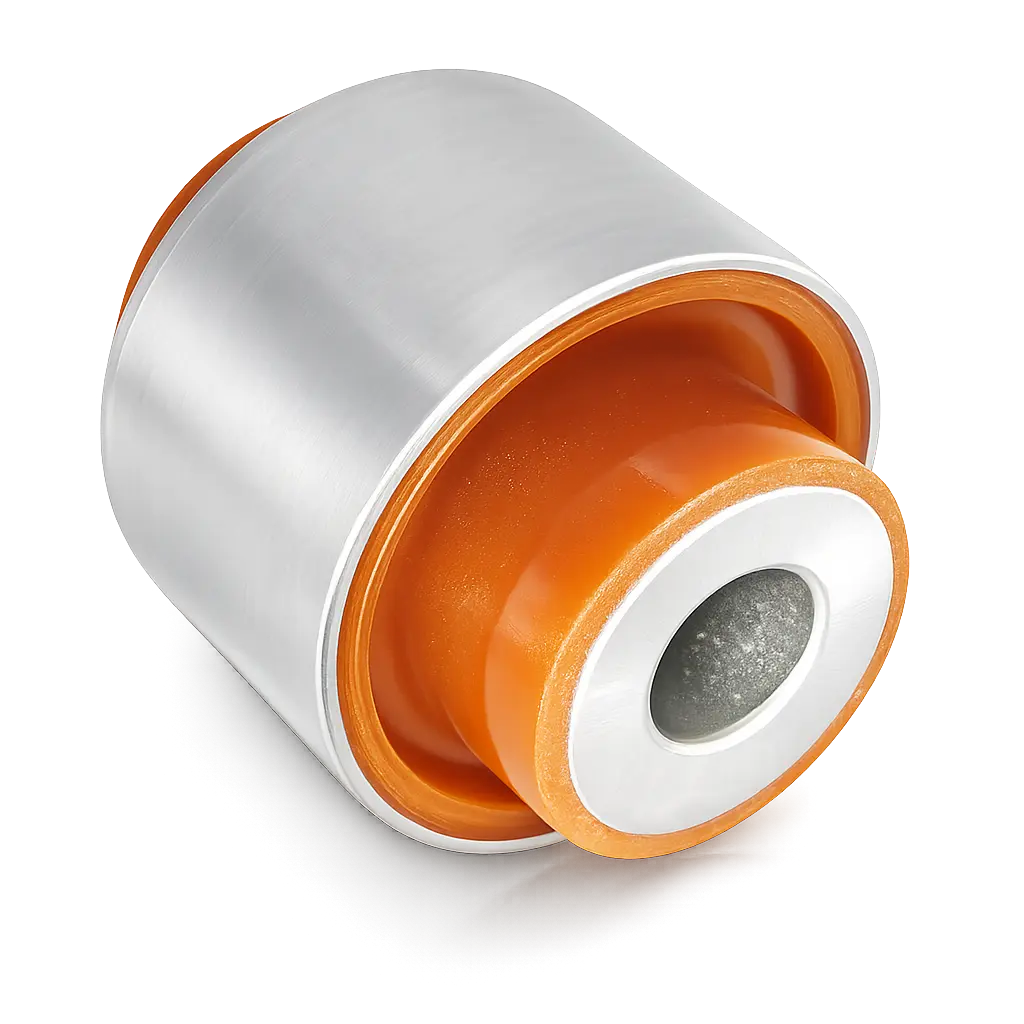
Polyurethane Bushings with Outer Shell
Polyurethane bushings with an outer shell have the urethane element bonded inside a steel sleeve, so the part is pressed into the housing as one piece. The shell copies the geometry of the factory component, which makes these bushings a direct replacement for control arms, rear beams, track bars and tie rod ends. PolyPro molds them in-house in every common size. See the rest of the range in our polyurethane parts catalog.
What a Bushing with an Outer Shell Does
A suspension bushing is a flexible joint between two parts of the chassis. It holds the control arm in its plane, absorbs road impact and lets the joint rotate through a small angle without metal-on-metal contact. In the outer-shell design the urethane sits inside a steel sleeve, with an inner tube running through the middle for the bolt or pin.
The shell takes the entire press-fit load. Steel spreads the force evenly around the bore, so the urethane is never cut by the edge of the housing and never squeezes out during installation. That is why this design is used wherever the factory joint is press-fit only: control arm eyes, rear beam brackets, track bars, subframe and body mounts. The inner tube is clamped by bolt torque and stays still, while all torsional movement happens in the polyurethane. The result is predictable suspension kinematics — the arm travels on its own arc instead of moving with a worn-out bore.
Symptoms of Worn Bushings
Polyurethane does not dry-rot the way rubber does, but the housing, the shell and the surrounding hardware still wear. Inspect the joint at every seasonal service and always after a hard pothole hit.
Signs It Is Time to Replace Them
- a dull clunk from the front or rear over small bumps that disappears on smooth pavement;
- the car pulls to one side after a pothole and needs constant steering correction;
- uneven tire wear on the inner or outer shoulder;
- steering wheel vibration under acceleration and engine braking;
- visible cracks in the rubber, material pushed out past the shell, rust and play of the shell in the bore;
- squeaking when the wheel is unloaded or at low speed over broken pavement;
- alignment will not hold — the angles drift a few thousand miles after a setup.
How to Check a Bushing Yourself
The quickest check is on a lift. Put a pry bar between the arm and the subframe and apply light pressure sideways. Visible movement of the part relative to its bore means the urethane is no longer holding. Second method — rock an unloaded wheel horizontally; a knock near the arm points to the bushing rather than the ball joint. Look for rust streaks around the shell, which mean it is turning in the bore. Wear is rarely isolated: sway bar bushings and shock bushings usually go at the same time. It pays to rebuild the whole corner in one visit, since dropping the arm opens access to several points at once.
Rubber vs Polyurethane Bushings
The rubber element in a factory bushing works mostly in tension and slowly delaminates from oil, road salt and temperature swings. First it starts to flex and alignment angles drift. Then the shell spins and chews out the bore in the arm — at that point the repair costs more than the part. Polyurethane in the same shell works in compression: it does not swell in oil, does not harden in the cold, ignores salt and does not age out. A quality polyurethane bushing lasts 100,000–150,000 km — three to five times longer than the rubber original.
The difference shows up most in handling. Rubber allows parasitic movement under cornering load: the arm shifts a few millimeters and the car floats through the turn. Polyurethane holds the designed geometry under load, so steering feel is sharper, braking in a straight line is more stable and alignment stays put until the next service interval. The trade-off is a firmer response over small bumps — barely noticeable in standard durometer, clearly present in the stiffer grade. For daily driving, high-mileage vehicles and loaded rear axles polyurethane pays for itself, because there is no second suspension rebuild.
How to Choose the Right Bushing
By Dimensions
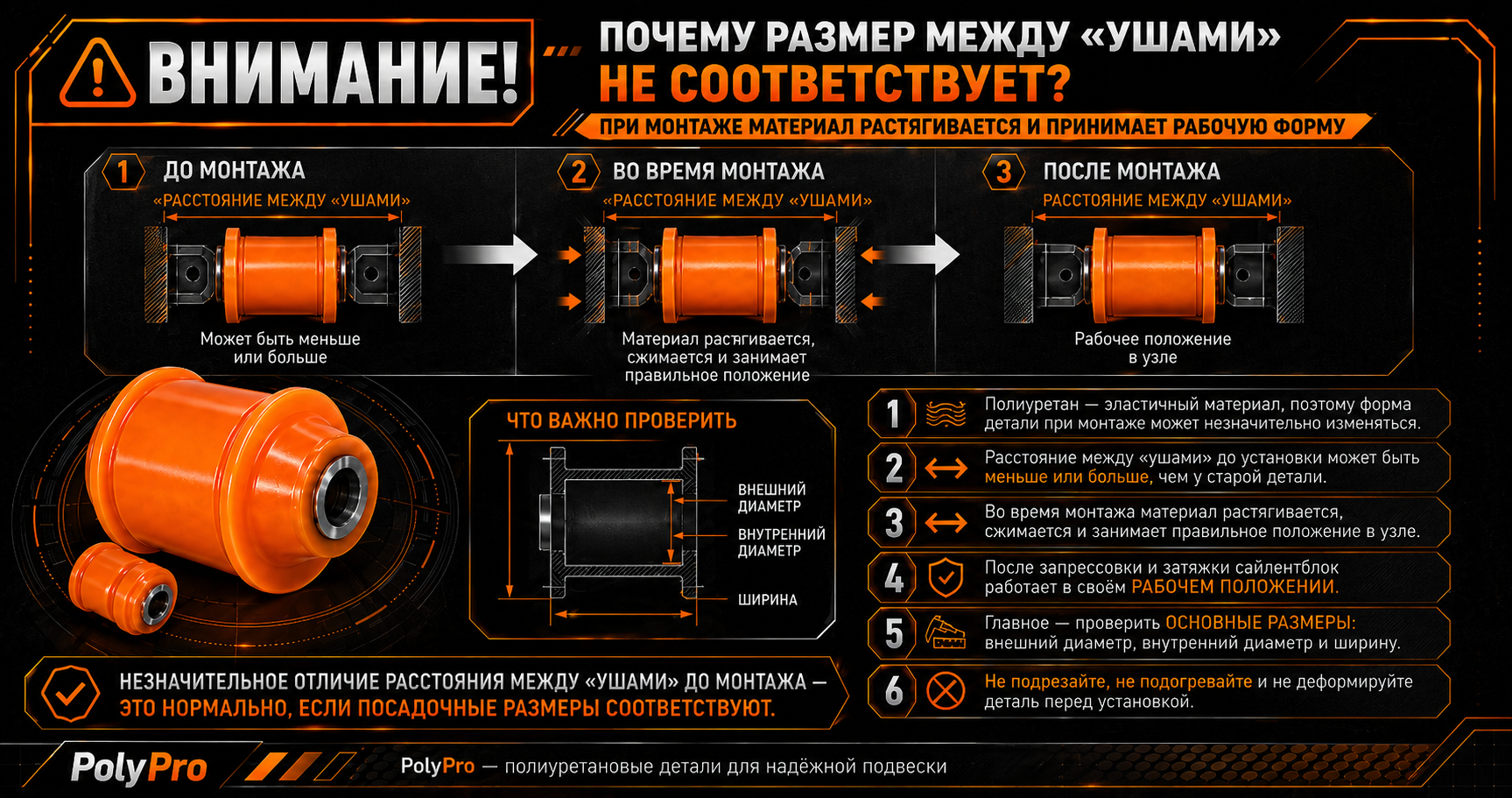
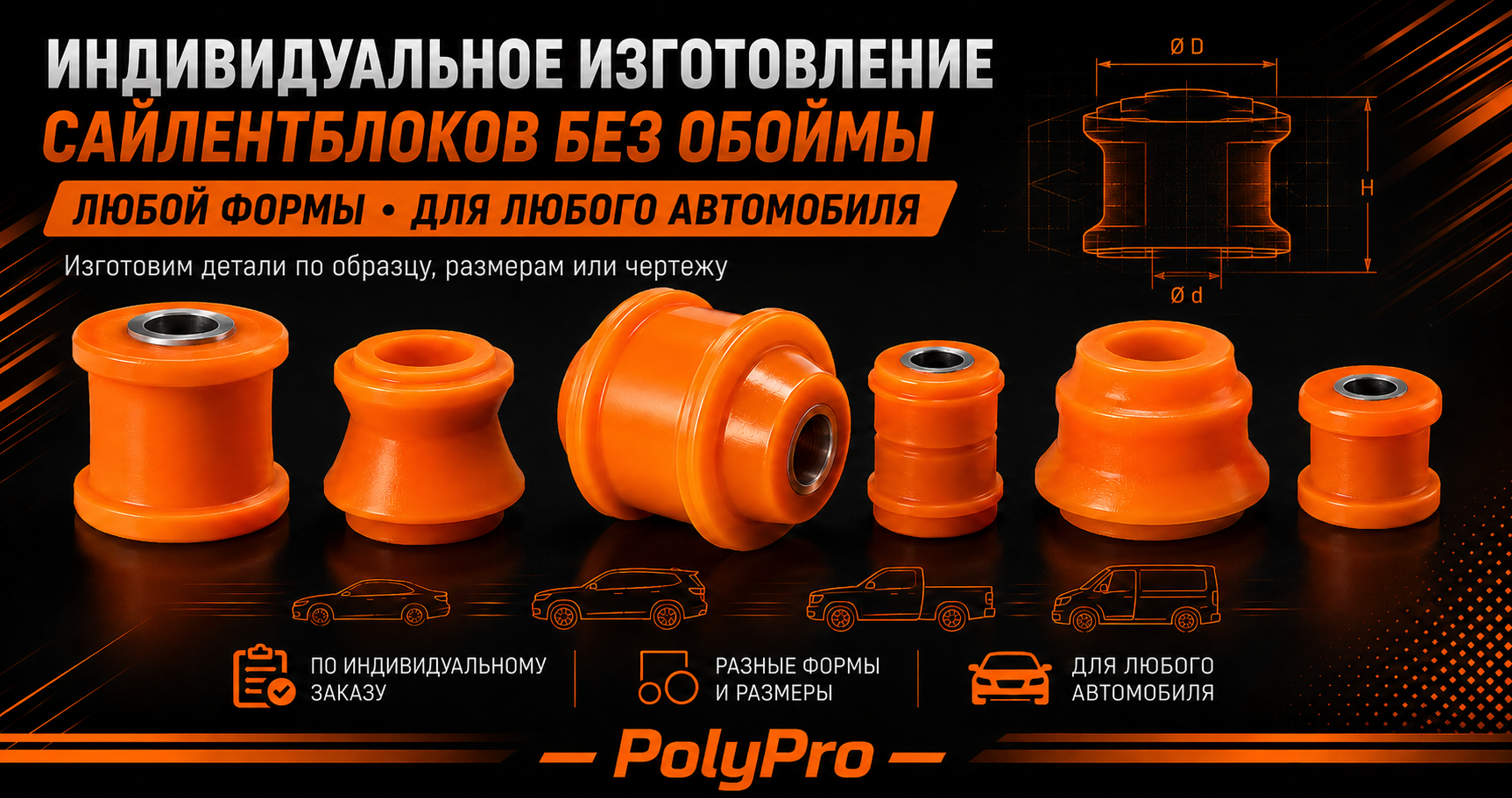
Three measurements are needed: outer shell diameter (this is the press fit into the bore), inner diameter for the bolt or pin, and overall height. Measure the old part with calipers and measure the bore in the arm separately — a shell that has been spinning may have opened the hole up. If the bore is oversized, an oversize-shell part is required, and we make those to order. If there is nothing left to measure, send a photo of the part next to a ruler and we will match it from our database.
By Vehicle Make and Model
The catalog is organized as vehicle type → make → model. If your model is not listed, dimensions still decide the fit: two different cars often share the same bushing size. Custom polyurethane bushings are made from a drawing, a sample or even the worn part itself, which matters for classic and low-volume vehicles that no longer have a parts supply.
Where non-original arms are already fitted, the seat bore may differ from factory — measure it instead of trusting the old part number.
By Design: Four Types Compared
This is where most ordering mistakes happen. If the factory joint takes the urethane element directly into the arm with no metal around it, you need a bushing without outer shell. If the sleeve has a lip on one end that locates the part axially, look at flanged bushings. Mounts with a steel plate embedded in the urethane — typical for engine and transmission mounts — use a bushing with inner plate. The outer-shell version is the baseline: a plain sleeve, no lip, press-fit installation.
By Durometer
For street driving choose the standard grade: ride comfort stays close to rubber while service life increases several times over. For performance driving, off-road use, towing or a permanently loaded vehicle choose the stiffer grade — less body roll and sharper steering, but more road texture reaching the cabin. The Shore hardness is listed on every product page, and mixing grades within one joint is not recommended.
Product Photos
Why Buy Outer-Shell Bushings from PolyPro — Wholesale and Retail
PolyPro is a manufacturer, not a reseller: the molds, the casting line and dimensional control are all ours. That keeps retail pricing free of middleman markup and lets us supply shops, parts stores and fleets at wholesale, with a partner program for regular accounts. Non-standard parts are made to order from a drawing, a sample or a worn component, starting at a single piece. Every part carries a warranty and ships with installation grease included. Thousands of sizes are in stock, so most orders leave the same day.
Frequently asked questions
What is the difference between a bushing with an outer shell and one without?
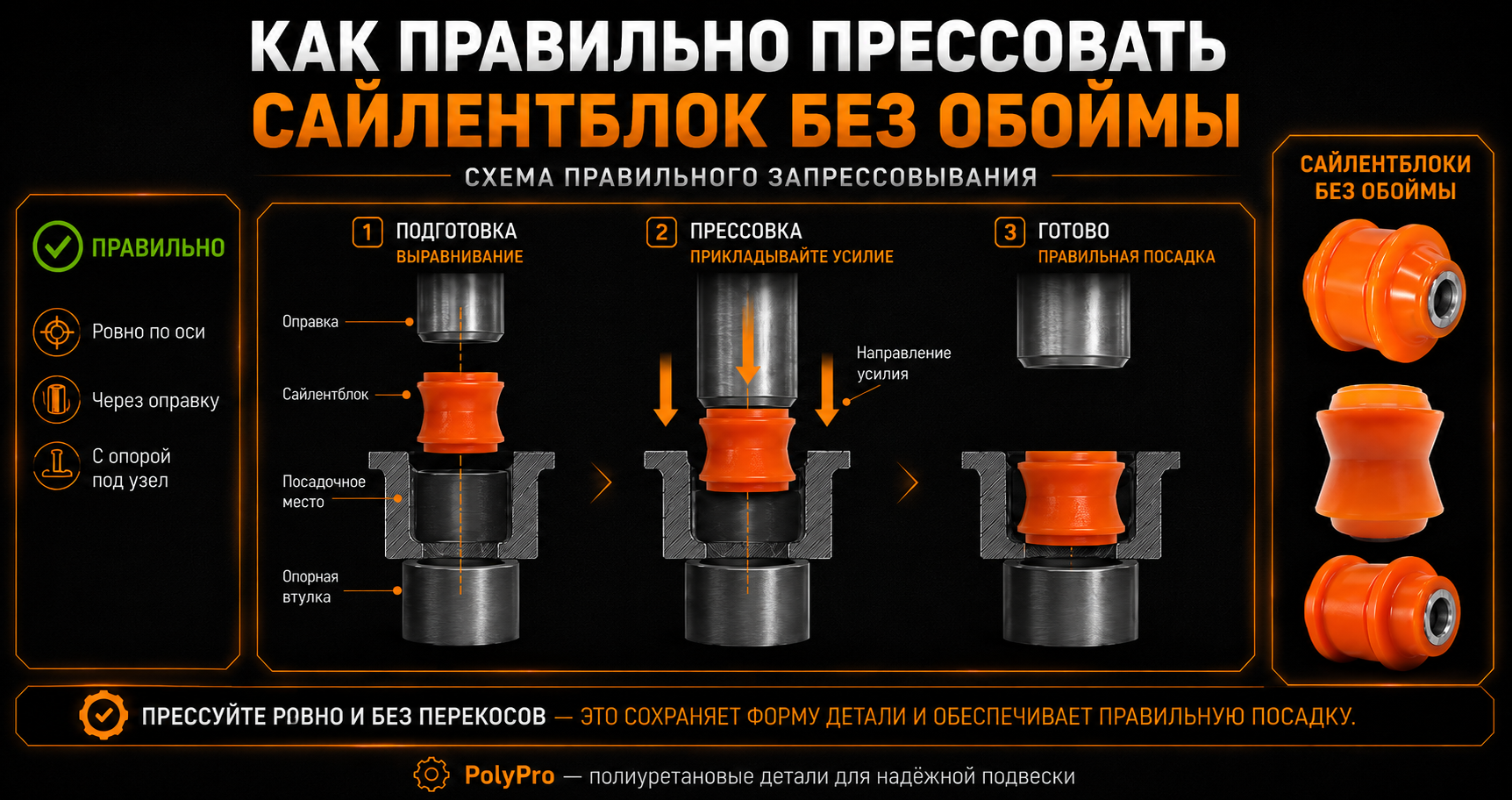
A bushing with an outer shell is a urethane element inside a steel sleeve; the assembly is pressed into the housing as one unit. The shell-less version is the urethane element alone, fitted straight into the arm. Use the outer shell when the factory part had one, or when the bore in the arm is already worn. The sleeve spreads the press load and keeps the geometry true.
How long do polyurethane bushings last?
A quality polyurethane bushing lasts 100,000–150,000 km, three to five times longer than the rubber original. Urethane does not crack with age, does not break down in road salt and holds up through temperature extremes, so the part usually outlives the rest of the suspension rebuild. PolyPro warranties every part it makes.
How do you press in a bushing without a shop press?
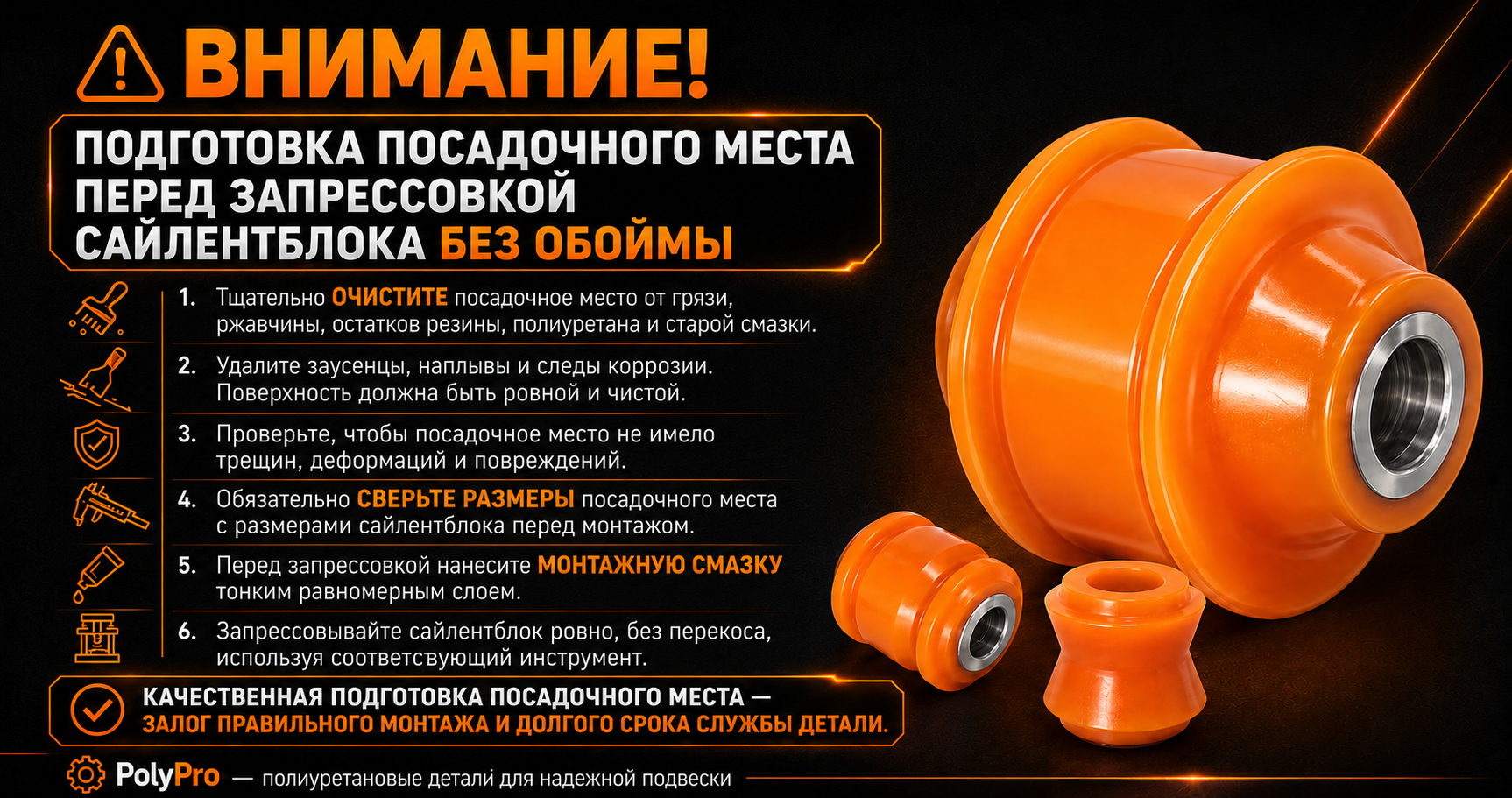
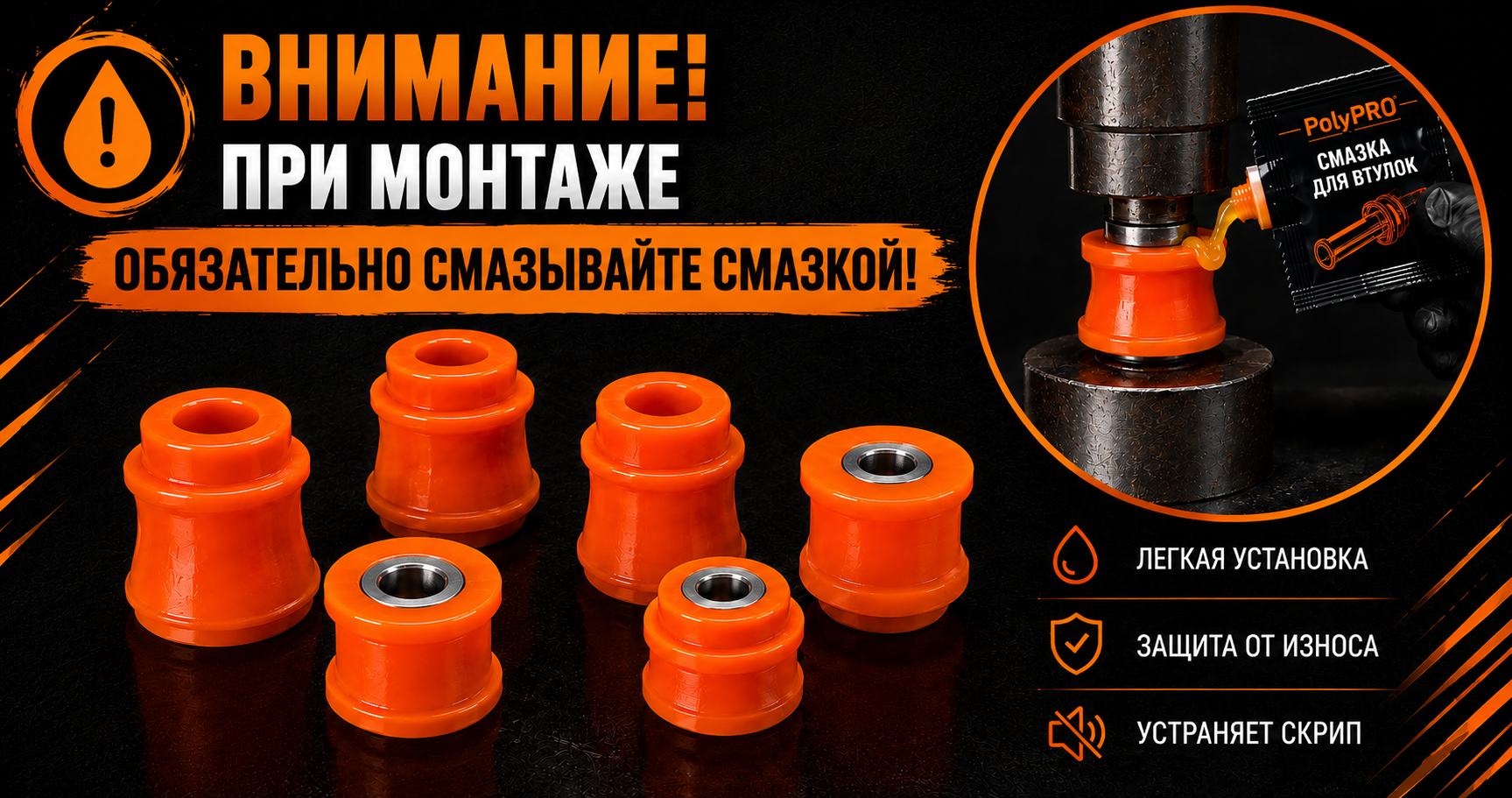
Use a long bolt with washers and a section of pipe sized to the shell — the setup works like a clamp. Apply force to the steel shell only, never to the urethane, and keep the part square to the bore. Lubricate the housing before installation. On many vehicles the lower bushings can be done in place without removing the control arm.
Do polyurethane bushings squeak, and what grease should be used?
Squeaking comes from a dry interface, not from the material itself. Use silicone or a dedicated polyurethane installation grease on the inner tube and contact surfaces; PolyPro ships grease with the parts. Do not use petroleum-based grease — it is harmless to our urethane but destroys nearby rubber components.
Are polyurethane bushings worth it on a daily driver?
Yes, if the goal is service life and predictable handling. Standard-durometer polyurethane rides close to rubber but does not deform under load, so alignment holds and clunks do not come back. The stiffer grade is meant for performance, towing and off-road use, where extra road feel is an acceptable trade.
Can I order one bushing for a single repair?
Retail goes piece by piece, so one bushing is a normal order and the rest of the arm stays untouched. Thousands of sizes are held in stock, and installation grease comes with the part. If the size is not standard, it is cast to order from a drawing, a sample or the worn component, starting at a single piece.
Do parts stores and fleets get wholesale terms on bushings?
Yes. Repair shops, parts stores, fleets and resellers buy at wholesale, and terms are calculated against the volume ordered. The partner program adds bonuses for turnover or for a single large order, access to prices, stock and shipping dates, and the option of shipment under the partner's own brand.