
 Втулки стабілізатора передні
Stabilizer bushing
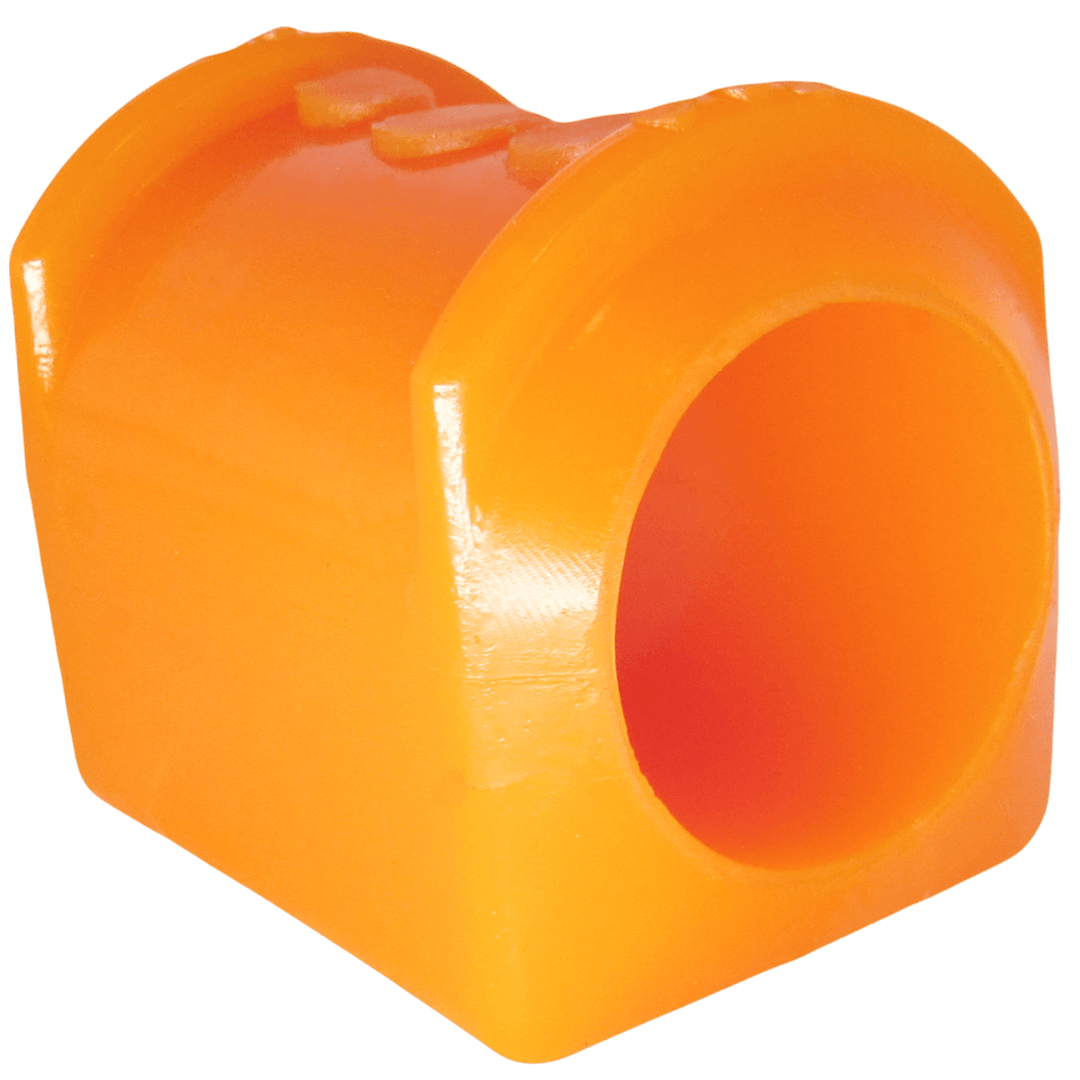
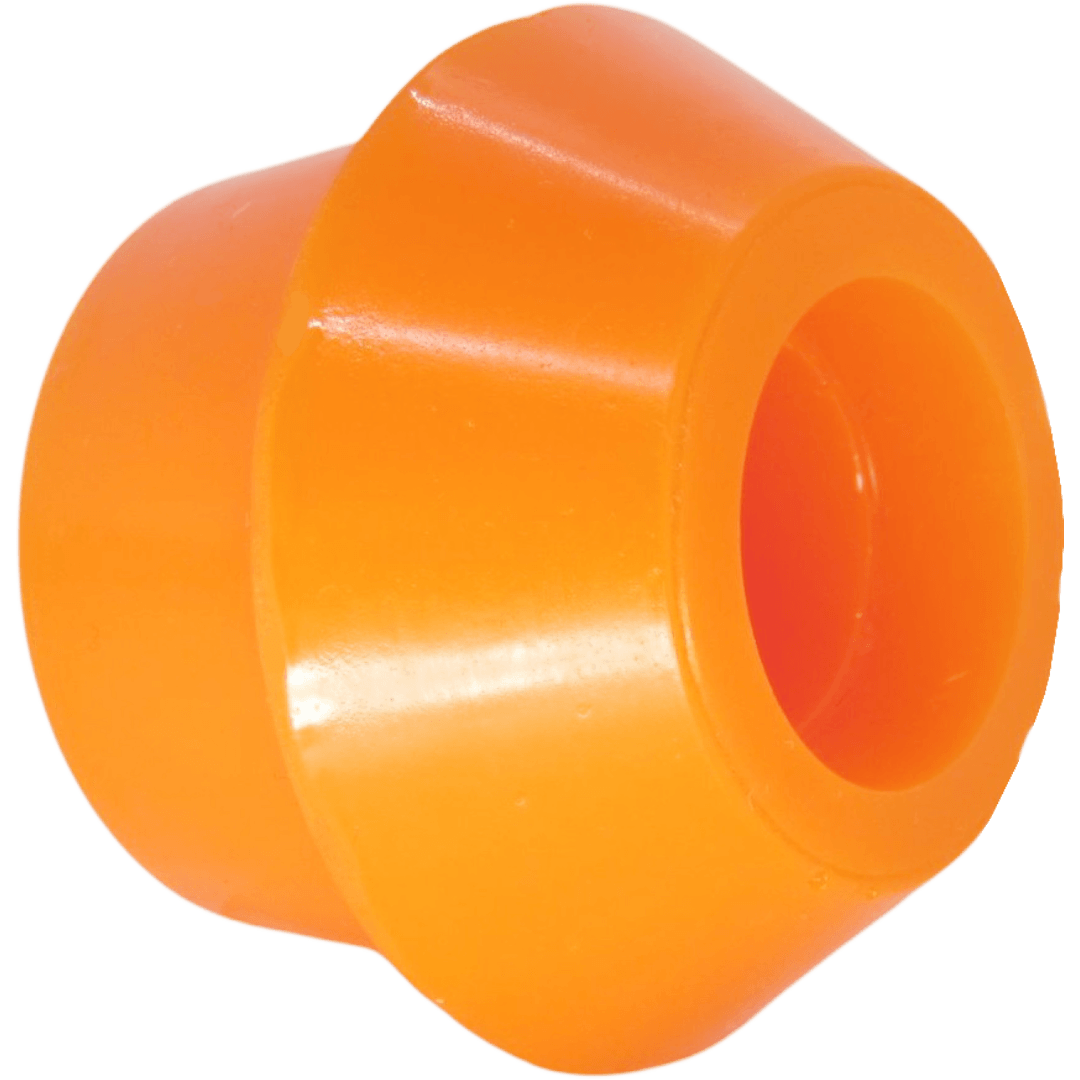
Polyurethane Sway Bar Bushings
Polyurethane sway bar bushings are the mounts that clamp the stabilizer bar to the chassis or subframe. They are almost always the first suspension part to start clunking over small bumps. PolyPro molds sway bar bushings for any bar diameter — passenger cars, trucks, vans and commercial vehicles, retail and wholesale. The rest of the range is in the polyurethane bushings catalog. Below: how to spot wear, how polyurethane compares to rubber, and how to get the size right.
What Sway Bar Bushings Do
A sway bar (also called a stabilizer bar or anti-roll bar) is a U-shaped torsion spring that ties the left and right wheels of one axle together. In a corner the outside wheel loads up, the bar twists and transfers part of that load to the inside wheel, cutting body roll. The bar has to rotate inside its mounts without moving sideways or rattling. That job belongs to the sway bar bushings, held to the frame by a pair of brackets or D-clamps.
Each bushing works as a plain bearing and a damper at the same time: it keeps the bar centered and absorbs high-frequency vibration so metal never hits the bracket. The load is fully reversing — one bump cycles the bushing through compression and release several times, and on a winding road that cycle never stops. Add grit, water, road salt and temperatures ranging from hard freeze to sun-baked asphalt, and it becomes obvious why rubber bushings fail earlier than most other suspension parts.
Symptoms of Bad Sway Bar Bushings
Sway bar bushings do not fail suddenly. The bore wears oversize, clearance grows, and the bar starts moving inside the clamp. First you hear a faint rattle over expansion joints, then a clear clunk on every pothole. Eventually the car feels vague: slower turn-in and more body roll than it used to have.
Clunks, Squeaks and Body Roll
- a dull clunk or rattle from the front end over small bumps, rough pavement and rail crossings;
- a squeak when turning the wheel at low speed or at a standstill, worst in rain and cold;
- more body roll in corners, wandering on the straight, delayed steering response;
- visible play: with the car on a lift, the bar shifts inside the bracket when you push it by hand;
- rubber dust around the bracket, cracks and a split through the bore of the old bushing;
- uneven tire wear at the shoulders caused by constantly changing alignment angles;
- the noise disappears temporarily after retorquing the bracket — a reliable wear check.
Worn sway bar bushings rarely come alone. On the same lift you will usually find tired polyurethane control arm bushings and worn shock absorber bushings. Doing the whole corner at once is cheaper than paying labor twice.
Polyurethane vs Rubber Sway Bar Bushings
This is the one location where the material difference is impossible to miss. A rubber bushing is soft, so the bar floats inside it: part of the torsional load is spent deforming the bushing instead of resisting roll. Within a season or two the bore wears, clearance appears, and the bar begins to knock even though the bar itself is perfectly straight.
Polyurethane is stiffer and more resilient. It holds the bar with no free play, so the sway bar starts working from the first degree of roll rather than after the slack is taken up. The material shrugs off motor oil, coolant and road salt, does not go hard in the cold and does not soften near a hot exhaust. Service life of a quality polyurethane bushing is 100,000–150,000 km — three to five times a rubber equivalent. That usually means one install and no more clunks until the next major suspension job.
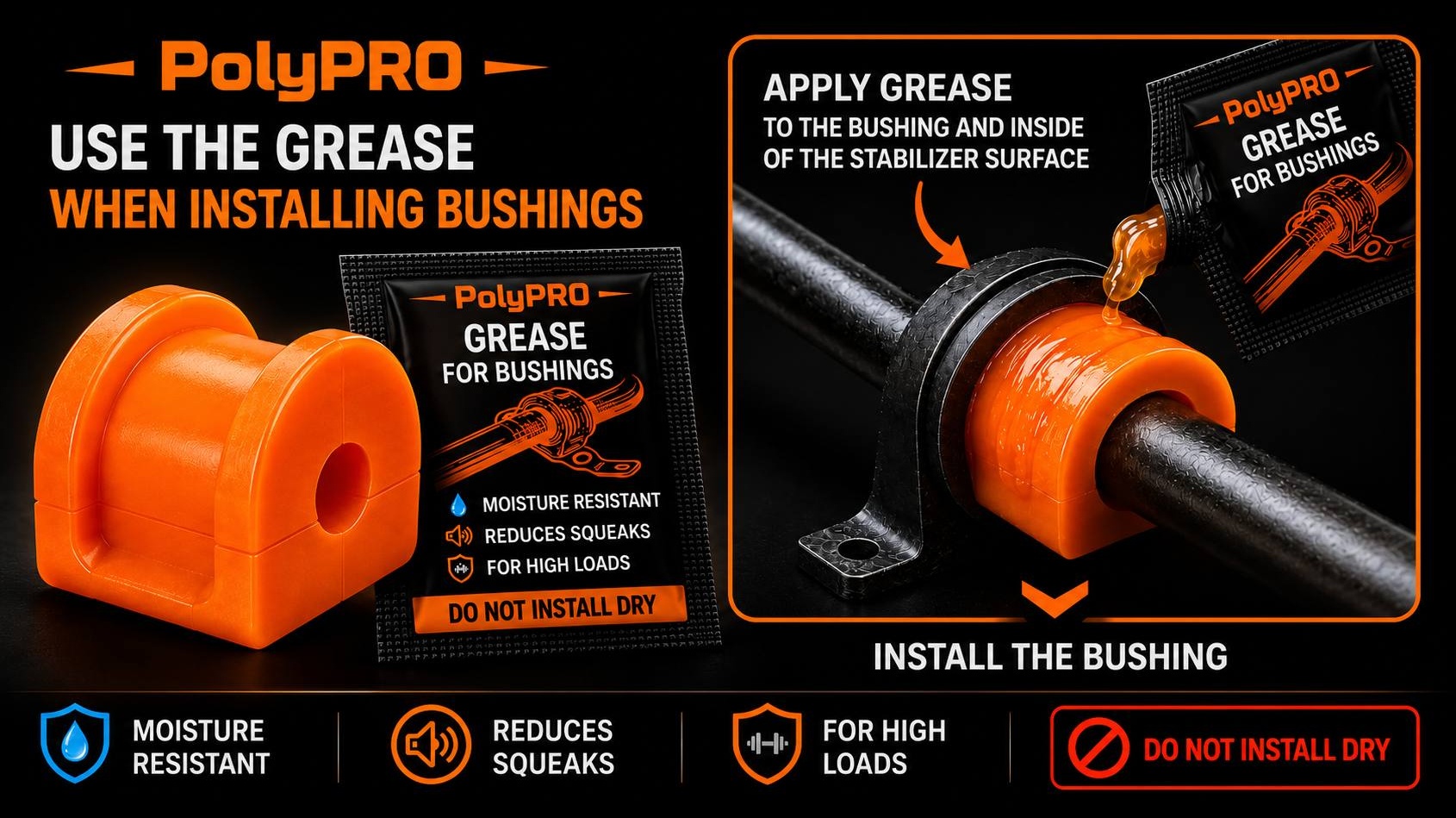
The honest downside: polyurethane is harder, so small road vibration reaches the body a little more clearly than with fresh rubber. On sway bar bushings this is barely noticeable, because unlike control arm bushings they do not work in large-amplitude torsion. The second point is installation — polyurethane needs a proper lubricant, otherwise a new bushing may squeak for the first few hundred kilometers until it beds in.
How to Choose the Right Sway Bar Bushings
Fitment is decided by geometry, not by the badge on the car: the same bushing often fits several models from different manufacturers as long as the dimensions match.
By Bar Diameter and Width
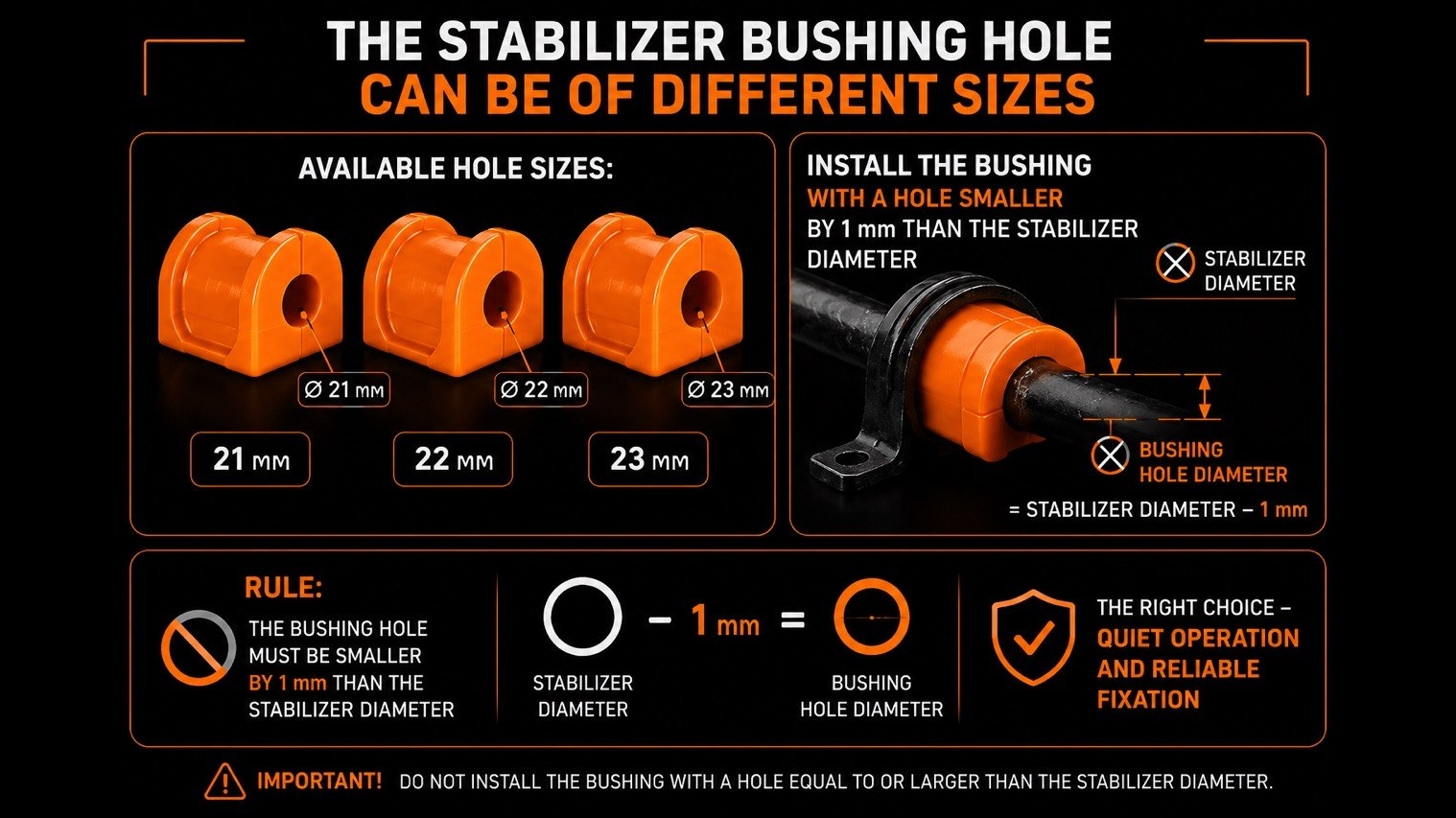
The critical dimension is the inner diameter — the sway bar diameter at the mounting point. Measure with calipers where the old bushing sits, not on a bend: undercoating throws the reading off. Second is width: the bushing must sit fully inside the clamp with no overhang. Third is the outer profile: usually half-round with a flat base under the bracket, but some bars need a matching locating groove. If the old part is destroyed, send a photo of the mount and the bar diameter.
By Vehicle Make and Model
On the PolyPro site, fitment runs through the catalog branch: vehicle type → make → model. If your model is not listed yet, ordering by measurement is faster and more accurate — bar diameters repeat across platforms, so a bushing listed for one model very often fits another. For classic, modified and off-road builds, or for aftermarket bars with non-standard diameters, we mold to size rather than forcing an off-the-shelf part.
Sway Bar Bushings vs End Link Bushings
These are two different parts and they get confused constantly at checkout. Sway bar bushings wrap the bar itself and clamp it to the chassis. The end link is a separate short rod connecting the bar to the control arm or strut, and it carries its own, much smaller bushings. Quick rule: noise near the frame rail on small ripples points to the bar bushings; noise near the wheel when the suspension droops points to the links and their end link bushings.
By Durometer
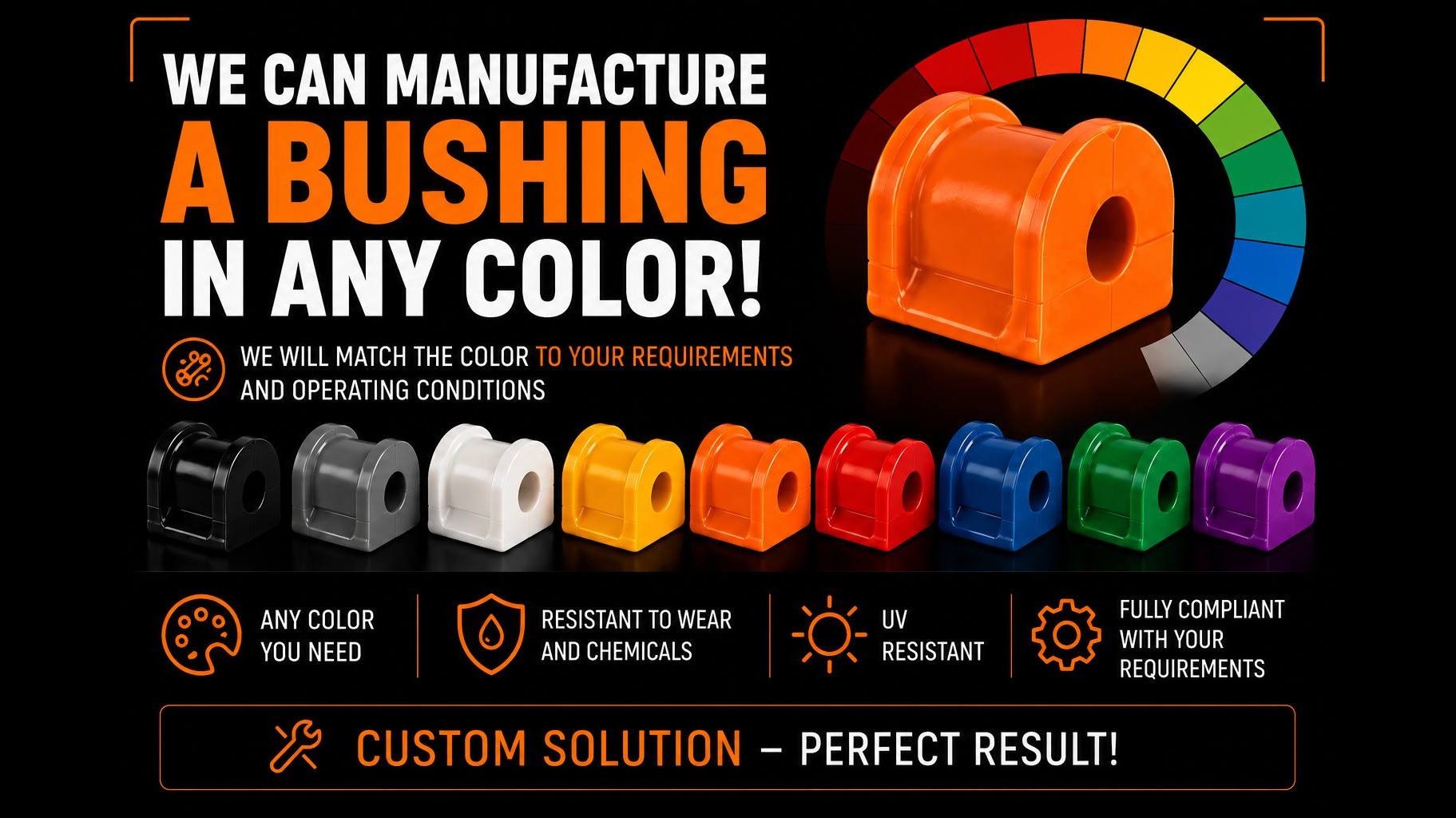
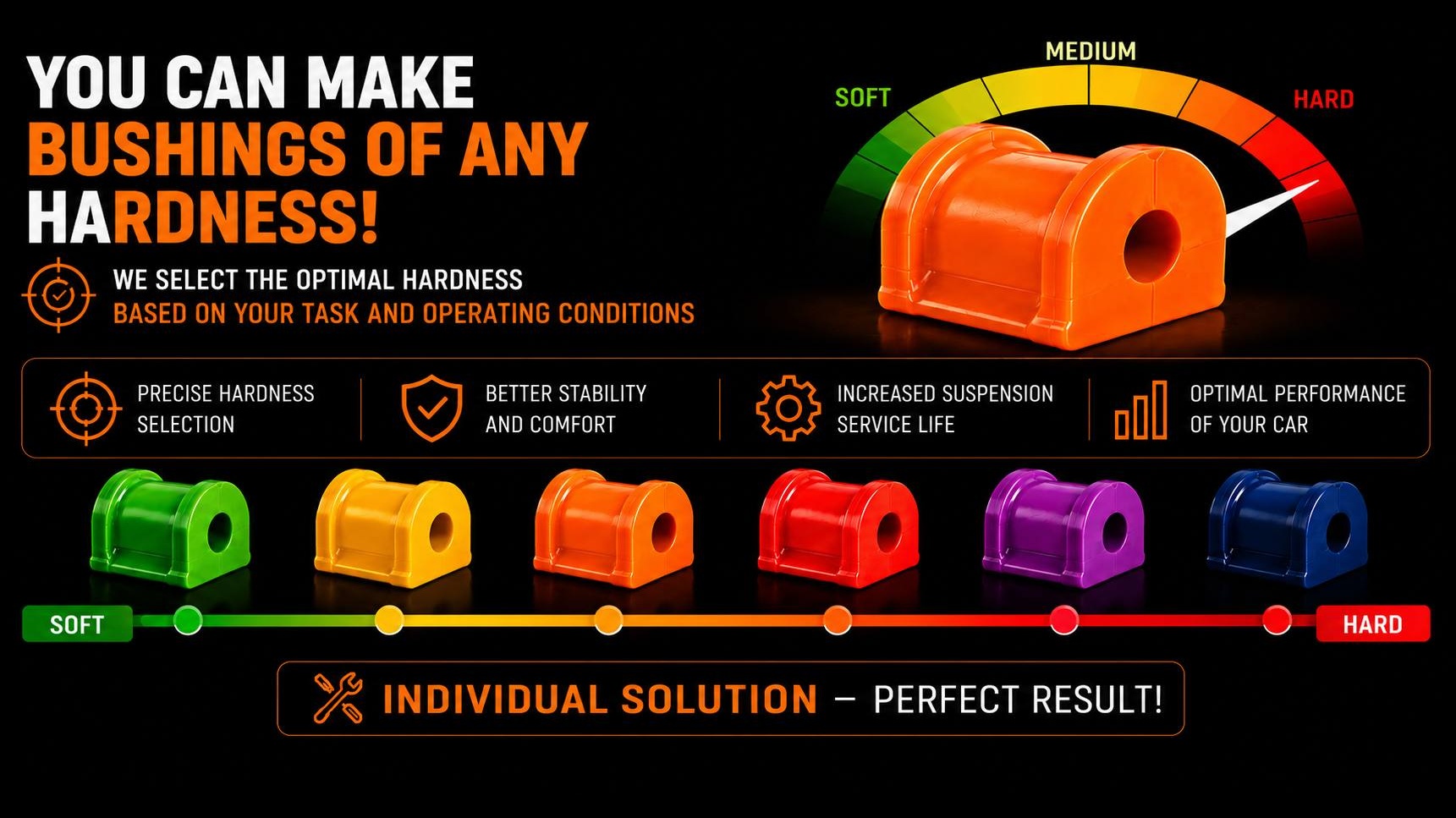
For daily street driving choose standard hardness: ride comfort stays close to rubber while service life multiplies. Firmer durometer makes sense on a loaded vehicle, a truck, an off-road build or a car driven hard. Expect less roll and sharper steering response, at the cost of slightly more vibration. Shore hardness is listed on every product page.
Replace the bushing once a knock appears over bumps or the bore has gone oval. Tighten the clamp with the suspension loaded.
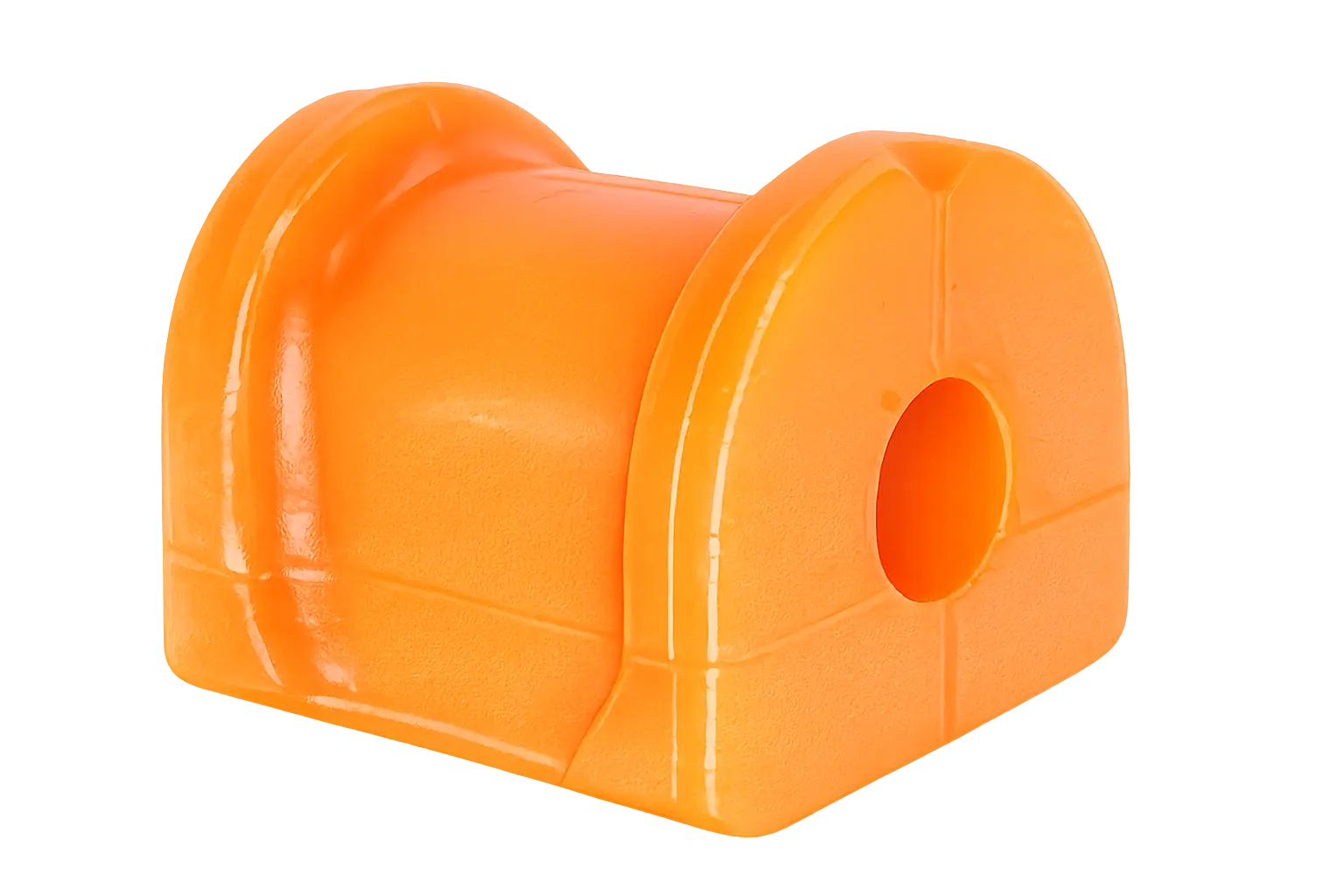
Product Photos
Why Order Sway Bar Bushings Direct from PolyPro — Retail and Wholesale
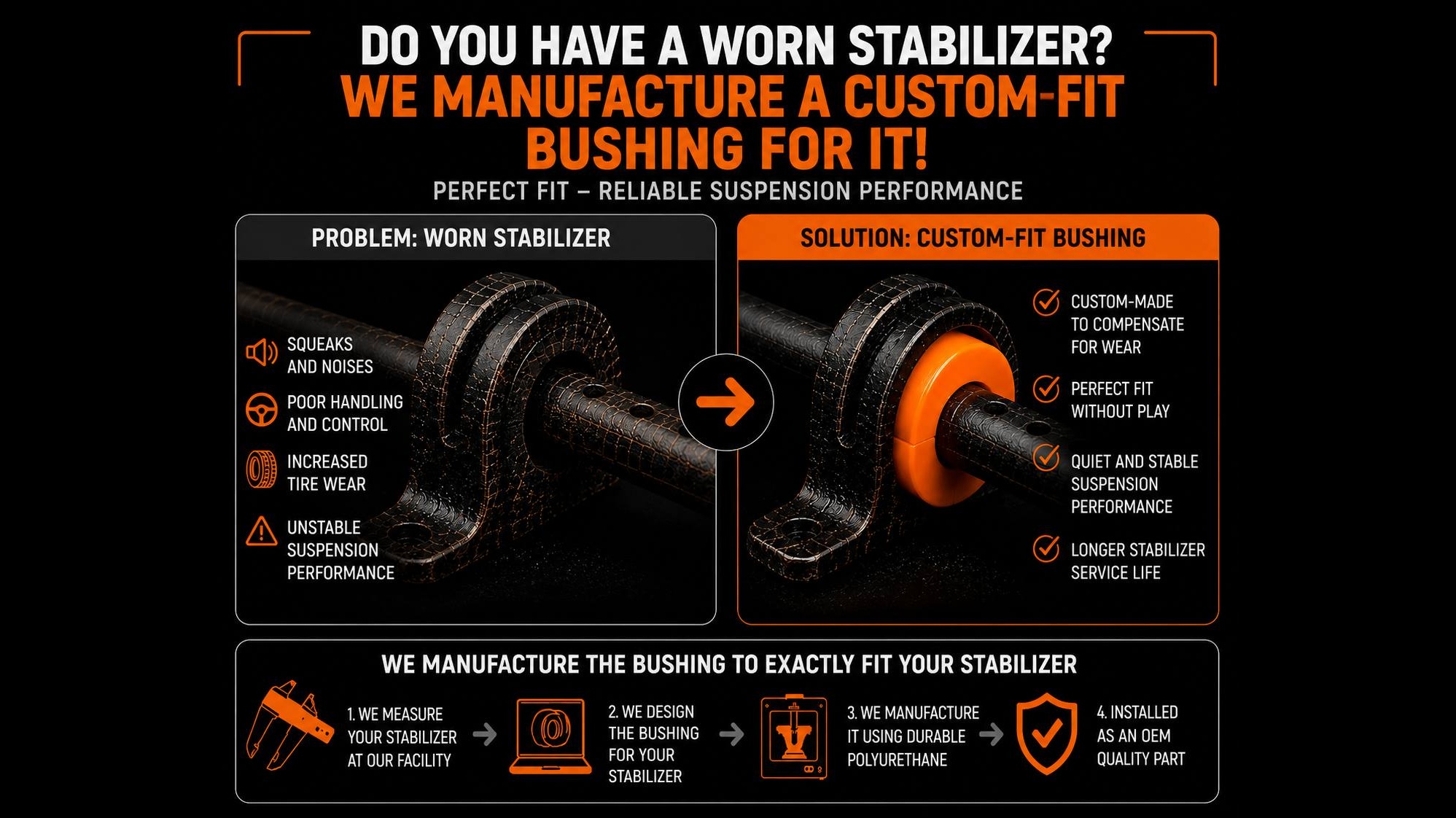
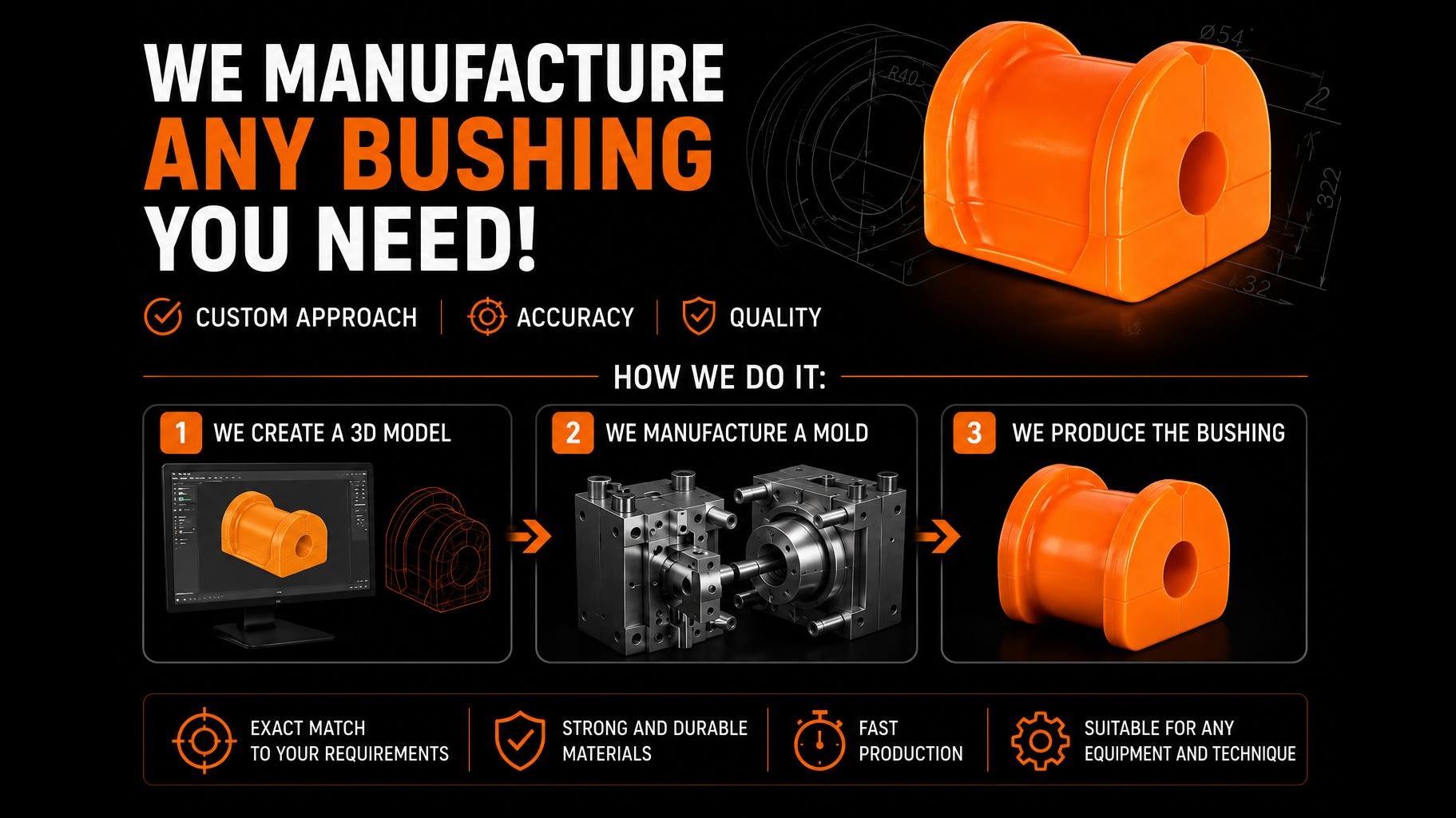
PolyPro is a manufacturer, not a reseller: bushings are cast on our own equipment in Ukraine, so we control both the polyurethane formulation and the tolerances. That gives you three practical things. Custom work — a bushing for a rare bar diameter, an aftermarket sway bar or discontinued equipment can be made from a drawing, a sample or even your worn part, from one piece up. Manufacturer-direct pricing, retail from a single bushing and a working wholesale partner program for shops and distributors. And a warranty backed by the material itself: polyurethane does not crack with age, salt or temperature swings. Rebuilding the whole suspension? A bushing and mount kit ships as a single order. Worldwide shipping available.
Frequently asked questions
What do worn sway bar bushings sound like?
Worn bushings produce a dull clunk or rattle from the front end over small bumps, plus a squeak when steering in rain or cold weather. You can confirm the play by pushing the bar by hand with the car on a lift — it should not move inside the bracket. Polyurethane bushings remove that noise for good.
What is the difference between sway bar bushings and end link bushings?
They are different parts. Sway bar bushings wrap the bar and clamp it to the chassis. End links are separate rods connecting the bar to the control arm or strut, with their own smaller bushings. Noise near the frame rail means bar bushings; noise near the wheel usually means the links.
How do I measure sway bar bushings?
You need two numbers: the inner diameter, equal to the bar diameter at the mounting point, and the bushing width along the bar. Measure with calipers on a straight section, never on a bend where paint builds up. If the old bushing is destroyed, send a photo of the mount plus the bar measurement.
What grease should I use on polyurethane sway bar bushings?
Use silicone or dedicated polyurethane assembly lubricant — it eases installation and prevents squeaking. Avoid petroleum-based greases such as lithium or chassis grease: they are not critical for PolyPro polyurethane but will attack nearby rubber components.
How long do polyurethane sway bar bushings last?
A quality polyurethane bushing lasts 100,000–150,000 km, three to five times longer than a rubber equivalent. PolyPro warranties its products: polyurethane does not crack from age, road salt or temperature swings, so one installation typically covers the rest of the suspension's service life.
Which durometer should I choose?
For normal street driving choose standard hardness — comfort close to rubber, with far longer life. Choose the firmer option for a loaded vehicle, off-road build, commercial van or spirited driving: less body roll and sharper steering, with slightly more vibration. Shore hardness is listed on each product page.
Do you sell sway bar bushings individually or only in pairs?
Both. A single bushing is a normal retail order, which helps when one side has worn out or when a rare bar diameter is involved — custom work starts at one piece as well. Pairs and kits suit a full suspension rebuild, while larger quantities move onto wholesale terms.
What do shops and distributors get from the partner program?
The partner program covers shops, service centers, fleets and distributors. It gives bonuses based on turnover or on the volume of a single order, access to prices, stock levels and shipping dates, and shipment under the partner's own brand where that is needed. Retail buying is unaffected and still starts at one bushing.