

SKU: PP201766
Polyurethane bushing front subframe Mitsubishi Eclipse 1995-1999
In stock15 pcs.$13.22Log in as dealer

Polyurethane bushing front subframe Mitsubishi Eclipse 1995-1999
In stock15 pcs.Polyurethane bushing front subframe Mitsubishi Galant 1992-1998
In stock15 pcs.Polyurethane bushing front subframe Mitsubishi Galant 1996-2003
In stock15 pcs.
Polyurethane bushing front subframe front Nissan Primera 1996-1999
In stock15 pcs.Polyurethane bushing front subframe front Nissan Primera 1999-2002
In stock15 pcs.
Polyurethane bushing front subframe front upper Mercedes-Benz 415 2012-
In stock15 pcs.Polyurethane bushing front subframe front upper Renault Kangoo 2008-
In stock15 pcs.Polyurethane bushing front subframe front upper Renault Megane 2002-2009
In stock15 pcs.
Polyurethane bushing front subframe front, lower Mercedes-Benz 415 2012-
In stock15 pcs.
Polyurethane bushing front subframe front, lower Nissan Cube Z11 2002-2008
In stock15 pcs.Polyurethane bushing front subframe front, lower Nissan Cube Z12 2008-
In stock15 pcs.Polyurethane bushing front subframe front, lower Nissan Micra 3 2003-2010
In stock15 pcs.Polyurethane bushing front subframe front, lower Nissan Note E11 2004-2013
In stock15 pcs.Polyurethane bushing front subframe front, lower Nissan Nv200 2009-
In stock15 pcs.Polyurethane bushing front subframe front, lower Nissan Sentra B17 2012-2019
In stock15 pcs.Polyurethane bushing front subframe front, lower Nissan Tiida C11 2004-2011
In stock15 pcs.Polyurethane bushing front subframe front, lower Renault Grand Scenic 2 2004-2009
In stock15 pcs.Polyurethane bushing front subframe front, lower Renault Kangoo 2008-
In stock15 pcs.Polyurethane bushing front subframe front, lower Renault Megane 2 2002-2009
In stock15 pcs.Polyurethane bushing front subframe front, lower Renault Megane 2002-2009
In stock15 pcs.Polyurethane bushing front subframe front, lower Renault Scenic 2 2003-2009
In stock15 pcs.
Polyurethane bushing front subframe rear Nissan Primera 1996-1999
In stock15 pcs.Polyurethane bushing front subframe rear Nissan Primera 1999-2002
In stock15 pcs.
Polyurethane bushing rear subframe Bmw E39 1995-2003
In stock15 pcs.
Polyurethane bushing rear subframe Bmw E60 2003-2010
In stock15 pcs.Polyurethane bushing rear subframe Bmw E61 2003-2010
In stock15 pcs.Polyurethane bushing rear subframe Bmw E63 2005-2010
In stock15 pcs.Polyurethane bushing rear subframe Bmw E64 2005-2010
In stock15 pcs.Polyurethane bushing rear subframe Bmw F06 2010-
In stock15 pcs.Polyurethane bushing rear subframe Bmw F12 2010-
In stock15 pcs.Polyurethane bushing rear subframe Bmw F13 2010-
In stock15 pcs.
Polyurethane bushing rear subframe rear Toyota Chaser 1992-1996 REPLACEABLE BUSHING
In stock15 pcs.Polyurethane bushing rear subframe rear Toyota Cresta 1992-1996 REPLACEABLE BUSHING
In stock15 pcs.Polyurethane bushing rear subframe rear Toyota Crown 1995-1999 REPLACEABLE BUSHING
In stock15 pcs.Polyurethane bushing rear subframe rear Toyota Crown 1999-2003 REPLACEABLE BUSHING
In stock15 pcs.Polyurethane bushing rear subframe rear Toyota Mark 1992-1996 REPLACEABLE BUSHING
In stock15 pcs.
Polyurethane bushing front subframe front Bmw E12 1972-1981
In stock15 pcs.
Polyurethane bushing front subframe front Bmw E12 1972-1981
In stock15 pcs.Polyurethane bushing front subframe front Bmw E24 1976-1989
In stock15 pcs.
Polyurethane bushing front subframe front Chevrolet Aveo 2011-
In stock15 pcs.Polyurethane bushing front subframe front Chevrolet Aveo 2002-
In stock15 pcs.
Polyurethane bushing front subframe front Ford Granada 1972-1977
In stock15 pcs.Polyurethane bushing front subframe front Ford Granada 1977-1985
In stock15 pcs.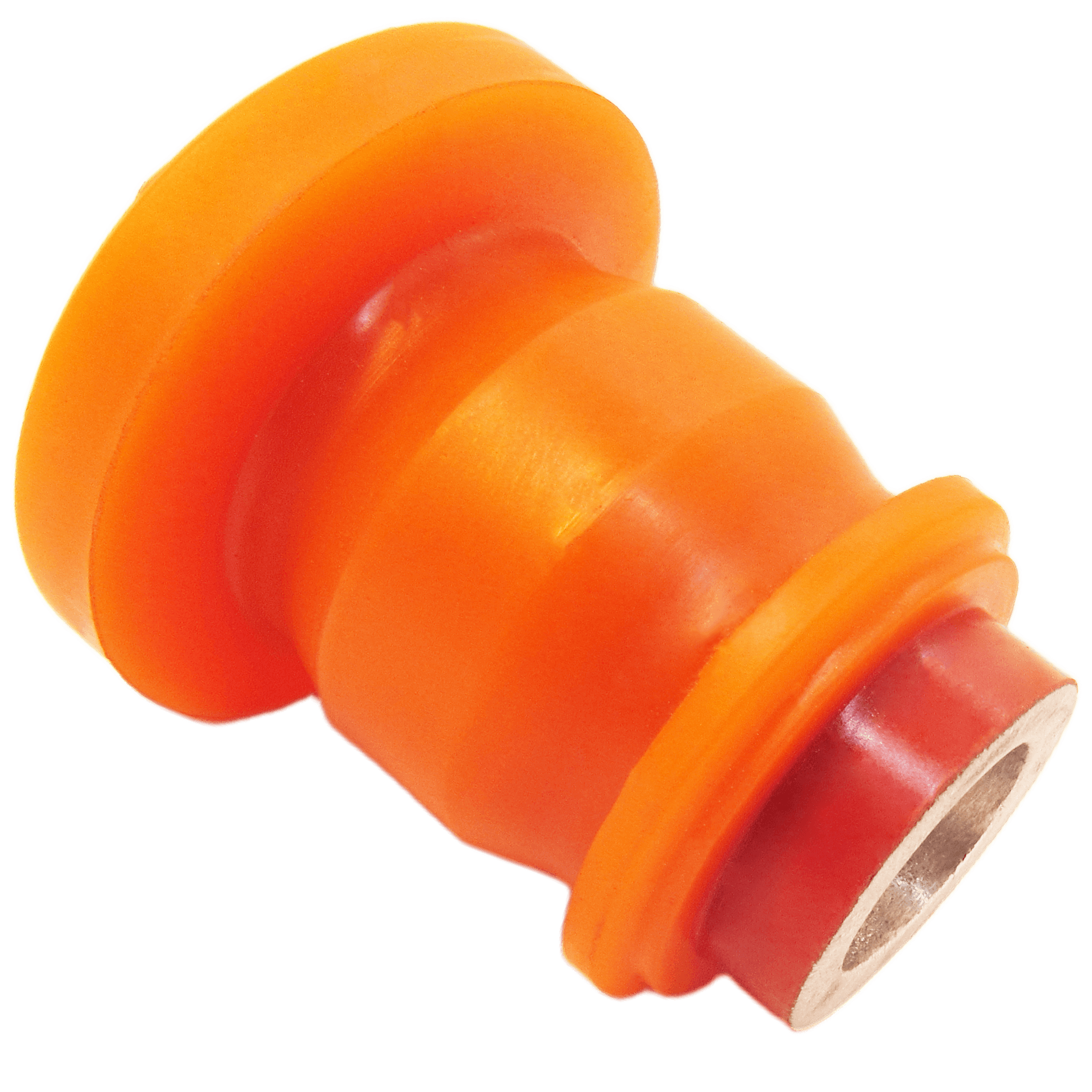
Polyurethane bushing front subframe front Mazda 929 1982-1987
In stock15 pcs.
Polyurethane bushing front subframe front and rear Lancia Thesis 2001-2009
In stock15 pcs.
Polyurethane bushing front subframe outer Chrysler Cirrus 1994-2000
In stock15 pcs.Polyurethane bushing front subframe outer Dodge Stratus 1995-2000
In stock15 pcs.Polyurethane bushing front subframe outer Mitsubishi Eclipse 1995-1999
In stock15 pcs.Polyurethane bushing front subframe outer Mitsubishi Galant 1992-1998
In stock15 pcs.Polyurethane bushing front subframe outer Mitsubishi Galant 1996-2003
In stock15 pcs.
Polyurethane bushing front subframe rear Audi 80 1972-1978
In stock15 pcs.Polyurethane bushing front subframe rear Audi 80 1978-1986
In stock15 pcs.
Polyurethane bushing front subframe rear Audi 80 1986-1991
In stock15 pcs.Polyurethane bushing front subframe rear Audi 80 1986-1991
In stock15 pcs.
Polyurethane bushing front subframe rear Audi 80 1986-1991 HARDNESS
In stock15 pcs.Polyurethane bushing front subframe rear Audi 80 1991-1995
In stock15 pcs.Polyurethane bushing front subframe rear Audi 90 1981-1985
In stock15 pcs.Polyurethane bushing front subframe rear Audi 90 1987-1991
In stock15 pcs.Polyurethane bushing front subframe rear Audi A3 1993-2006
In stock15 pcs.Polyurethane bushing front subframe rear Audi A3 1993-2006 HARDNESS
In stock15 pcs.Polyurethane bushing front subframe rear Audi A3 2003-2012
In stock15 pcs.Polyurethane bushing front subframe rear Audi A3 2003-2012 HARDNESS
In stock15 pcs.Polyurethane bushing front subframe rear Audi A4 1994-2001
In stock15 pcs.Polyurethane bushing front subframe rear Audi A4 1994-2001 HARDNESS
In stock15 pcs.Polyurethane bushing front subframe rear Audi A6 1994-1997
In stock15 pcs.Polyurethane bushing front subframe rear Audi A6 1994-1997 HARDNESS
In stock15 pcs.Polyurethane bushing front subframe rear Audi Cabriolet 1991-2000
In stock15 pcs.Polyurethane bushing front subframe rear Audi Cabriolet 1991-2000 HARDNESS
In stock15 pcs.Polyurethane bushing front subframe rear Audi TT 1998-2006
In stock15 pcs.Polyurethane bushing front subframe rear Audi TT 1998-2006 HARDNESS
In stock15 pcs.
Polyurethane bushing front subframe rear Chevrolet Aveo 2011-
In stock15 pcs.Polyurethane bushing front subframe rear Chevrolet Aveo 2002-
In stock15 pcs.
Polyurethane bushing front subframe rear Ford Granada 1972-1977
In stock15 pcs.Polyurethane bushing front subframe rear Ford Granada 1977-1985
In stock15 pcs.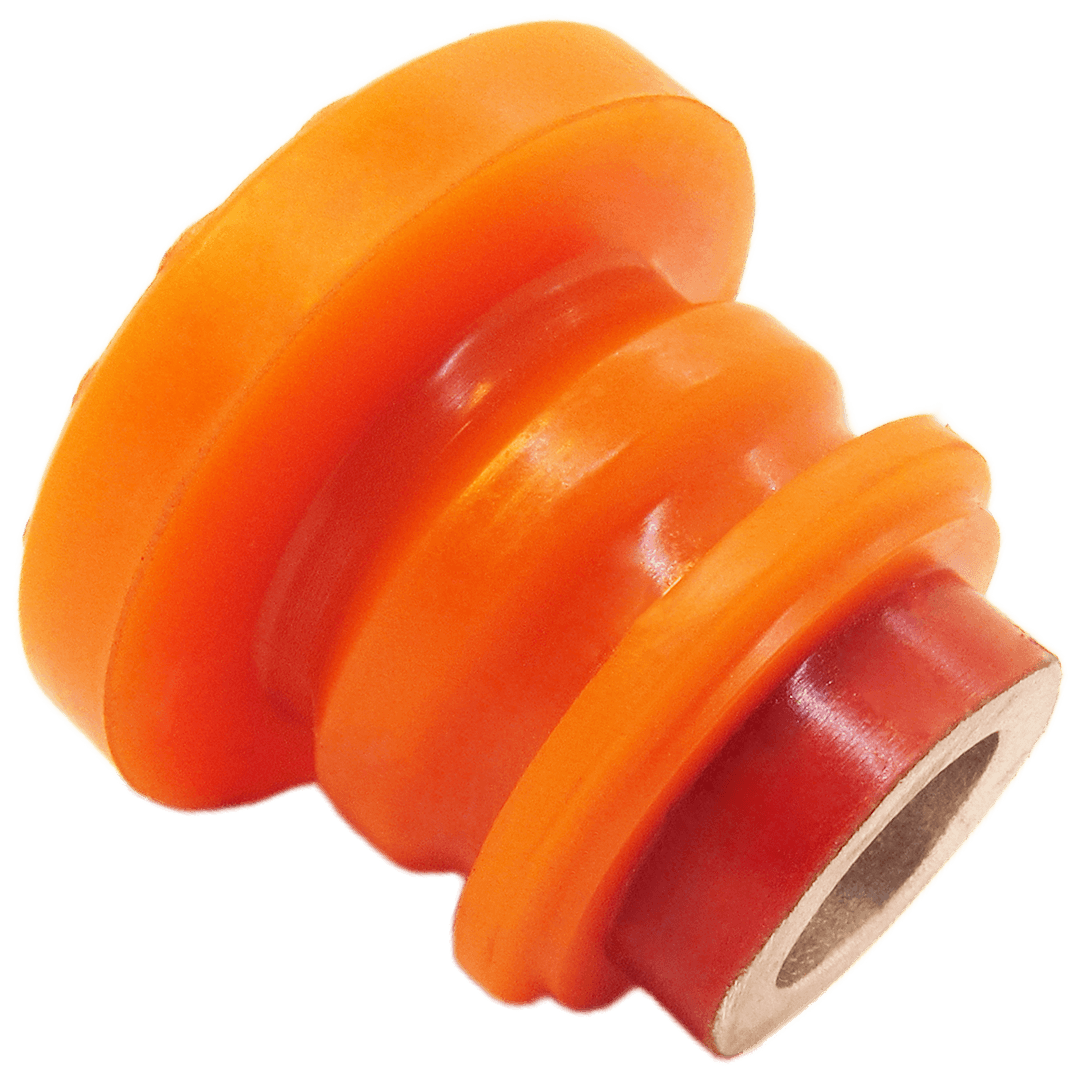
Polyurethane bushing front subframe rear Mazda 929 1982-1987
In stock15 pcs.Polyurethane bushing front subframe rear Seat Leon 1998-2006
In stock15 pcs.Polyurethane bushing front subframe rear Seat Leon 1998-2006 HARDNESS
In stock15 pcs.Polyurethane bushing front subframe rear Seat Leon 2005-2012
In stock15 pcs.Polyurethane bushing front subframe rear Seat Leon 2005-2012 HARDNESS
In stock15 pcs.Polyurethane bushing front subframe rear Seat Toledo 1999-2004
In stock15 pcs.Polyurethane bushing front subframe rear Seat Toledo 1999-2004 HARDNESS
In stock15 pcs.Polyurethane bushing front subframe rear Seat Toledo 2004-2009
In stock15 pcs.Polyurethane bushing front subframe rear Seat Toledo 2004-2009 HARDNESS
In stock15 pcs.Polyurethane bushing front subframe rear Skoda Octavia 1996-2010
In stock15 pcs.Polyurethane bushing front subframe rear Skoda Octavia 1996-2010 HARDNESS
In stock15 pcs.Polyurethane bushing front subframe rear Skoda Octavia 2004-2010
In stock15 pcs.Polyurethane bushing front subframe rear Skoda Octavia 2004-2013 HARDNESS
In stock15 pcs.Polyurethane bushing front subframe rear Volkswagen Beetle 2011-2019
In stock15 pcs.Polyurethane bushing front subframe rear Volkswagen Beetle 2011-2019 HARDNESS
In stock15 pcs.Polyurethane bushing front subframe rear Volkswagen Bora 1998-2005
In stock15 pcs.Polyurethane bushing front subframe rear Volkswagen Bora 1998-2005 HARDNESS
In stock15 pcs.Polyurethane bushing front subframe rear Volkswagen Caddy 1995-2004
In stock15 pcs.Polyurethane bushing front subframe rear Volkswagen Caddy 1995-2004 HARDNESS
In stock15 pcs.Polyurethane bushing front subframe rear Volkswagen Golf 1991-1998
In stock15 pcs.Polyurethane bushing front subframe rear Volkswagen Golf 1991-1998 HARDNESS
In stock15 pcs.Polyurethane bushing front subframe rear Volkswagen Golf 1997-2003
In stock15 pcs.Polyurethane bushing front subframe rear Volkswagen Golf 1997-2006 HARDNESS
In stock15 pcs.Polyurethane bushing front subframe rear Volkswagen New Beetle 1998-2010
In stock15 pcs.Polyurethane bushing front subframe rear Volkswagen New Beetle 1998-2010 HARDNESS
In stock15 pcs.Polyurethane bushing front subframe rear Volkswagen Passat 1980-1988
In stock15 pcs.Polyurethane bushing front subframe rear Volkswagen Polo 1994-2001
In stock15 pcs.Polyurethane bushing front subframe rear Volkswagen Polo 1994-2001 HARDNESS
In stock15 pcs.
Polyurethane bushing rear subframe Mazda 323 1985-1993
In stock15 pcs.
Polyurethane bushing rear subframe front BMW E46 1998-2006
In stock15 pcs.
Polyurethane bushing rear subframe front BMW E46 1998-2006 HARDNESS
In stock15 pcs.Polyurethane bushing rear subframe front BMW E83 1990-2002
In stock15 pcs.Polyurethane bushing rear subframe front BMW E83 1990-2002 HARDNESS
In stock15 pcs.Polyurethane bushing rear subframe front Z3 1995-2003
In stock15 pcs.Polyurethane bushing rear subframe front Z3 1995-2003 HARDNESS
In stock15 pcs.Polyurethane bushing rear subframe front Z4 2002-2008
In stock15 pcs.Polyurethane bushing rear subframe front Z4 2002-2008
In stock15 pcs.Polyurethane bushing rear subframe front Z4 2002-2008 HARDNESS
In stock15 pcs.Polyurethane bushing rear subframe front Z4 2002-2008 HARDNESS
In stock15 pcs.Polyurethane bushing rear subframe front Z4 2009-2016
In stock15 pcs.Polyurethane bushing rear subframe front Z4 2009-2016 HARDNESS
In stock15 pcs.
Polyurethane bushing front subframe Chevrolet Lacetti 2003-2009
In stock15 pcs.Polyurethane bushing front subframe Chevrolet Optra 2003-2009
In stock15 pcs.
Polyurethane bushing front subframe Honda Accord 2002-2008
In stock15 pcs.
Polyurethane bushing front subframe Hyundai Santa Fe 2006-2012
In stock15 pcs.
Polyurethane bushing front subframe Hyundai Trajet 1999-2007
In stock15 pcs.Polyurethane bushing front subframe Hyundai Tucson (JM) 2004-2009
In stock15 pcs.
Polyurethane bushing front subframe Jaguar XK X100 1997-2006
In stock15 pcs.Polyurethane bushing front subframe Kia Sportage (JE, KM) 2004-2010
In stock15 pcs.Polyurethane bushing front subframe Kia Sportage (SL) 2010-2015
In stock15 pcs.
Polyurethane bushing front subframe Opel Astra 1998-2004
In stock15 pcs.Polyurethane bushing front subframe Opel Astra 2004-2008
In stock15 pcs.Polyurethane bushing front subframe Opel Astra 2004-2014
In stock15 pcs.Polyurethane bushing front subframe Opel Astra 2009-2015
In stock15 pcs.
Polyurethane bushing front subframe Opel Vectra 1995-2002
In stock15 pcs.Polyurethane bushing front subframe Opel Zafira 1999-2005
In stock15 pcs.Polyurethane bushing front subframe Opel Zafira 2005-2011
In stock15 pcs.
Polyurethane bushing front subframe Saab 9-5 1997-2010
In stock15 pcs.
Polyurethane bushing front subframe Saab 9-5 1997-2010 1.9L
In stock15 pcs.
Polyurethane bushing front subframe Saab 9-5 1997-2010 2.0L
In stock15 pcs.
Polyurethane bushing front subframe front Audi 80 1972-1978
In stock15 pcs.Polyurethane bushing front subframe front Audi 80 1978-1986
In stock15 pcs.Polyurethane bushing front subframe front Audi 80 1986-1991
In stock15 pcs.Polyurethane bushing front subframe front Audi 80 1991-1995
In stock15 pcs.Polyurethane bushing front subframe front Audi 90 1981-1985
In stock15 pcs.Polyurethane bushing front subframe front Audi 90 1987-1991
In stock15 pcs.
Polyurethane bushing front subframe front Audi A4 1994-2001
In stock15 pcs.Polyurethane bushing front subframe front Audi A4 2000-2004
In stock15 pcs.Polyurethane bushing front subframe front Audi A4 2004-2008
In stock15 pcs.Polyurethane bushing front subframe front Audi A6 1997-2004
In stock15 pcs.
Polyurethane bushing front subframe front Audi A6 2004-2011
In stock15 pcs.Polyurethane bushing front subframe front Audi Allroad 2000-2005
In stock15 pcs.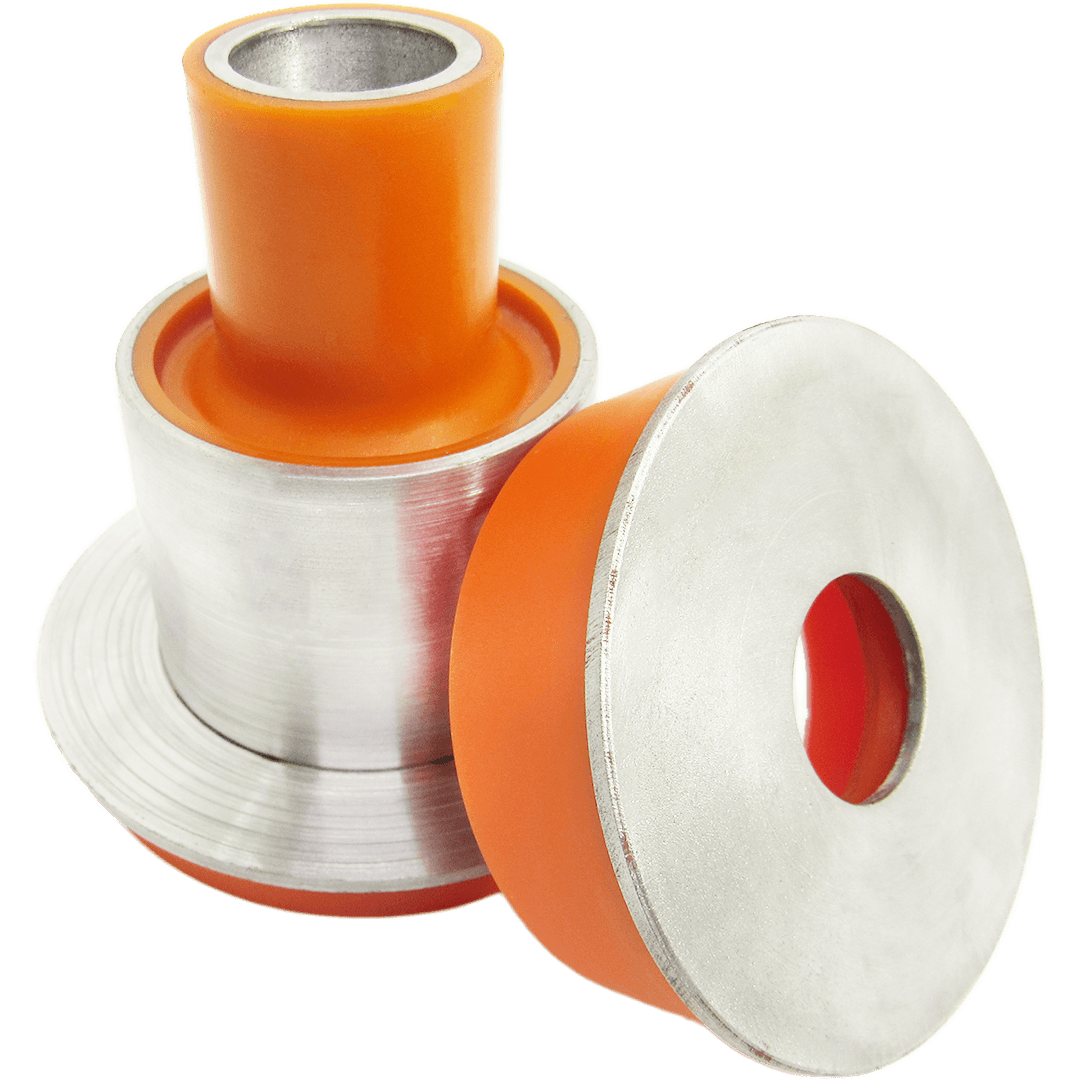
Polyurethane bushing front subframe front Byd Han 2020-
In stock15 pcs.
Polyurethane bushing front subframe front Chery Eastar 2003-
In stock15 pcs.
Polyurethane bushing front subframe front Chevrolet Captiva 2006-2018
In stock15 pcs.Polyurethane bushing front subframe front Chevrolet Epica 2006-2014
In stock15 pcs.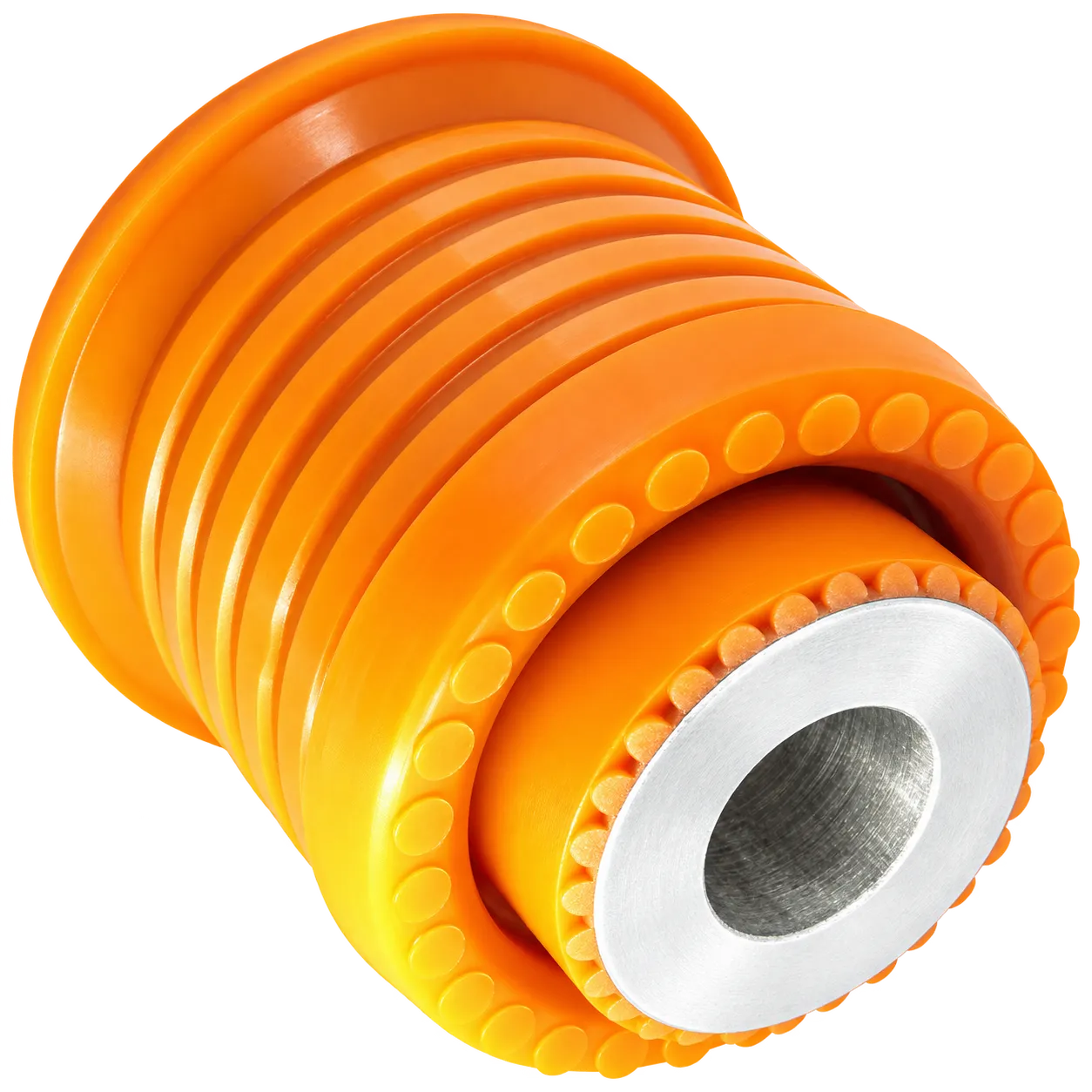
A subframe bushing is the flexible mount that bolts the removable suspension frame to the car body. The subframe carries the control arms and, on many cars, the engine, gearbox and steering rack, so its mounts hold the suspension geometry and isolate the body from vibration at the same time. PolyPro casts these parts from polyurethane in its own moulds, checks the dimensions and ships directly, by the piece or in batches. The full range sits in the catalog.
The subframe is a frame under the body that carries the front or rear suspension arms and, on many models, the powertrain and the steering rack. It is connected to the body at several points through flexible mounts. Each mount consists of a metal sleeve, an elastic element and an inner tube that takes the mounting bolt.
The loads are not uniform: when pulling away and braking the subframe tries to shift lengthwise, in corners it moves sideways, and the engine feeds vibration in continuously. The elastic element therefore works in compression and shear at once. When it sags or tears, the subframe moves by several millimetres, the arm pivot points move with it, and the suspension geometry follows the frame rather than the body.
The most common complaint is a dull knock or a shunt when pulling away and when changing between reverse and drive. That is the subframe shifting in worn mounts and settling back. Vibration and vague steering follow later.
Check from underneath: one person selects a gear with the brake held while the other watches whether the subframe moves relative to the body. Visible movement or torn elastic material means replacement. Inspect the bolts and seats separately: stretched bolts are replaced with the bushings.
Factory subframe mounts are moulded in rubber, sometimes hydraulically filled. They damp engine vibration well but they age: the rubber hardens with heat and oil, cracks and separates from the sleeve, and a fluid-filled mount eventually leaks. A few millimetres of sag is enough to move the arm pivot points and pull the toe settings out.
Polyurethane does not crack from ozone or road salt, resists tearing better and returns to its original height after load. The subframe stays where it belongs when pulling away and braking, the knocking disappears and the geometry holds far longer. The trade-off is that more of the powertrain vibration reaches the body, especially on harder grades. That is why each item has its own Shore hardness on the product page, matched to the type of car.
Subframe bushings differ even on one car: front and rear mounting points often vary in size and hardness. Select them for each seat separately rather than ordering a set by eye.
Three figures are needed: the outer diameter of the sleeve or of the seat bore, the inner diameter for the bolt or crush tube, and the height of the mount. Take the measurements from the seat in the subframe and from the mounting bolt, because a worn part gives a false reading. Measure height across the metal part, not across the elastic element. Check the bore itself as well: if it is elongated or machined out, an oversize part is needed, otherwise the new mount will sit with play. Record the figures for each point separately and label them: front and rear mounts look alike and are easy to mix up on reassembly.
Front and rear subframe bushings carry different loads, so the parts differ too. Front mounts are usually more compact, rear ones are taller, often with a flange or a wide seating face. You will find versions with an outer sleeve for a press fit, flanged versions that seat against the frame face, sleeveless ones, and designs with an inner plate that give deliberately asymmetric stiffness. Identify the type from the old part and the seat: a subframe often uses two different mounts on each side, differing in height and in the direction of the working load.
Shore hardness is chosen from how the car is used. On a city car whose engine sits on the subframe, a softer grade is closer to the factory level of vibration filtering and keeps the cabin quiet. For a loaded vehicle, rough roads or active driving a harder grade is used: the subframe moves less and the steering answers more precisely. The Shore value for each item is given on its product page; there is no single figure for all cars, since it depends on the mass carried and the mounting layout. Left and right sides must get the same hardness, otherwise the frame works at an angle.
Subframe mounts wear as a group, so replacing just one rarely makes sense: a fresh part next to a sagged one pulls the frame out of line again. Ready-made combinations for the assembly are grouped in the bushing kits section. A kit also pays off once the subframe is already out: every point is accessible, and stripping it down a second time costs more than the parts themselves. If the size you need is missing, or the seat has been bored out, the part is produced to a drawing, a sample or the worn part from a single piece — the terms are set out under custom-made parts.
PolyPro is a manufacturer: own moulds, in-house casting, dimensional control on every batch and direct sales with no intermediaries. That keeps the geometry consistent from batch to batch and the price free of extra margins. Retail is by the piece, so you can order a single mount for one seat instead of the whole assembly. Non-standard parts are made to a drawing, a sample or a worn part, from one piece. The products carry a warranty, with delivery across Ukraine and international shipping.
Workshops, parts shops, fleets and resellers are served on wholesale terms and through the partner program: bonuses for turnover or single-order volume, access to prices and stock levels, and shipping under the partner's own brand.
On some cars it is done one point at a time: the subframe is supported on a stand, one bolt is released and that mount is worked on while the others stay in place. This keeps the frame in its original position. If the seats are corroded or the mounts differ in design, it is easier to drop the subframe completely, otherwise pressing the parts in squarely is difficult.
Yes. The control arms are attached to the subframe, so any shift of the frame relative to the body changes the wheel angles. After the mounts are replaced the subframe is torqued down in its correct position, using the alignment marks or locating holes, and camber and toe are then checked on a rig. Skipping this leads to pulling and rapid tyre wear.
If the powertrain sits on the subframe, these mounts absorb part of its vibration. Polyurethane is stiffer than aged rubber, so the hum at idle can become more audible. That is the expected trade-off for stable geometry. For a city car choose a softer Shore hardness — the value is stated on the product page of each item.
Yes, and it is common practice, because the mounting points are loaded differently. A softer grade is often kept at the front points for vibration filtering, while a harder grade goes to the rear ones so the frame does not move under acceleration and braking. The key rule is symmetry: left and right sides must be identical.
Inspect the bolts every time the frame comes down. Stretched bolts, damaged threads or heavy corrosion mean replacement: these fasteners run at high torque and hold the frame in position. Clean the threads in the body and the seating faces so the new mount rests on its full area rather than on rust or a raised edge.
A subframe knock is dull and low and appears exactly when the load direction changes: pulling away, braking, shifting out of reverse. Stabiliser links and ball joints rattle in a lighter tone and mostly over bumps. Confirm it from underneath: an assistant rocks the body or selects a gear against the brake while the frame should stay still.
Yes, retail is by the piece: one mount, a pair for an axle, or a full set for the assembly. Non-standard sizes and oversize parts for a machined seat are made to a drawing, a sample or the worn part, from one piece. Sales go directly from production, with a warranty on the products, delivery across Ukraine and international shipping.
Workshops, parts shops, fleets and resellers work on wholesale terms and through the partner program: bonuses for turnover or single-order volume, access to current prices and stock, and shipping under the partner's brand. Items and volumes are agreed around your repair flow.