 Polyurethane front stabilizer bushing Toyota Yaris 2010-2020
SKU: PP203258
$0Log in as dealerPolyurethane front stabilizer bushing Toyota Yaris 2010-2020
Out of stock1 EUR = 51,06 грн1 USD = 43,12 грн

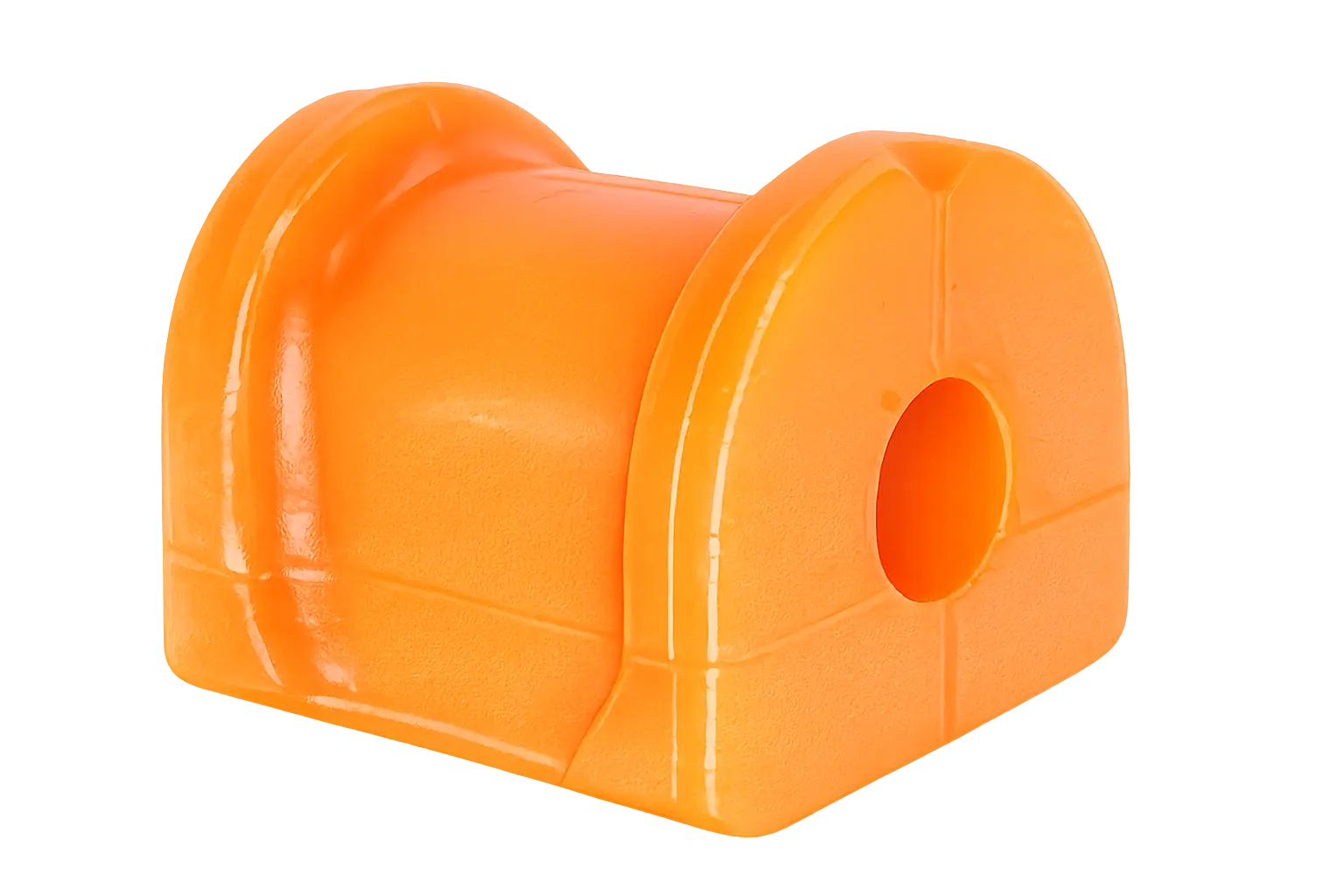
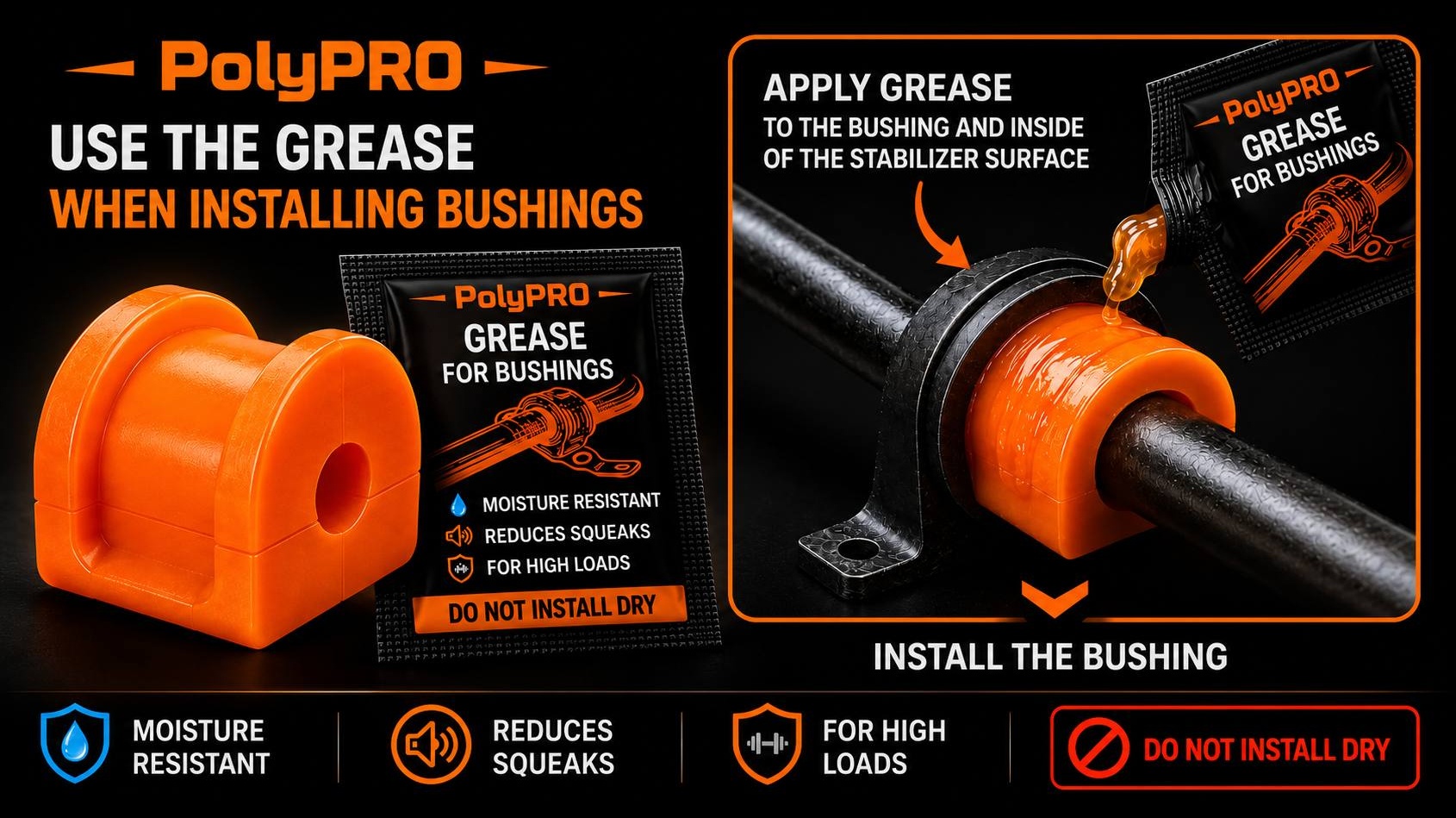
A stabilizer bushing is a rubber-polymer component that secures the anti-roll bar to the body or frame, compensating for bar movement, reducing the transmission of vibrations to the body, and helping to minimize vehicle roll. We offer the opportunity to purchase high-quality components with direct delivery on favorable partnership terms, allowing your business to provide customers with reliable repair solutions. Choosing this part is a technically sound decision that helps optimize suspension maintenance costs, improve driving comfort, and ensure vehicle safety during daily use.
Stabilizer bushings serve to secure the stabilizer bar, reducing body roll during turns and on uneven roads. They operate under demanding conditions of constant load, so the material and manufacturing quality are critical to the lifespan of the vehicle’s suspension. This is precisely why car owners are increasingly turning to modern parts with improved wear resistance.
During vehicle operation, bushings come into contact with moisture, dust, and chemicals, which gradually affect their elasticity. Timely replacement of parts helps prevent abnormal noises, reduced handling, and additional stress on other suspension components.
Stabilizer bar bushings are used to reduce vibrations and transfer loads between suspension components. Unlike bushings, stabilizer bar bushings have a more complex design and are often installed in areas subject to high dynamic loads. The choice between these components depends on the design features of a specific vehicle and its operating conditions.
High-quality silent blocks improve ride smoothness and reduce wear on adjacent components. For city cars, they provide comfort, and for vehicles frequently driven on rough roads—additional reliability. That is why it is important to purchase proven parts that meet the manufacturer’s technical requirements. Properly selected stabilizer bushings and stabilizer silent blocks help maintain a balance between comfort and handling, extending the service life of the entire suspension system.
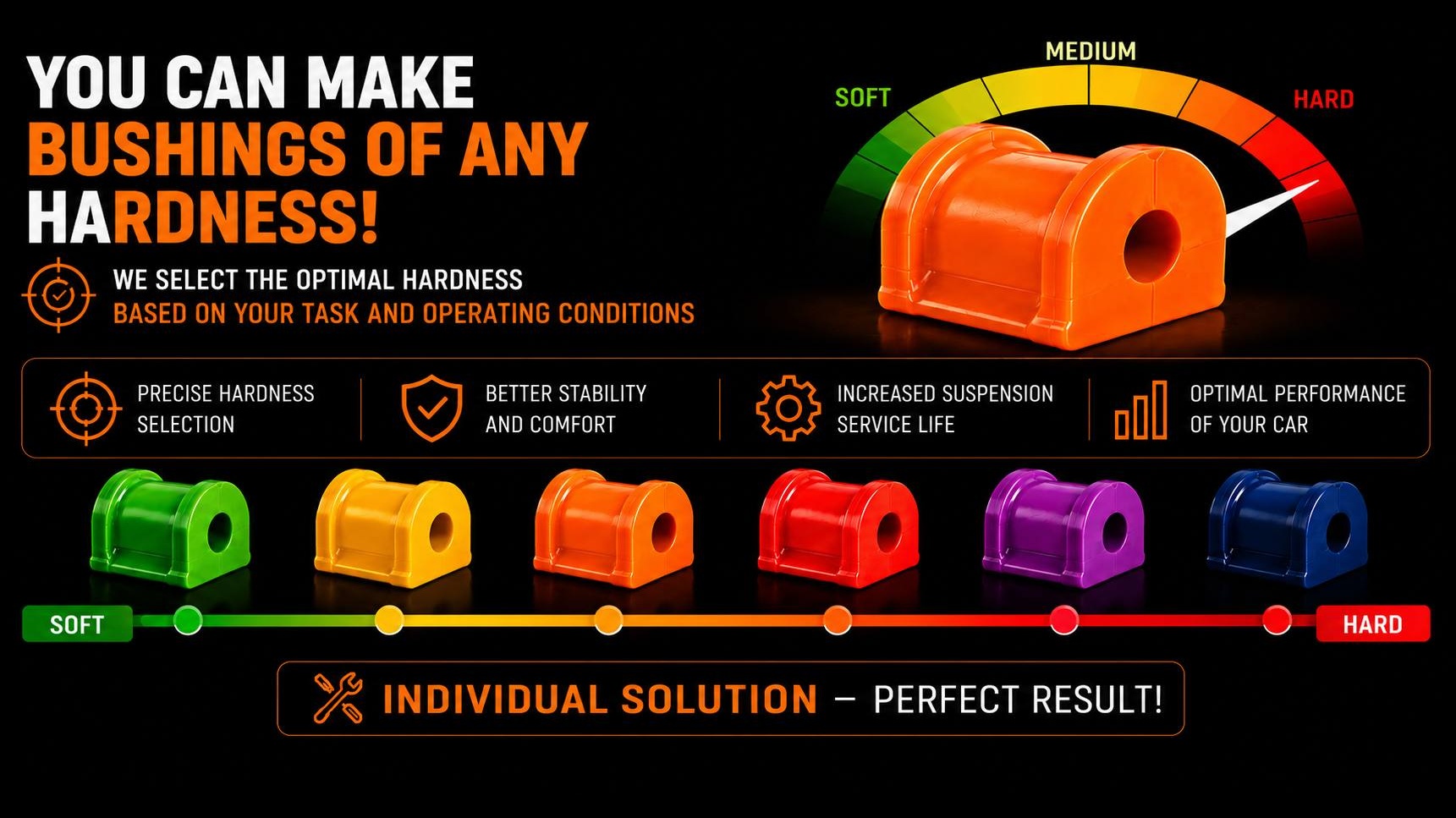
Polyurethane is a modern synthetic material that has become indispensable in the production of silent blocks and other replacement parts available for purchase, thanks to its combination of strength and elasticity. Polyurethane stabilizer bushings are resistant to mechanical stress, temperature fluctuations, and exposure to aggressive environments: chemicals, lubricants, and moisture. This is a critical factor for the longevity of the suspension system under daily driving conditions on roads with poor pavement.
Key advantages of polyurethane parts include:
Unlike traditional rubber parts, which are prone to aging and cracking under the influence of UV rays or chemicals, polyurethane retains its original shape and performance properties for much longer. This directly improves the cost-effectiveness of vehicle maintenance and makes it economically sensible to purchase parts at a lower cost while ensuring stable suspension performance over the long term. Maintaining the stiffness of the silent block and bushing ensures precise stabilizer bar retention, which minimizes play and positively impacts the service life of all related components.