

SKU: PP100705
Polyurethane decor for towbar, Eggs for towbar
In stock15 pcs.$34.79Log in as dealer

Polyurethane decor for towbar, Eggs for towbar
In stock15 pcs.
Polyurethane decor for towbar, Eggs for towbar
In stock15 pcs.
Polyurethane decor for towbar, Eggs for towbar
In stock15 pcs.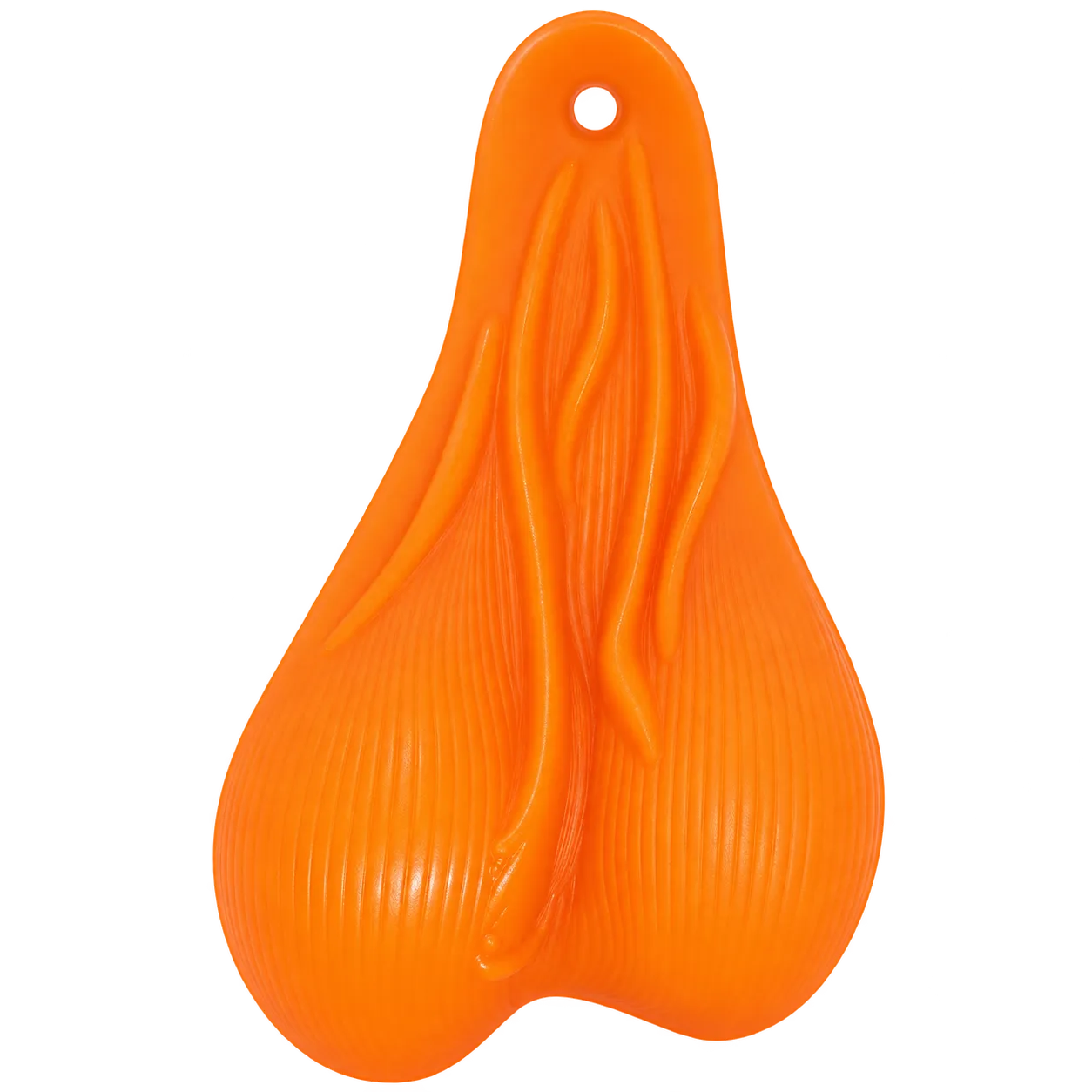
A hitch shock absorber is a polyurethane insert that wraps around the tow ball and takes up the clearance between the ball and the trailer coupler. With that gap closed, the jerk on pulling away and on braking disappears, the coupling stops knocking, and load is spread more evenly across the towbar and the rear of the body. PolyPro moulds these dampers in its own tooling for car trailers, caravans and commercial equipment. The rest of the range is in the catalogue.
The damper is a polyurethane insert that sits around the ball of the coupling. A trailer coupler is built with a working clearance over the ball: without it the coupling would not drop on at all and would bind in turns. That same clearance produces the familiar thump every time the towing force changes sign — pulling away, braking, shifting gear or crossing a bump.
The damper fills that clearance with an elastic material. The ball is held against the face of the insert, the free movement disappears, and a change in force is passed on smoothly instead of as an impact. As a side effect it reduces wear on the ball and on the coupler itself, cuts shock loading on the towbar bracket and the rear of the body, and makes the rig calmer in traffic and when reversing.
The part works in compression and abrasion, so its life is finite and depends on towing mileage, trailer weight and road surface. Condition is checked every time the trailer is hitched: the insert comes off the ball and the working face is inspected.
A worn insert stops damping and starts acting as an abrasive, so it is replaced along with a check of the towbar bolts.
A rubber damper is softer and simpler to produce, but it soaks up grease from the coupling, swells in contact with road salt and goes stiff in the cold. After a couple of seasons it flattens, and the clearance between ball and coupler comes back together with the knock.
Polyurethane holds its shape under constant compression and stands up better to abrasion, oils and temperature swings, so the working profile of the insert survives much longer. At the same time the material stays elastic: it does not pass the impact through rigidly the way a plastic spacer would, it absorbs it. For trailers used all year round and towed fully loaded, that is the main argument for polyurethane. The Shore hardness is listed on every product page.
Selection is driven by ball diameter, the geometry of the coupling and the duty the rig sees. Dimensions are taken from the ball and the coupler themselves, not from the vehicle name.
The governing dimensions are the diameter of the tow ball and the height of the working part of the insert. Measure the ball with a caliper in two planes: on high-mileage equipment it is often worn and slightly oval, so the smallest actual reading is taken as the reference. The second thing to check is the shape of the neck under the ball and whether an electrical socket or a breakaway cable sits right next to it, since both limit how much room the part has. If no stock item fits, we make custom-made items from a drawing, a sample or a worn part.
Hardness is matched to trailer weight. For a light single-axle trailer a softer grade is the sensible choice: it takes up the clearance completely and gives a smooth pull-away without making the coupling hard to close. For heavy trailers, caravans and commercial equipment a firmer insert is the logical option — it flattens less under constant load and keeps its working profile for longer. A mid-range grade suits general-purpose trailers that run empty for part of the season. The exact Shore value for each item is stated on its product page, so grades can be compared directly in the catalogue.
Occasional weekend towing and daily work with a trailer wear the part at very different rates. For rare trips a standard insert is enough; for constant duty a denser grade is worth taking, as it survives more compression cycles. Road surface counts separately: gravel, sand and road salt scour the working face far faster than asphalt does. Load matters in the same way: even a light trailer taken to its limit puts more work through the coupling than an empty one. If the vehicle tows every day, keep a spare on the shelf; parts for heavy vehicles are grouped under truck spare parts.
PolyPro is a manufacturer: our own tooling, our own casting shop, dimensional inspection of finished parts and sales without intermediaries. That means the part comes to you straight from the shop floor rather than through a chain of resellers. Retail orders go by the piece, so a single damper or a spare alongside it is no problem; non-standard geometry is produced from a drawing, a sample or a worn part, again from one piece. Our products carry a warranty and we ship internationally.
On the wholesale side we supply repair shops, parts retailers, fleets and resellers. The partner programme gives bonuses for turnover or for the size of a single order, access to prices and stock levels, and shipment under the partner's own brand.
A coupler drops onto the ball with a working clearance, otherwise it could not be fitted and would bind in turns. That clearance produces an impact every time the towing force changes direction: pulling away, braking and shifting gear. An elastic insert fills the gap, so the change in force is passed on smoothly and the knock in the coupling stops.
Selection goes by ball diameter and by the shape of the neck beneath it, not by the make of the car or the trailer. An electrical socket, a breakaway cable or a non-standard bracket sitting hard against the ball can get in the way. That is why the ball is measured before ordering and the free space around it is assessed separately.
The insert is pushed onto a clean ball until it seats over the whole working face, then the coupler is dropped over the top. The ball has to be degreased and free of scoring: leftover old grease accelerates wear of the polyurethane. Once hitched, check that the coupler closes normally and that the latch reaches its working position.
The polyurethane-on-steel pairing is designed to run without heavy greasing: an excess layer collects sand and then works as an abrasive. Keeping the ball clean and dry is enough. If the coupling design calls for lubrication, apply the minimum and clear away any dirt that sticks to the working face of the insert.
Service life depends on trailer weight, annual towing mileage and road conditions. The part works in compression and abrasion, so daily duty with a fully loaded trailer wears it noticeably faster than seasonal trips do. Judge it by inspection rather than by the calendar: returning play and knocking are the signal to replace it.
It removes the knock that comes from clearance between the ball and the trailer coupler. If the source is elsewhere — a damaged towbar bracket, loose fixings into the body, play inside the coupler itself or in the trailer suspension — the damper will not cure it. So the whole assembly is inspected: mounts, coupler, ball and the insert.
Yes, retail goes by the piece: take one part, or one plus a spare. Non-standard geometry for a particular coupling is produced from a drawing, a sample or the worn insert, again from a single piece. Our products carry a warranty and we ship internationally. The Shore hardness of each item is stated on its product page.
Wholesale supply goes to parts retailers, repair shops, fleets and resellers. The partner programme opens access to prices and stock levels, bonuses for turnover or for the size of a single order, and shipment under the partner's own brand. Volume and range are agreed case by case.