SKU: PP104203
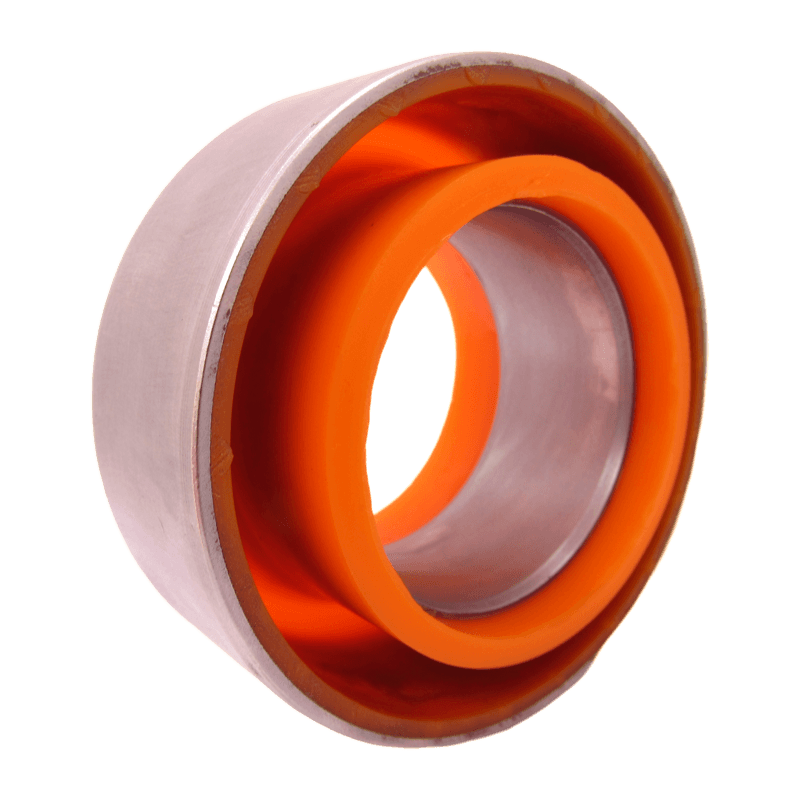
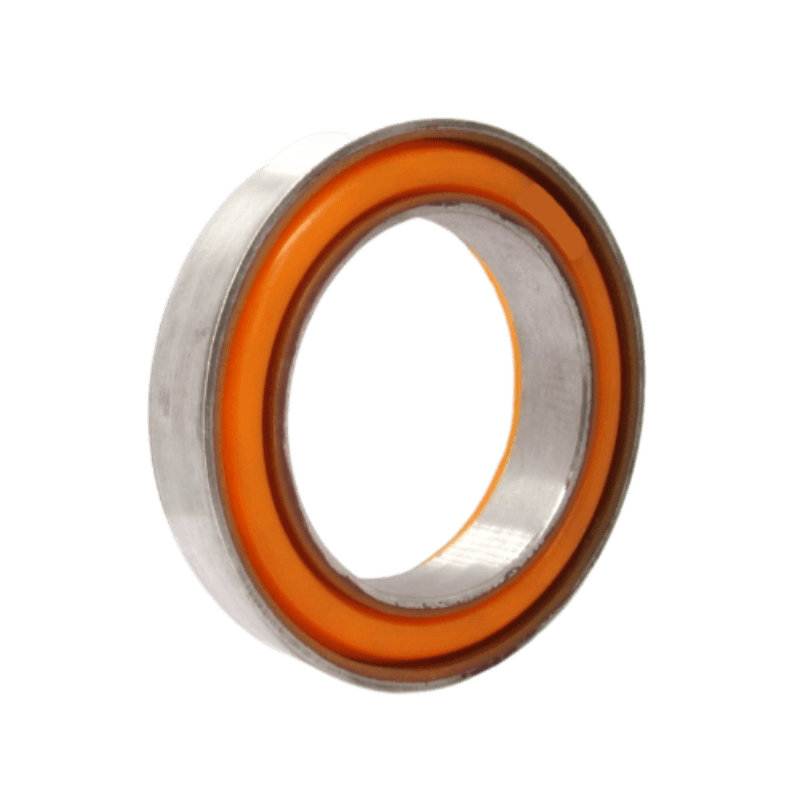
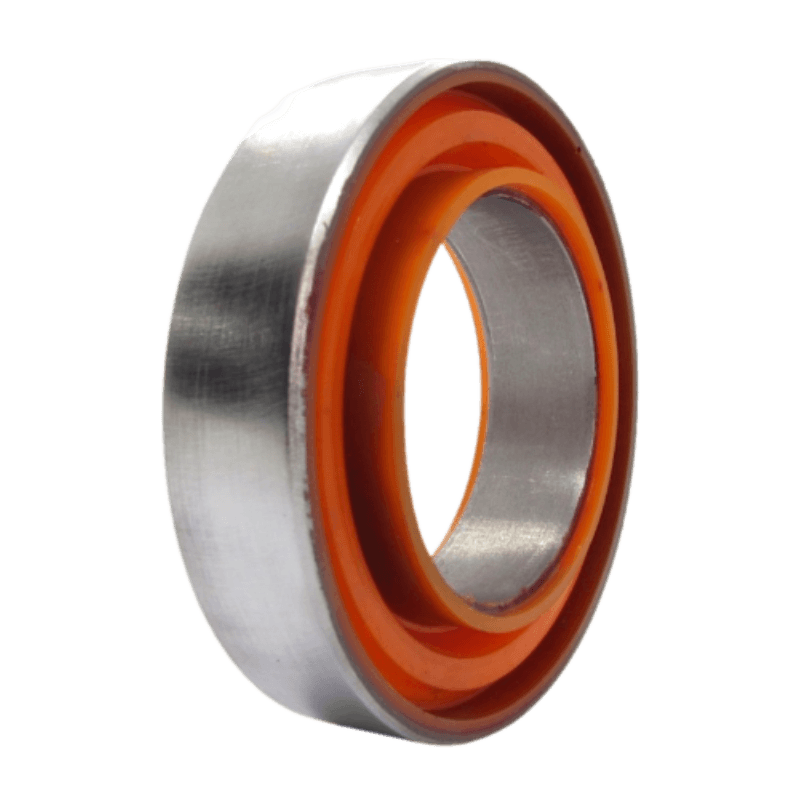
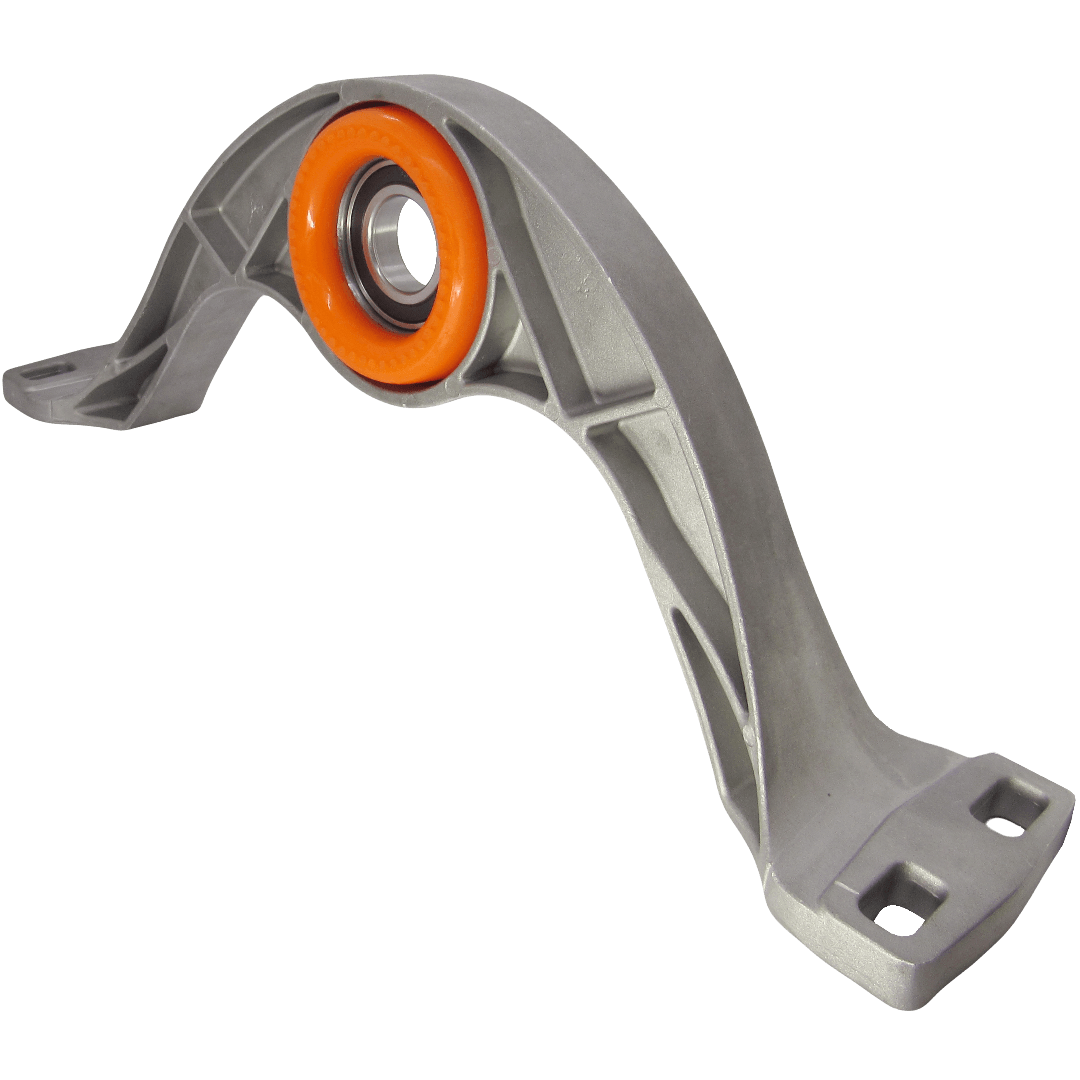
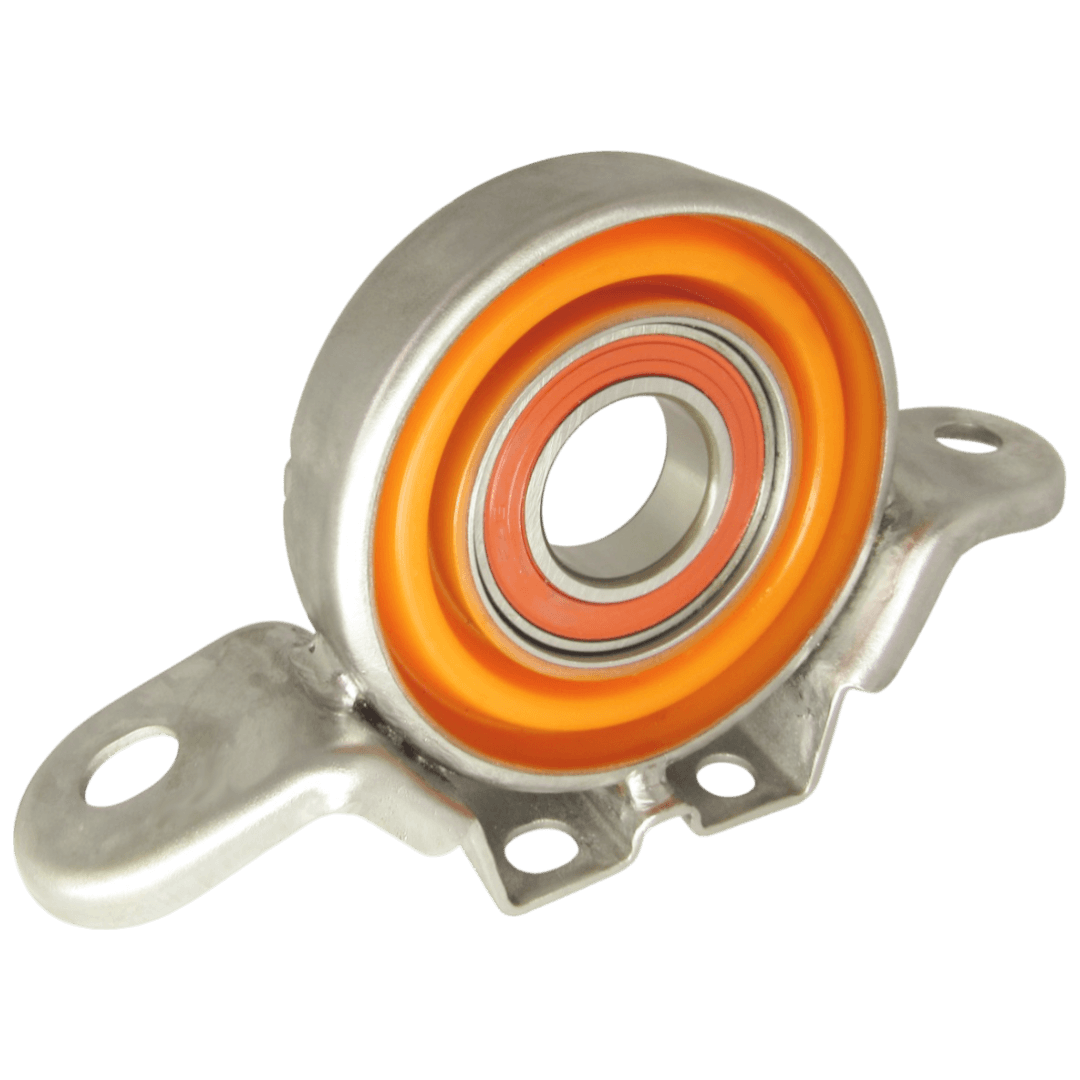
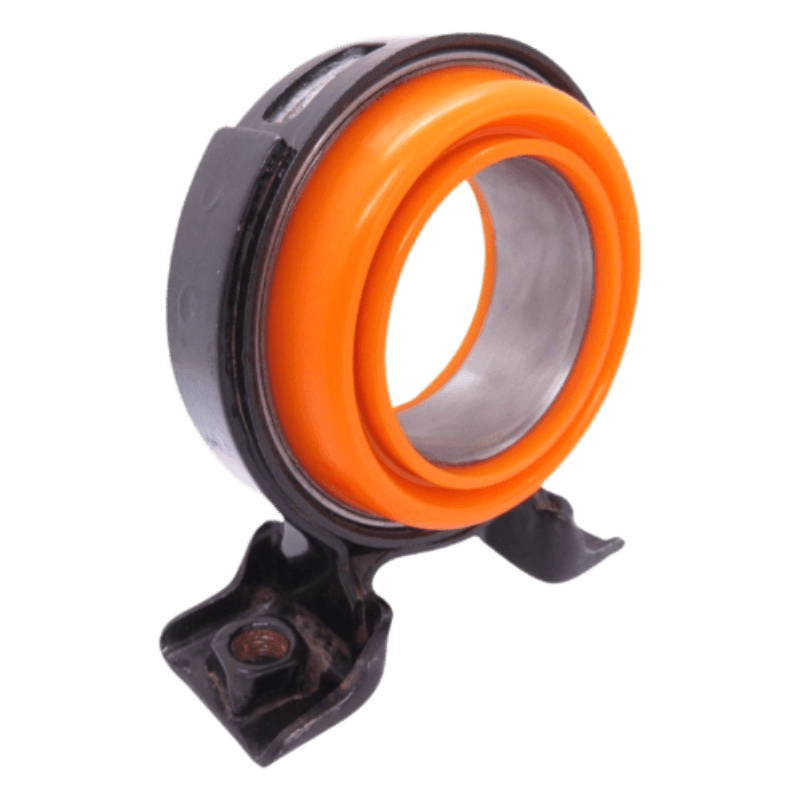
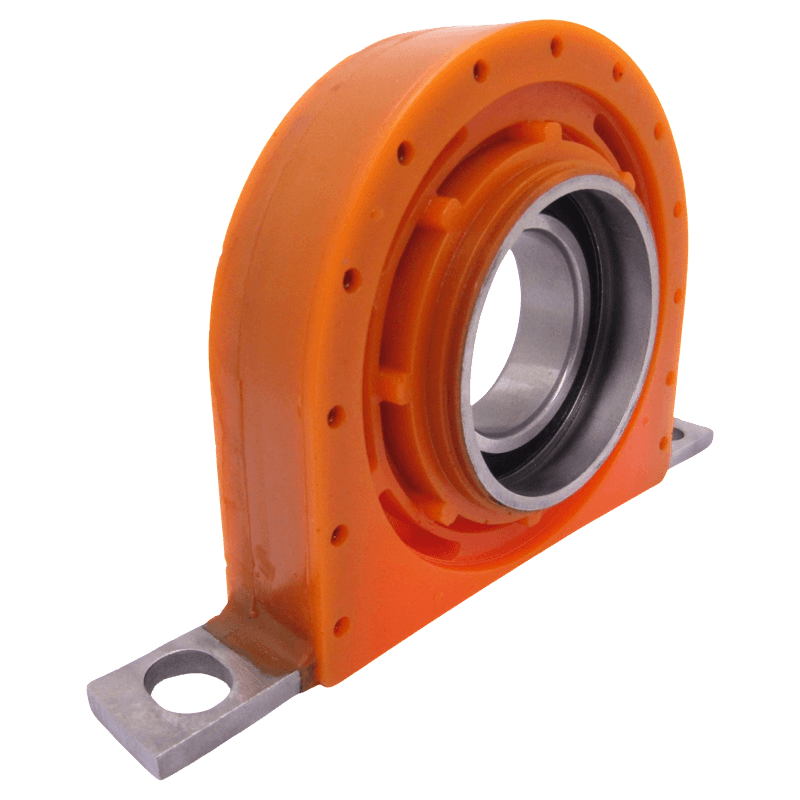
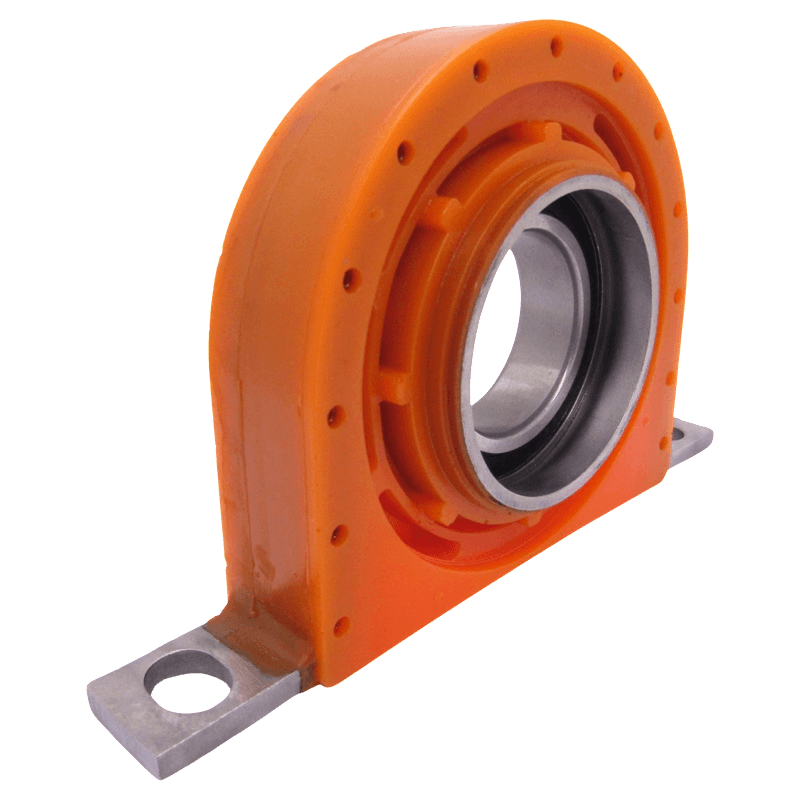
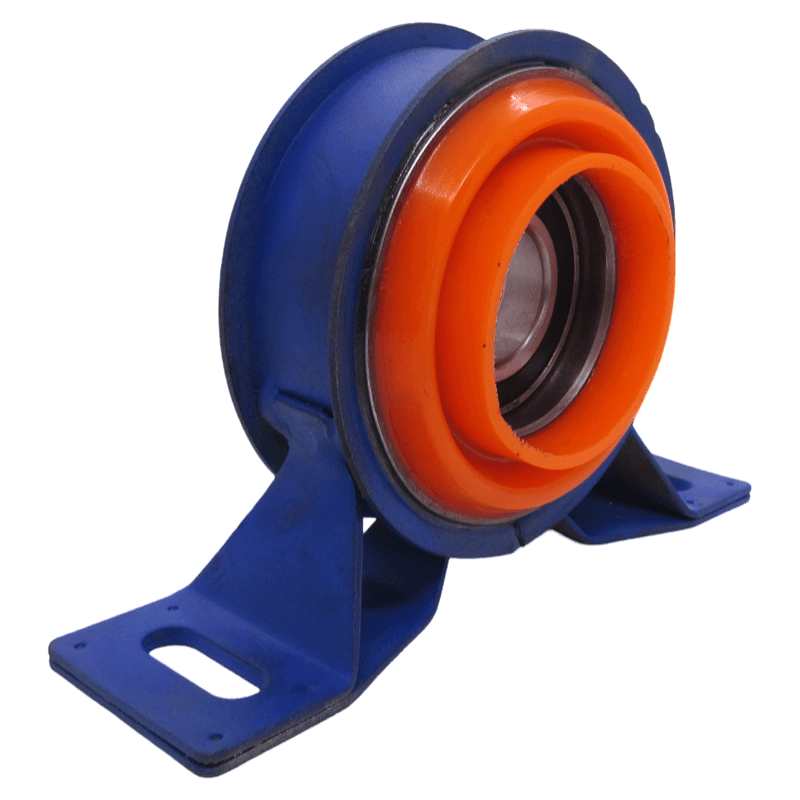
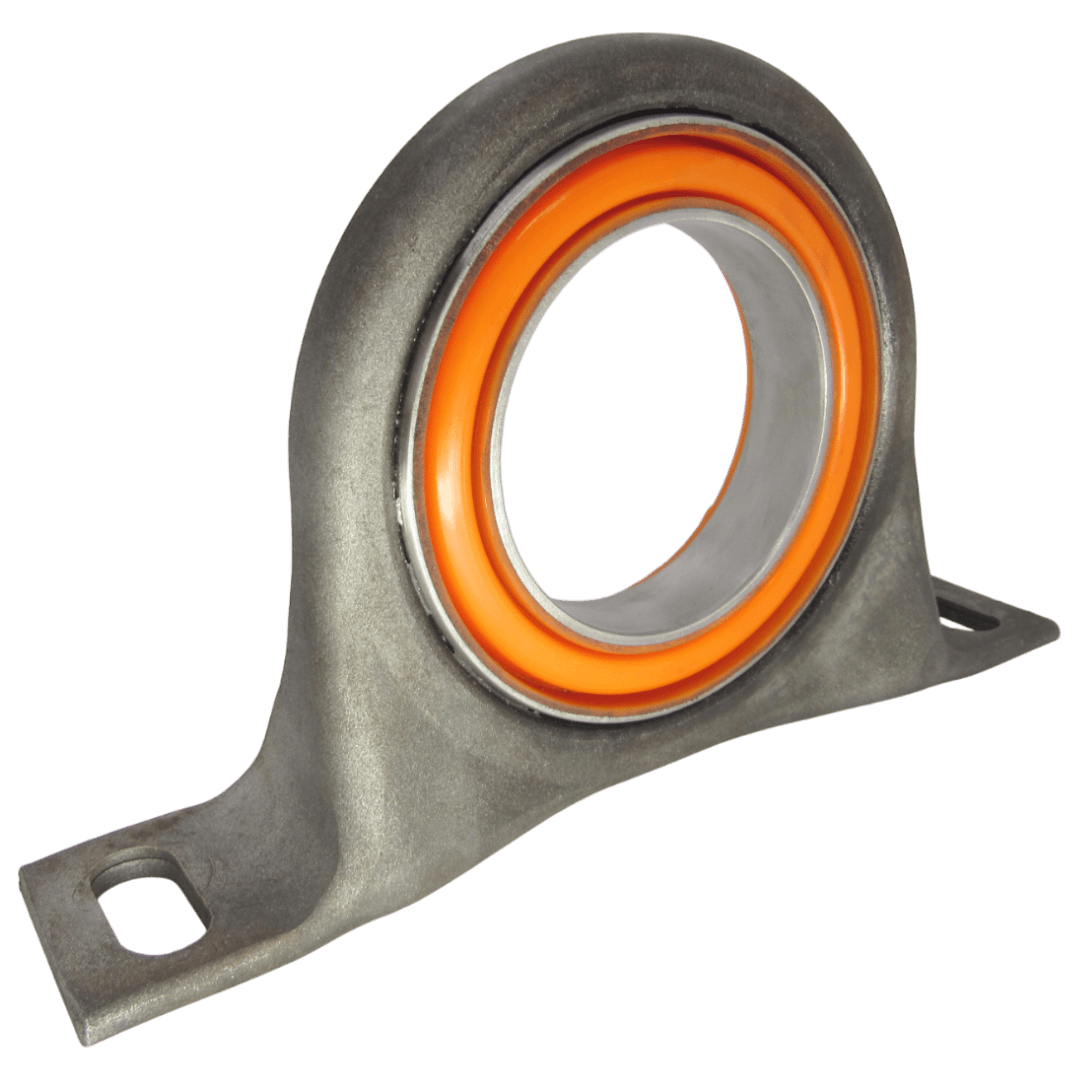
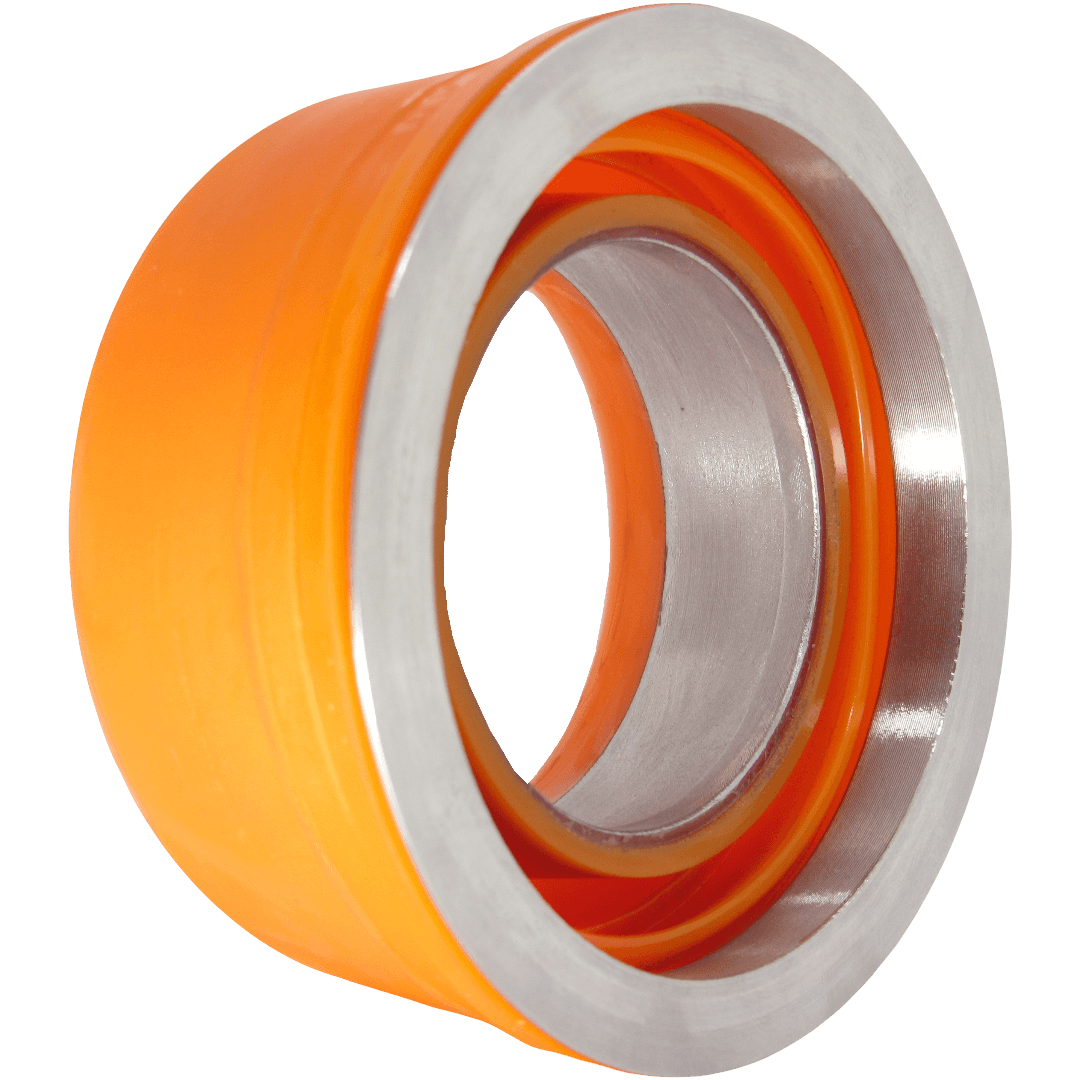
Polyurethane outboard bearing for driveshaft Audi Q3 2019- REPLACEABLE BUSHING
In stock15 pcs.$93.69Log in as dealer
1 EUR = 51,06 грн1 USD = 43,12 грн

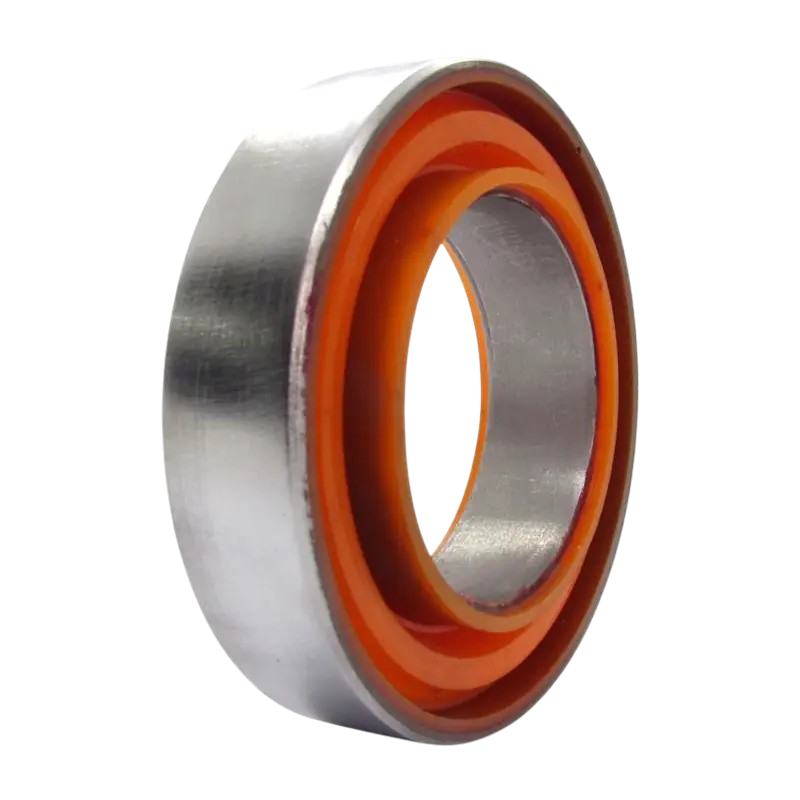
A driveshaft center support bearing — also called a driveshaft carrier bearing or drive shaft support — is the mid-mount that holds a two-piece driveshaft at the joint. It damps runout and keeps driveline vibration out of the floor. PolyPro molds polyurethane center support bearing mounts for cars, vans, pickups and heavy trucks. The full range is in our polyurethane parts catalog.
On rear- and all-wheel-drive vehicles the driveshaft is rarely one piece: a single long shaft hits a resonance at highway speed and whips. Splitting it in two and hanging the joint from a crossmember solves that — and the hanger is the center support bearing.
The assembly has two parts. A sealed ball bearing rides on the shaft and takes the rotation; it presses into an elastic cushion held by a steel bracket bolted to the chassis. The cushion does the real work — absorbing the angular and axial travel of the shaft, keeping the bearing square and isolating driveline vibration from the body.
It never works alone: a sagging transmission mount changes the driveline angle, and a misaligned carrier bearing wears out in a fraction of its normal life.
Failure is gradual, so the noise gets blamed on tires or the differential. Check it on a lift. Grab the shaft next to the bracket and push it up, down and sideways — a healthy mount flexes back without a clunk or measurable play.
Noise and vibration rarely have a single source. Inspect the U-joints and the driveshaft flex disc at the same time — same shaft, same vibration, and the driveshaft comes out only once.
The rubber cushion lives in the worst spot on the vehicle: exhaust heat alongside it, salt and grit from below, gearbox oil from above. Add the torsional shock of every launch and it delaminates, tears away from the bracket and lets the bearing walk with the shaft. Misalignment then kills the bearing, and the runout reaches the U-joints and slip yoke.
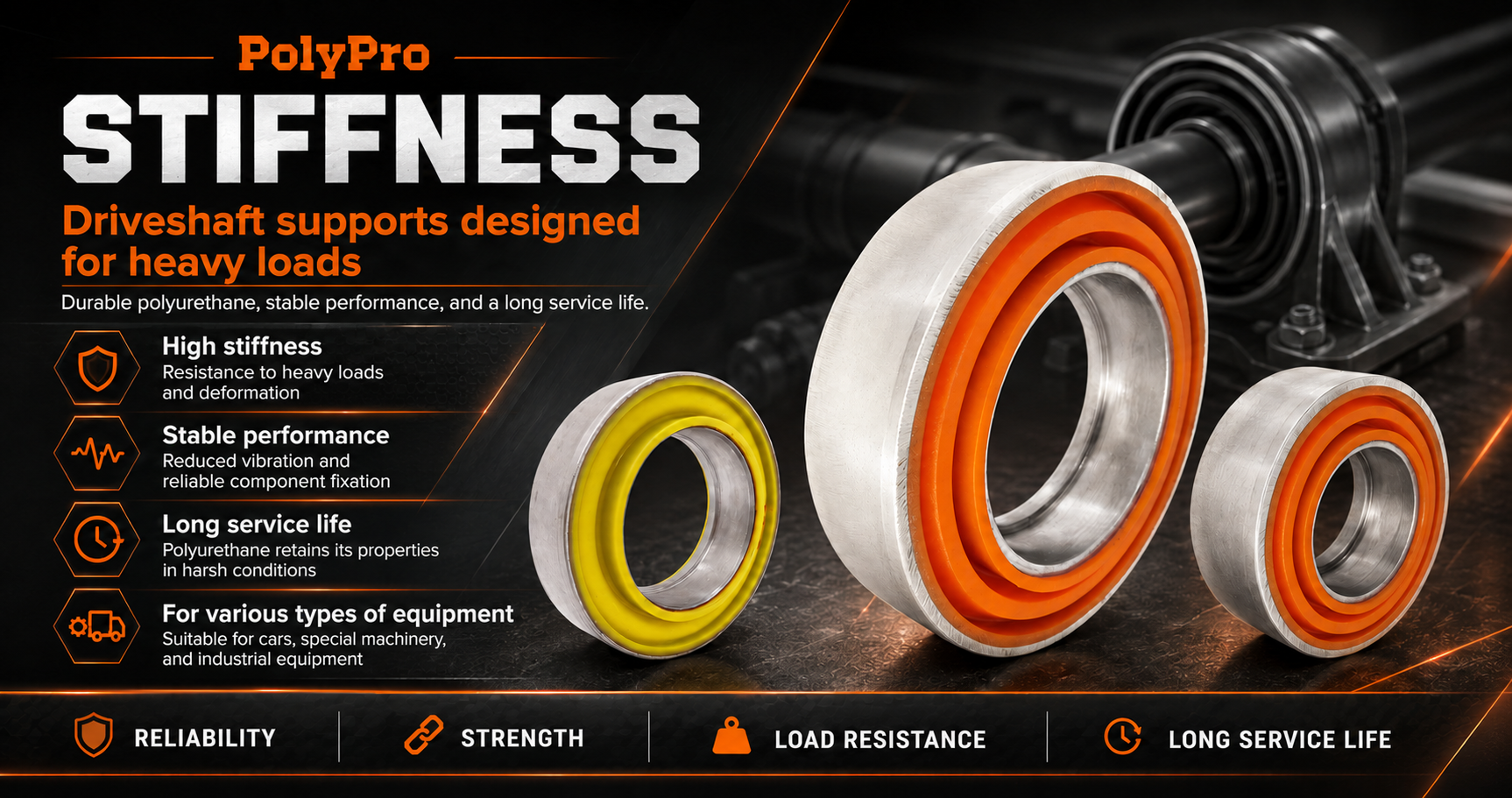
Polyurethane wins on three counts. It works as one solid elastic body, so it does not delaminate or separate from the bracket. It shrugs off oil, road chemicals and exhaust heat, and stays flexible in the cold. And it keeps the bearing square to the shaft under load, so both the mount and the bearing last longer. Typical service life runs 100,000 to 150,000 km, three to five times a rubber part.
The trade-off is a slightly firmer link to the body: barely noticeable in standard durometer on a passenger car, a faint vibration signature in the firm grade on a loaded van — but the driveshaft stops whipping.
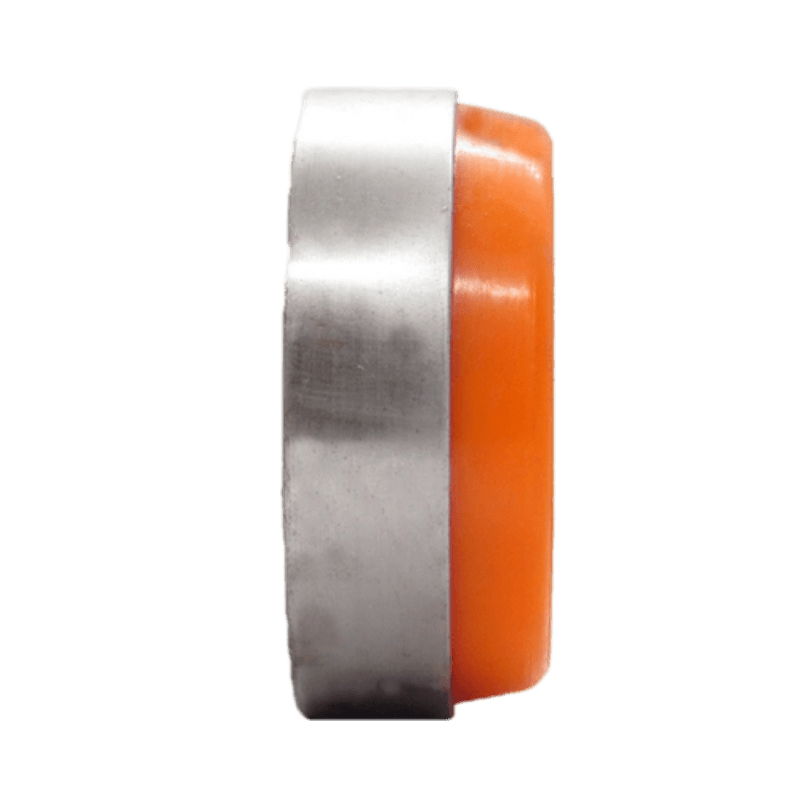
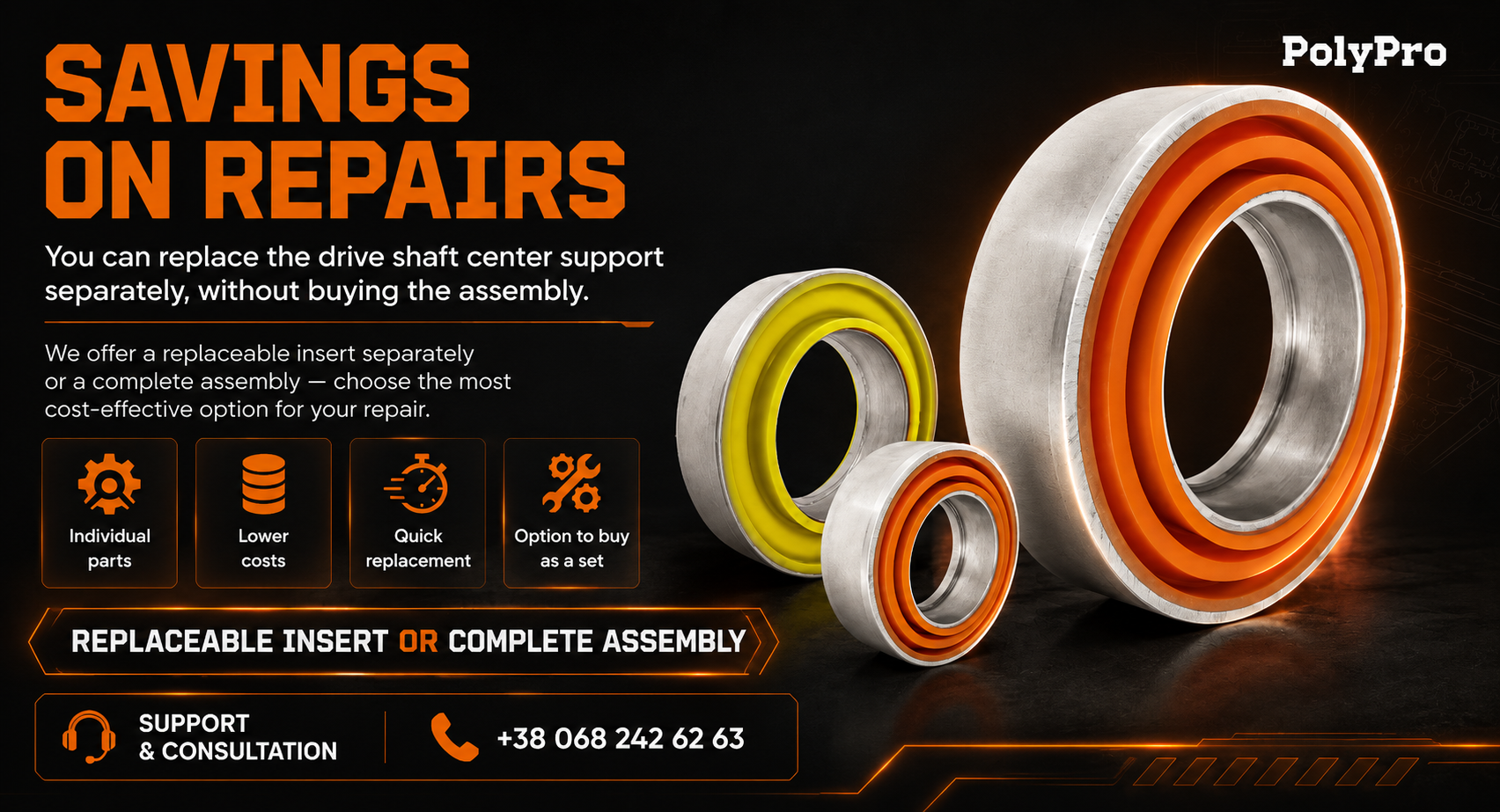
The polyurethane element is specified by three dimensions: cushion outer diameter, inner diameter for the bearing's outer race, and width. The bearing is standard and ordered by its own number, so replacing the elastic element alone is usually enough.
Sizes cover cars and crossovers, body-on-frame SUVs and pickups, vans and commercial chassis, and medium- and heavy-duty trucks. High-load parts are under truck and commercial vehicle parts. Not listed? Send photos, the bearing number and three measurements.
Standard durometer suits cars and crossovers on the street: ride quality stays close to rubber, service life does not. The firm grade is for vans, pickups, trucks, towing rigs and rough roads — it locates the shaft tightly and stops it whipping under load.
The firmer the element, the less the shaft moves, but the more driveline vibration reaches the body. Signs of a worn support: vibration that builds with speed, a hum under the floor, shaft play near the bearing. Durometer is listed on every product page.
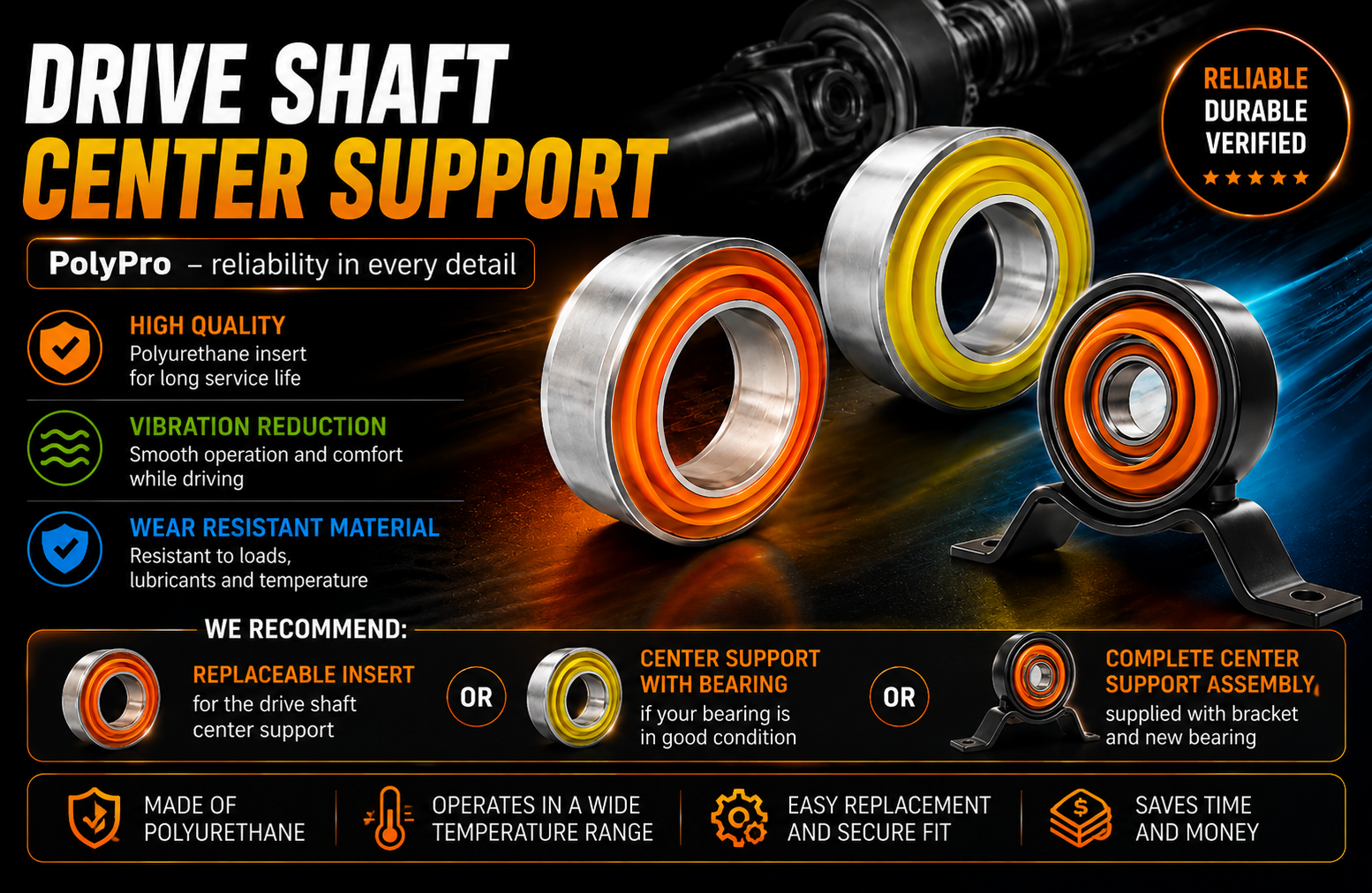
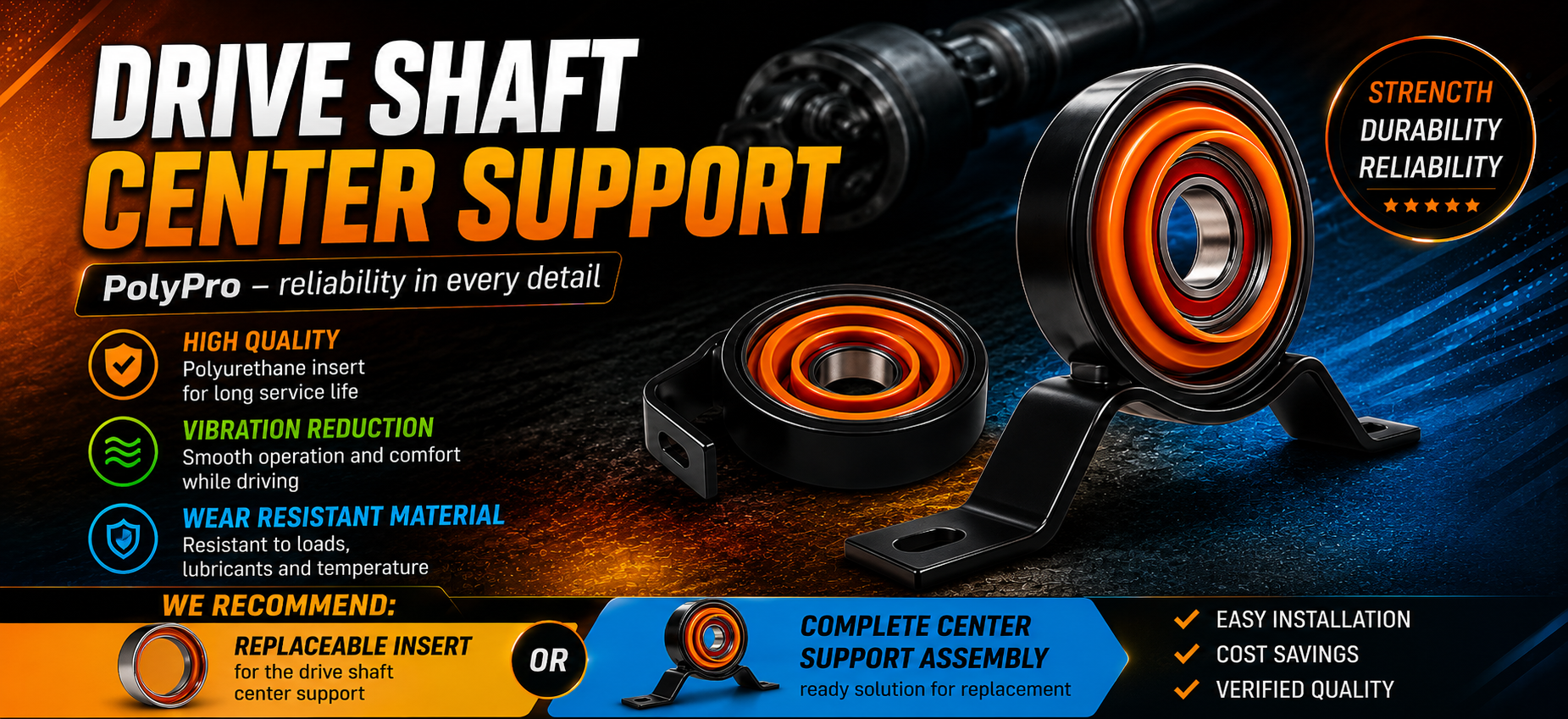
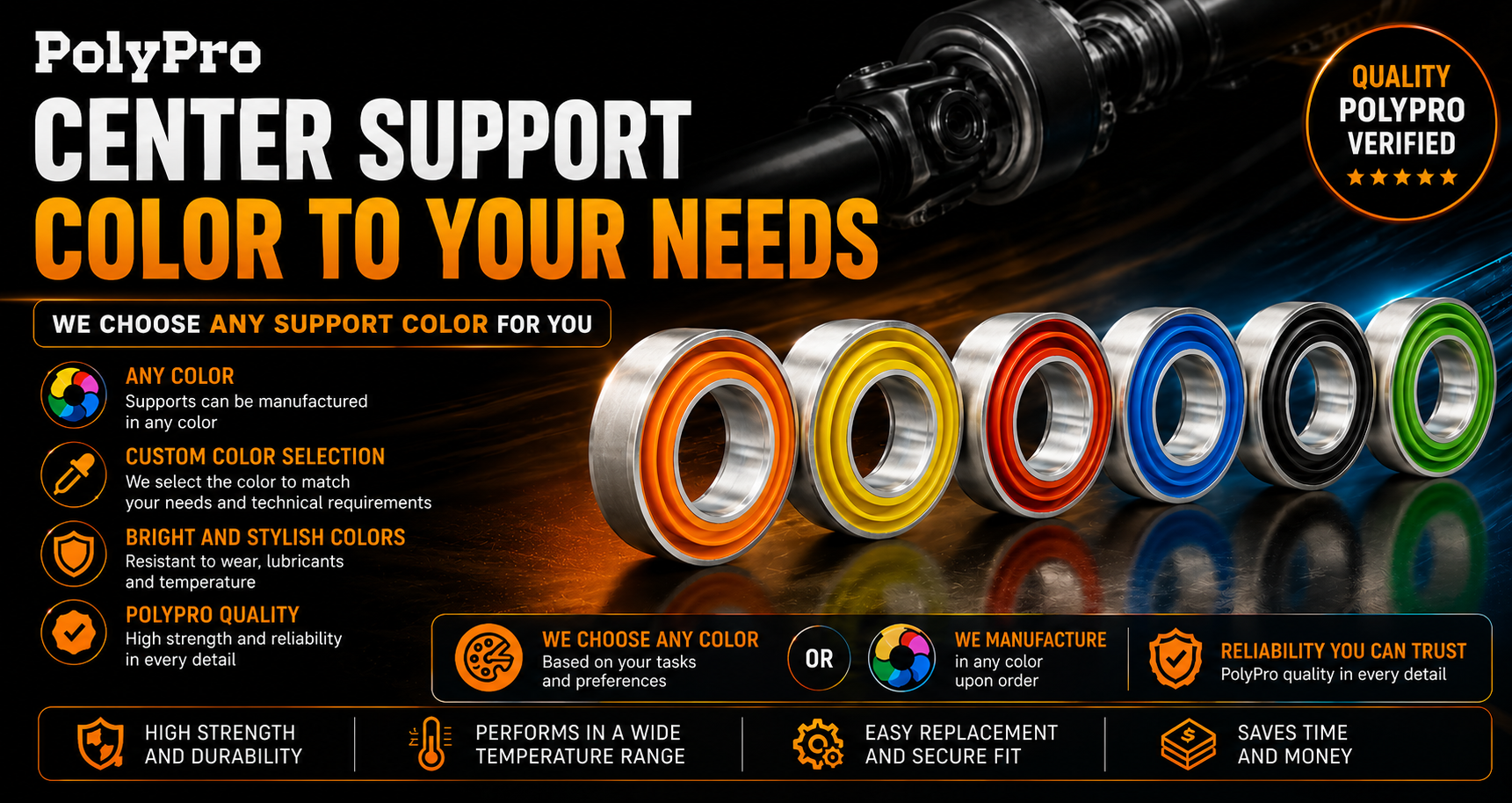
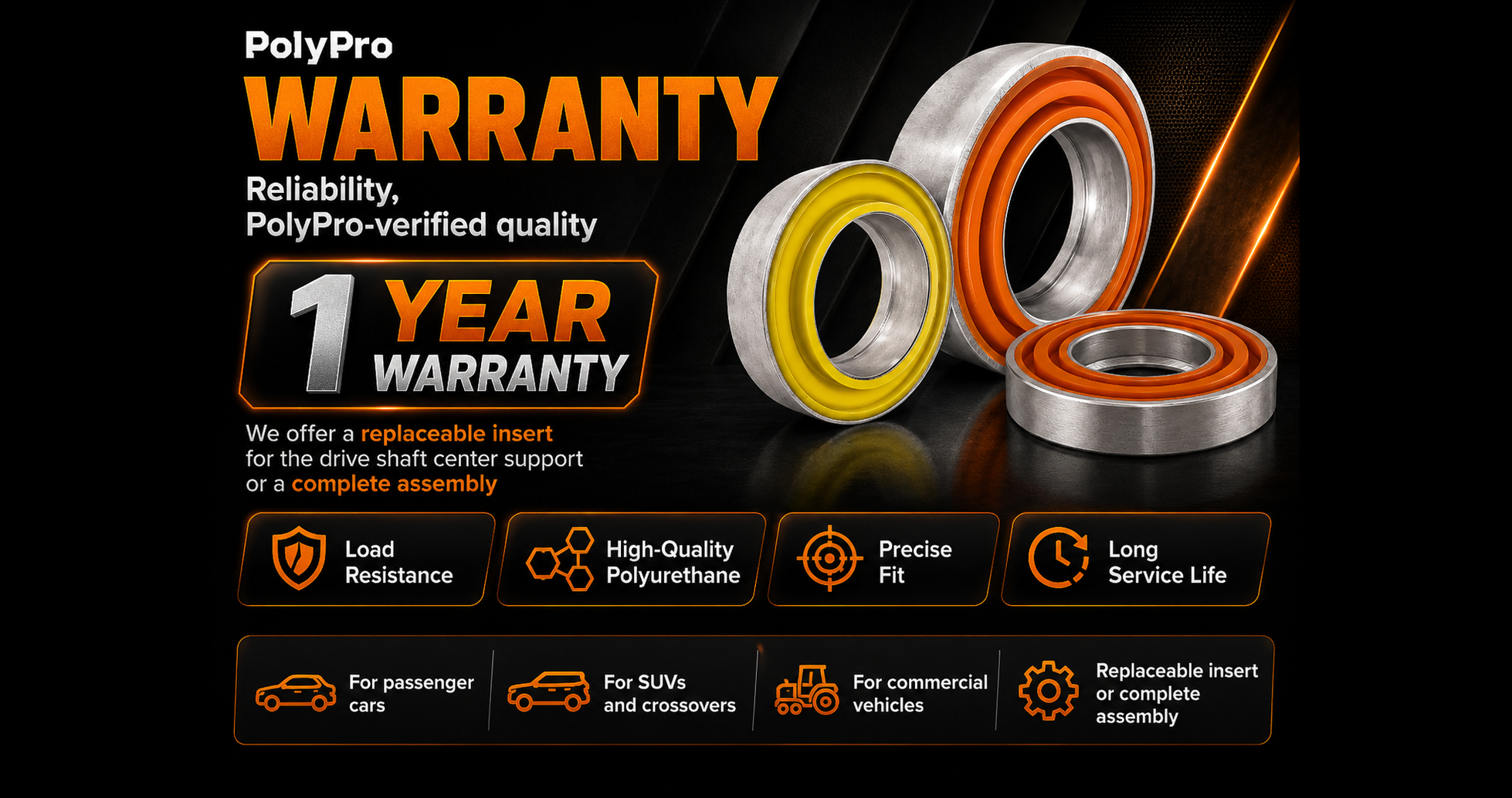
PolyPro is a manufacturer, not a reseller: we cast polyurethane on our own tooling, so we control the material and the geometry of the part. Pricing is manufacturer-direct at both ends — retail from a single piece, wholesale for workshops, parts stores and fleets under our partner program. If the mount for your vehicle is out of production, we pour it from a drawing, a sample or your worn part (custom polyurethane parts). Every part carries a warranty and we ship worldwide. Send photos and dimensions before ordering and we will confirm whether a stock mount fits.
A hum or whine that rises with road speed but ignores gear selection, vibration in the floor and shifter under acceleration, and a dull clunk on take-off. Visually, the rubber cushion cracks and pushes out of the bracket. On a lift, the shaft shows play when levered near the mount.
Put the vehicle on a lift, grab the driveshaft next to the bracket and push it up, down and sideways. Play, a clunk or a gritty feel when you spin the shaft by hand means the assembly is worn out and needs replacing. Then inspect the cushion for cracks, delamination and grease weeping from the bearing.
Yes, provided the bearing itself spins smoothly with no play or noise. In most cases the elastic element fails first — rubber delaminates long before the bearing does. The PolyPro mount presses into the original bracket and works with the stock bearing, ordered by its own number.
Around 100,000 to 150,000 km, roughly three to five times a rubber unit. Polyurethane resists oil, road salt, exhaust heat and freezing temperatures, so it does not crack or delaminate with age. It also keeps the bearing aligned, so the bearing lasts longer too. PolyPro parts are warranted.
Yes — carrier bearing, center support bearing and drive shaft support all describe the same mid-mount on a two-piece driveshaft. Manufacturers use the terms interchangeably. PolyPro supplies the polyurethane cushion for that assembly; the sealed ball bearing inside it is a standard catalog part.
Retail orders start at a single piece, so one mount for the repair at hand is a normal order; a second one for the shelf is just as easy. Custom work follows the same rule — a mount poured from a drawing, a sample or your worn part is made from one piece up, which is what makes rare vehicles workable.
Wholesale is meant for repair shops, parts stores, fleets and resellers. The terms live in our partner program: a bonus tied to turnover or to the volume of one order, access to current prices, stock balances and shipping dates, and the option of shipping parts under the partner's own brand.