

SKU: PP300800
Сайлентблок заднього прямого важеля посередині під амортизатор PP300800
In stock15 pcs.$12.06Log in as dealer

Сайлентблок заднього прямого важеля посередині під амортизатор PP300800
In stock15 pcs.Сайлентблок заднього прямого важеля посередині під амортизатор PP300800
In stock15 pcs.
Polyurethane bushinLevante front shock absorber Maserati Levante 2017-
In stock15 pcs.
Polyurethane bushing front arm outer under shock absorber Acura Tsx 2009-2014 HARDNESS
In stock15 pcs.Polyurethane bushing front arm outer under shock absorber Honda Accord 4 1989-1993 HARDNESS
In stock15 pcs.
Polyurethane bushing front arm outer under shock absorber Honda Accord 5 1993-1997
In stock15 pcs.Polyurethane bushing front arm outer under shock absorber Honda Accord 5 1993-1997 HARDNESS
In stock15 pcs.Polyurethane bushing front arm outer under shock absorber Honda Accord 6 1997-2002
In stock15 pcs.Polyurethane bushing front arm outer under shock absorber Honda Accord 6 1997-2002 HARDNESS
In stock15 pcs.Polyurethane bushing front arm outer under shock absorber Honda Accord 7 2002-2008
In stock15 pcs.Polyurethane bushing front arm outer under shock absorber Honda Accord 7 2002-2008 HARDNESS
In stock15 pcs.Polyurethane bushing front arm outer under shock absorber Honda Ascot 1993-1997
In stock15 pcs.Polyurethane bushing front arm outer under shock absorber Honda Ascot 1993-1997 HARDNESS
In stock15 pcs.Polyurethane bushing front arm outer under shock absorber Honda Avancier 1999-2003
In stock15 pcs.Polyurethane bushing front arm outer under shock absorber Honda Avancier 1999-2003 HARDNESS
In stock15 pcs.Polyurethane bushing front arm outer under shock absorber Honda Civic 1987-1991
In stock15 pcs.Polyurethane bushing front arm outer under shock absorber Honda Civic 1987-1991 HARDNESS
In stock15 pcs.Polyurethane bushing front arm outer under shock absorber Honda Civic 1991-1995
In stock15 pcs.Polyurethane bushing front arm outer under shock absorber Honda Civic 1991-1995 HARDNESS
In stock15 pcs.Polyurethane bushing front arm outer under shock absorber Honda Crosstour 2009-
In stock15 pcs.Polyurethane bushing front arm outer under shock absorber Honda Crosstour 2009- HARDNESS
In stock15 pcs.Polyurethane bushing front arm outer under shock absorber Honda Inspire 1998-2003
In stock15 pcs.Polyurethane bushing front arm outer under shock absorber Honda Inspire 1998-2003 HARDNESS
In stock15 pcs.Polyurethane bushing front arm outer under shock absorber Honda Inspire 2003-2007
In stock15 pcs.Polyurethane bushing front arm outer under shock absorber Honda Inspire 2003-2007 HARDNESS
In stock15 pcs.Polyurethane bushing front arm outer under shock absorber Honda Odyssey 2 1999-2003
In stock15 pcs.Polyurethane bushing front arm outer under shock absorber Honda Odyssey 2 1999-2003 HARDNESS
In stock15 pcs.Polyurethane bushing front arm outer under shock absorber Honda Odyssey 3 2003-2008
In stock15 pcs.Polyurethane bushing front arm outer under shock absorber Honda Odyssey 3 2003-2008 HARDNESS
In stock15 pcs.Polyurethane bushing front arm outer under shock absorber Honda Prelude 1992-1996
In stock15 pcs.Polyurethane bushing front arm outer under shock absorber Honda Prelude 1992-1996 HARDNESS
In stock15 pcs.Polyurethane bushing front arm outer under shock absorber Honda Prelude 1996-2001
In stock15 pcs.Polyurethane bushing front arm outer under shock absorber Honda Prelude 1996-2001 HARDNESS
In stock15 pcs.Polyurethane bushing front arm outer under shock absorber Honda Rafaga 1993-1997
In stock15 pcs.Polyurethane bushing front arm outer under shock absorber Honda Rafaga 1993-1997 HARDNESS
In stock15 pcs.Polyurethane bushing front arm outer under shock absorber Honda Torneo 1997-2002
In stock15 pcs.Polyurethane bushing front arm outer under shock absorber Honda Torneo 1997-2002 HARDNESS
In stock15 pcs.Polyurethane bushing front arm outer under shock absorber Honda Vigor 1989-1995
In stock15 pcs.Polyurethane bushing front arm outer under shock absorber Honda Vigor 1989-1995 HARDNESS
In stock15 pcs.
Polyurethane bushing front arm outer under the shock absorber Honda Legend 2004-2012
In stock15 pcs.
Polyurethane bushing front arm outer under the shock absorber Lexus Gs 2005-2011
In stock15 pcs.Polyurethane bushing front arm outer under the shock absorber Lexus is 2006-2013
In stock15 pcs.Polyurethane bushing front arm outer under the shock absorber Toyota Crown 2003-2008
In stock15 pcs.Polyurethane bushing front arm outer under the shock absorber Toyota Mark X 2004-2009
In stock15 pcs.
Polyurethane bushing front lower arm Mercedes-Benz 164 2006-2012 under shock absorber
In stock15 pcs.Polyurethane bushing front lower arm Mercedes-Benz 251 2006- under shock absorber
In stock15 pcs.
Polyurethane bushing front lower arm outer Ssang Yong Actyon 2005-2013 under shock absorber
In stock15 pcs.Polyurethane bushing front lower arm outer Ssang Yong Actyon 2012- under shock absorber
In stock15 pcs.Polyurethane bushing front lower arm outer Ssang Yong Kyron 2005-2014 under shock absorber
In stock15 pcs.
Polyurethane bushing front shock absorber Audi A4 (В7) 2004-2008
In stock15 pcs.Polyurethane bushing front shock absorber Audi A4 (В8) 2007-2015
In stock15 pcs.Polyurethane bushing front shock absorber Audi A4 (В9) 2015-
In stock15 pcs.
Polyurethane bushing front shock absorber Audi A4 2007-2015
In stock15 pcs.Polyurethane bushing front shock absorber Audi A4 2015-
In stock15 pcs.Polyurethane bushing front shock absorber Audi A5 2007-2016
In stock15 pcs.Polyurethane bushing front shock absorber Audi A5 2007-2016
In stock15 pcs.Polyurethane bushing front shock absorber Audi A5 2016-
In stock15 pcs.Polyurethane bushing front shock absorber Audi A5 2016-
In stock15 pcs.Polyurethane bushing front shock absorber Audi A6 (С6) 2004-2011
In stock15 pcs.Polyurethane bushing front shock absorber Audi A6 (С7) 2011-2018
In stock15 pcs.Polyurethane bushing front shock absorber Audi A6 2004-2011
In stock15 pcs.Polyurethane bushing front shock absorber Audi A6 2010-2018
In stock15 pcs.Polyurethane bushing front shock absorber Audi A6 2011-2018
In stock15 pcs.Polyurethane bushing front shock absorber Audi A7 2010-2018
In stock15 pcs.Polyurethane bushing front shock absorber Audi A7 I 2010-2018
In stock15 pcs.Polyurethane bushing front shock absorber Audi A8 (4Е)2002-2009
In stock15 pcs.Polyurethane bushing front shock absorber Audi A8 (4Н) 2010-2017
In stock15 pcs.Polyurethane bushing front shock absorber Audi A8 2002-2009
In stock15 pcs.Polyurethane bushing front shock absorber Audi Q5 2008-2018
In stock15 pcs.Polyurethane bushing front shock absorber Audi Q5 2008-2018
In stock15 pcs.Polyurethane bushing front shock absorber Bentley Continental 2003-
In stock15 pcs.
Polyurethane bushing front shock absorber Bmw E70 2006-2013
In stock15 pcs.Polyurethane bushing front shock absorber Bmw E71 2008-2012
In stock15 pcs.Polyurethane bushing front shock absorber Bmw E72 2008-2012
In stock15 pcs.Polyurethane bushing front shock absorber Bmw F10 2010-2017
In stock15 pcs.Polyurethane bushing front shock absorber Bmw F11 2010-2017
In stock15 pcs.Polyurethane bushing front shock absorber Bmw F12 2010-
In stock15 pcs.Polyurethane bushing front shock absorber Bmw F13 2010-
In stock15 pcs.Polyurethane bushing front shock absorber Bmw F15 2012-2018
In stock15 pcs.Polyurethane bushing front shock absorber Bmw F16 2014-
In stock15 pcs.Polyurethane bushing front shock absorber Bmw F85 2012-2018
In stock15 pcs.Polyurethane bushing front shock absorber Bmw F86 2014-
In stock15 pcs.
Polyurethane bushing front shock absorber Ford F-150 2004-2008
In stock15 pcs.
Polyurethane bushing front shock absorber Ford Ranger 2006-2009
In stock15 pcs.Polyurethane bushing front shock absorber Ford Ranger 2011-
In stock15 pcs.
Polyurethane bushing front shock absorber Honda Accord 1985-1989
In stock15 pcs.Polyurethane bushing front shock absorber Honda Accord 1989-1993
In stock15 pcs.Polyurethane bushing front shock absorber Honda Prelude 1987-1991
In stock15 pcs.
Polyurethane bushing front shock absorber Hyundai Grandeur 1992-1998
In stock15 pcs.
Polyurethane bushing front shock absorber Hyundai Grandeur 2003-
In stock15 pcs.Polyurethane bushing front shock absorber Hyundai Sonata 1993-1998
In stock15 pcs.Polyurethane bushing front shock absorber Hyundai Sonata 1998-2004
In stock15 pcs.Polyurethane bushing front shock absorber Hyundai Sonata V (NF) 2004-2010
In stock15 pcs.Polyurethane bushing front shock absorber Hyundai Sonata VI (YF) 2009-2014
In stock15 pcs.
Polyurethane bushing front shock absorber Infiniti EX 2007-
In stock15 pcs.Polyurethane bushing front shock absorber Infiniti FX 2009-2013
In stock15 pcs.Polyurethane bushing front shock absorber Infiniti G 2006-2013
In stock15 pcs.Polyurethane bushing front shock absorber Infiniti M 2010-
In stock15 pcs.Polyurethane bushing front shock absorber Infiniti Q70
In stock15 pcs.Polyurethane bushing front shock absorber Kia Magentis 2001-2005
In stock15 pcs.Polyurethane bushing front shock absorber Kia Opirus 2003-2011
In stock15 pcs.Polyurethane bushing front shock absorber Kia Opirus 2003-2011
In stock15 pcs.
Polyurethane bushing front shock absorber Lexus Gx 2002-2009
In stock15 pcs.
Polyurethane bushing front shock absorber Merсedes 638 1996-2003
In stock15 pcs.Polyurethane bushing front shock absorber Mitsubishi Eclipse 1995-1999
In stock15 pcs.Polyurethane bushing front shock absorber Mitsubishi Galant 1992-1998
In stock15 pcs.Polyurethane bushing front shock absorber Mitsubishi Galant 1996-2003
In stock15 pcs.Polyurethane bushing front shock absorber Nissan Skyline 2006-2014
In stock15 pcs.Polyurethane bushing front shock absorber Toyota 4Runner 2003-2009
In stock15 pcs.Polyurethane bushing front shock absorber Toyota Dyna 1999-2011
In stock15 pcs.Polyurethane bushing front shock absorber Toyota Fj Cruiser 2006-2010
In stock15 pcs.Polyurethane bushing front shock absorber Toyota Fortuner 2004-2015
In stock15 pcs.Polyurethane bushing front shock absorber Toyota Hilux 2004-2015
In stock15 pcs.Polyurethane bushing front shock absorber Toyota Hilux 2015-
In stock15 pcs.Polyurethane bushing front shock absorber Toyota Land Cruiser 1996-2002
In stock15 pcs.Polyurethane bushing front shock absorber Toyota Land Cruiser 2002-2009
In stock15 pcs.Polyurethane bushing front shock absorber Toyota Land Cruiser Prado 2009-
In stock15 pcs.
Polyurethane bushing front shock absorber VAZ 2101-2107 1970-2014
In stock15 pcs.Polyurethane bushing front shock absorber VAZ 2121 1977-
In stock15 pcs.Polyurethane bushing front shock absorber Volkswagen Phaeton 2002-2016
In stock15 pcs.Polyurethane bushing front shock absorber Volkswagen Phaeton 2002-2016
In stock15 pcs.
Polyurethane bushing front shock absorber lower Lexus GX 2010-2013
In stock15 pcs.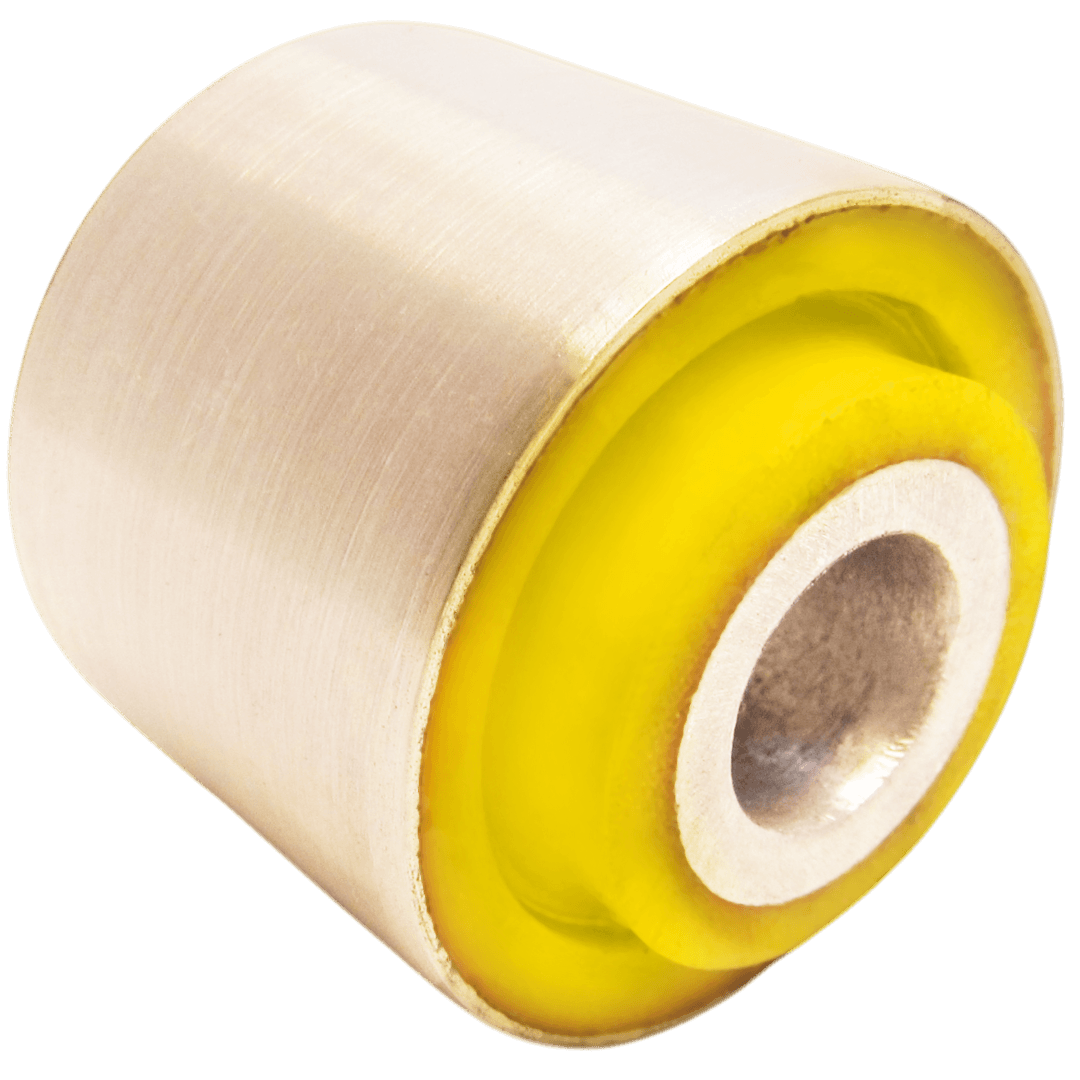
Polyurethane bushing front shock absorber lower Lexus GX 2010-2013 HARDNESS
In stock15 pcs.Polyurethane bushing front shock absorber lower Lexus NX 2014-2021
In stock15 pcs.Polyurethane bushing front shock absorber lower Lexus NX 2014-2021 HARDNESS
In stock15 pcs.
Polyurethane bushing front shock absorber lower Mitsubishi L200 2006-2015 Shock absorber KYB
In stock15 pcs.Polyurethane bushing front shock absorber lower Mitsubishi L200 2015- Shock absorber KYB
In stock15 pcs.
Polyurethane bushing front shock absorber lower Mitsubishi L400 1994-2007
In stock15 pcs.Polyurethane bushing front shock absorber lower Mitsubishi Pajero 1991-1999
In stock15 pcs.
Polyurethane bushing front shock absorber lower Mitsubishi Pajero 2000-2006
In stock15 pcs.Polyurethane bushing front shock absorber lower Mitsubishi Pajero 2006-
In stock15 pcs.Polyurethane bushing front shock absorber lower Mitsubishi Pajero Sport 1996-2008
In stock15 pcs.Polyurethane bushing front shock absorber lower Mitsubishi Pajero Sport 1996-2008 Shock absorber KYB
In stock15 pcs.Polyurethane bushing front shock absorber lower Mitsubishi Pajero Sport 2008-2016 Shock absorber KYB
In stock15 pcs.Polyurethane bushing front shock absorber lower Mitsubishi Pajero Sport 2015- Shock absorber KYB
In stock15 pcs.Polyurethane bushing front shock absorber lower Toyota 4Runner 2009-
In stock15 pcs.Polyurethane bushing front shock absorber lower Toyota 4Runner 2009- HARDNESS
In stock15 pcs.Polyurethane bushing front shock absorber lower Toyota Fj Cruiser 2006-2010
In stock15 pcs.Polyurethane bushing front shock absorber lower Toyota Fj Cruiser 2006-2010 HARDNESS
In stock15 pcs.Polyurethane bushing front shock absorber lower Toyota Harrier 2013-2020
In stock15 pcs.Polyurethane bushing front shock absorber lower Toyota Harrier 2013-2020 HARDNESS
In stock15 pcs.Polyurethane bushing front shock absorber lower Toyota Hilux 2015-
In stock15 pcs.Polyurethane bushing front shock absorber lower Toyota Hilux 2015- HARDNESS
In stock15 pcs.Polyurethane bushing front shock absorber lower Toyota Land Cruiser Prado 2009-
In stock15 pcs.Polyurethane bushing front shock absorber lower Toyota Land Cruiser Prado 2009- HARDNESS
In stock15 pcs.Polyurethane bushing front shock absorber lower Toyota Rav 4 2005-2013
In stock15 pcs.Polyurethane bushing front shock absorber lower Toyota Rav 4 2005-2013 HARDNESS
In stock15 pcs.Polyurethane bushing front shock absorber lower Toyota Rav 4 2013-2018
In stock15 pcs.Polyurethane bushing front shock absorber lower Toyota Rav 4 2013-2018 HARDNESS
In stock15 pcs.Polyurethane bushing front shock absorber lower Volkswagen Amarok 2010-
In stock15 pcs.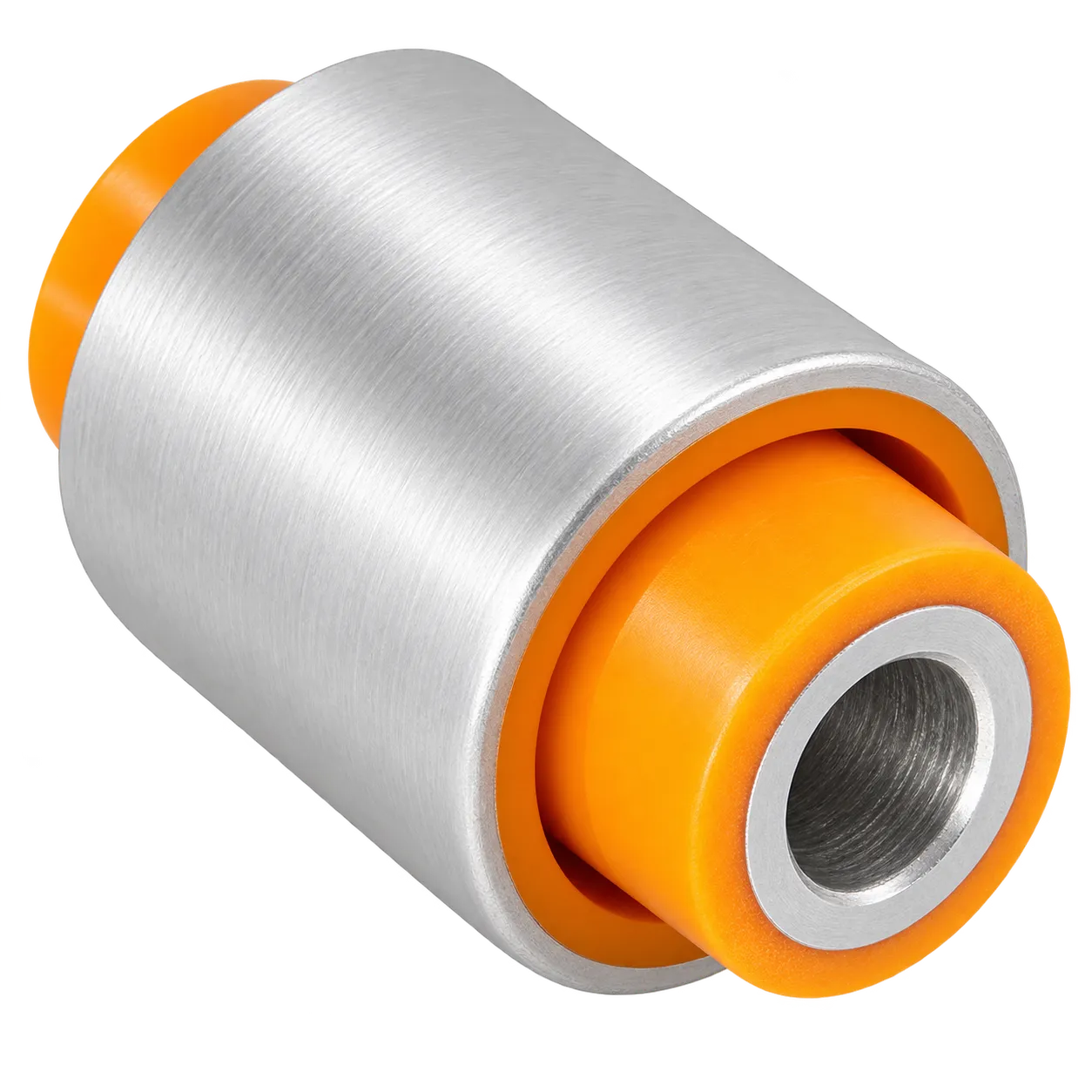
A shock absorber bushing is the elastic sleeve inside the damper eye through which the force from the rod is passed to the body, the beam or the leaf spring. It takes the push of every damper stroke, absorbs high-frequency vibration and keeps the metal eye from wearing the mounting bolt oval. PolyPro casts these joints from polyurethane in its own tooling. The other suspension groups are listed in the catalog.
A damper is attached to the body and to the arm or beam through eyes: metal lugs with a through hole. An elastic sleeve is pressed into that hole and the bolt or pin passes through it. The joint works in compression and in torsion: as the suspension moves, the eye rotates a few degrees relative to the bolt, and that angle is taken up by deformation of the material rather than by sliding on metal.
The job of the part is to decouple a rigid rod from the body. Without the elastic layer every damper stroke would reach the body as an impact and the eye would quickly wear oval. Because the damper works continuously and on every bump, this joint is loaded harder than many other suspension parts. The same arrangement is used on trailers, vans and trucks, where travel and mass are far greater. The other types are grouped under suspension bushings.
The usual symptom is a knock heard over small bumps and when pulling away, while the suspension is still unloaded. The check is simple: hold the damper by hand near the eye and rock it along and across the bolt axis, watching whether a gap opens up in the seat.
If the knock appeared right after a new damper was fitted, the worn sleeve in the eye is the cause far more often than the damper itself.
The factory rubber in the eye is soft, so it is quiet at first, but this is exactly where it breaks down fastest: constant reversing loads, heat from the damper, road dirt and de-icing salt. The material hardens, cracks around the hole and starts to turn with the bolt, after which the metal eye is quickly worn out of shape.
Polyurethane is denser and has higher tear and abrasion resistance, so it does not crumble under cyclic load and holds the bolt without play for longer. In practice that means fewer knocks, more consistent damper action and a preserved eye that would otherwise need repair or replacement together with the arm. The trade-off is a slightly firmer transfer of short impacts. The Shore hardness is listed on each product page, so a passenger car and a loaded vehicle can be given different grades.
Three things are needed: the mounting type of the damper, the exact dimensions of the eye, and a hardness that matches the load. A photo of the removed part narrows the rest.
Mountings differ. A lug with a through hole for a single bolt is the most common arrangement on rear dampers and on commercial vehicles. A stud mounting with two sleeves and washers is more often found at the top, on the body cup. The upper shock absorber mount with its bearing is a separate assembly and should not be confused with this part. The type is read off the removed damper: count the sleeves and see how the rod or the eye bears against the body. With a stud mounting two sleeves are needed, each of the correct length, or the joint tightens up skewed.
Three figures are taken: the outer diameter across the eye bore, the inner diameter for the bolt, and the sleeve length, which must match the thickness of the lug. Measure the eye itself rather than the worn part, because destroyed rubber gives an oversized reading. If the hole has already stretched oval, the eye has to be repaired or replaced, otherwise a new sleeve will not hold either. From a drawing, a sample or a worn part PolyPro makes an item from a single piece, truck and trailer sizes included. A drawing, a sample or the lug itself, removed together with its mounting bolt, is enough to place such an order.
Hardness is matched to mass and duty cycle. A passenger car used mostly in town takes a softer grade, closer to the original part in noise and vibration. Loaded vehicles, trailers, vans and gravel-road use call for a firmer grade, otherwise the sleeve works at its limit all the time and settles. The Shore value is listed on the product page, so grades can be compared against each other before ordering instead of being guessed. On a trailer or a van the difference is obvious: a soft grade settles within a season of work and the knock comes back to the rear axle.
PolyPro makes the part itself: in-house tooling, casting and dimensional control on every batch. That keeps the fit repeatable and leaves no middleman margin in the price. Retail is sold by the piece, so you can take exactly as many sleeves as a given repair needs. If a size is not in stock, it is made from a drawing, a sample or a worn part from a single piece; the products carry a warranty, with delivery across Ukraine and international shipping on request.
Garages, parts shops, fleets and resellers buy wholesale directly from production, through the partner programme with bonuses for turnover or for the size of a single order, access to prices and stock levels and shipment under the partner's own brand.
Polyurethane is denser than rubber and resists tearing better, so it does not crumble under the cyclic load coming from the rod. The practical effect is that the bolt seat stays free of play for longer, there are fewer knocks over small bumps, and the metal eye is preserved instead of being worn oval by a destroyed sleeve.
Hold the damper near the eye and rock it across the bolt axis. Noticeable clearance, clicking, or a sleeve that can be turned by hand all mean wear. Other signs are cracks around the hole, crumbling material, a wear step on the bolt, and a knock that stayed behind after the damper itself was replaced.
On the same axle it is better to do both sides. A new sleeve is firmer than a worn one, so one new and one old part make the left and right dampers work differently, which shows in how the car behaves over bumps. If the damper is fixed by two eyes, check the upper and the lower one.
Yes. The bore, the body of the sleeve and the bolt are coated with a grease compatible with polyurethane. A dry fit squeaks at the boundary between metal and elastic body and also makes pressing in harder. Ordinary petroleum greases are not suitable here, as they degrade the material over time.
Take the dimensions from the eye itself: the outer diameter across the bore, the sleeve length from the thickness of the lug, and the inner diameter from the mounting bolt. Measure with a caliper on undamaged metal. If the hole has stretched oval, repair the eye first, otherwise the new part will not hold either.
Yes. Dampers on commercial vehicles and trailers are mounted on the same principle, only the sizes and loads are larger, and such assemblies take firmer grades. If the size you need is not in stock, the part is produced from a drawing, a sample or the worn original.
Yes, retail is sold by the piece: one sleeve for one eye, or as many as the repair of both sides requires. Non-standard sizes are also made from a single piece, working from a drawing, a sample or a worn part. Delivery covers Ukraine, international shipping is arranged on request, and the products carry a warranty.
Garages, parts shops, fleets and resellers buy wholesale directly from production. The terms are set out in the partner programme: bonuses for turnover or order size, access to prices and stock, and shipment under the partner's brand. Bump stops are often ordered alongside.