SKU: PP203021
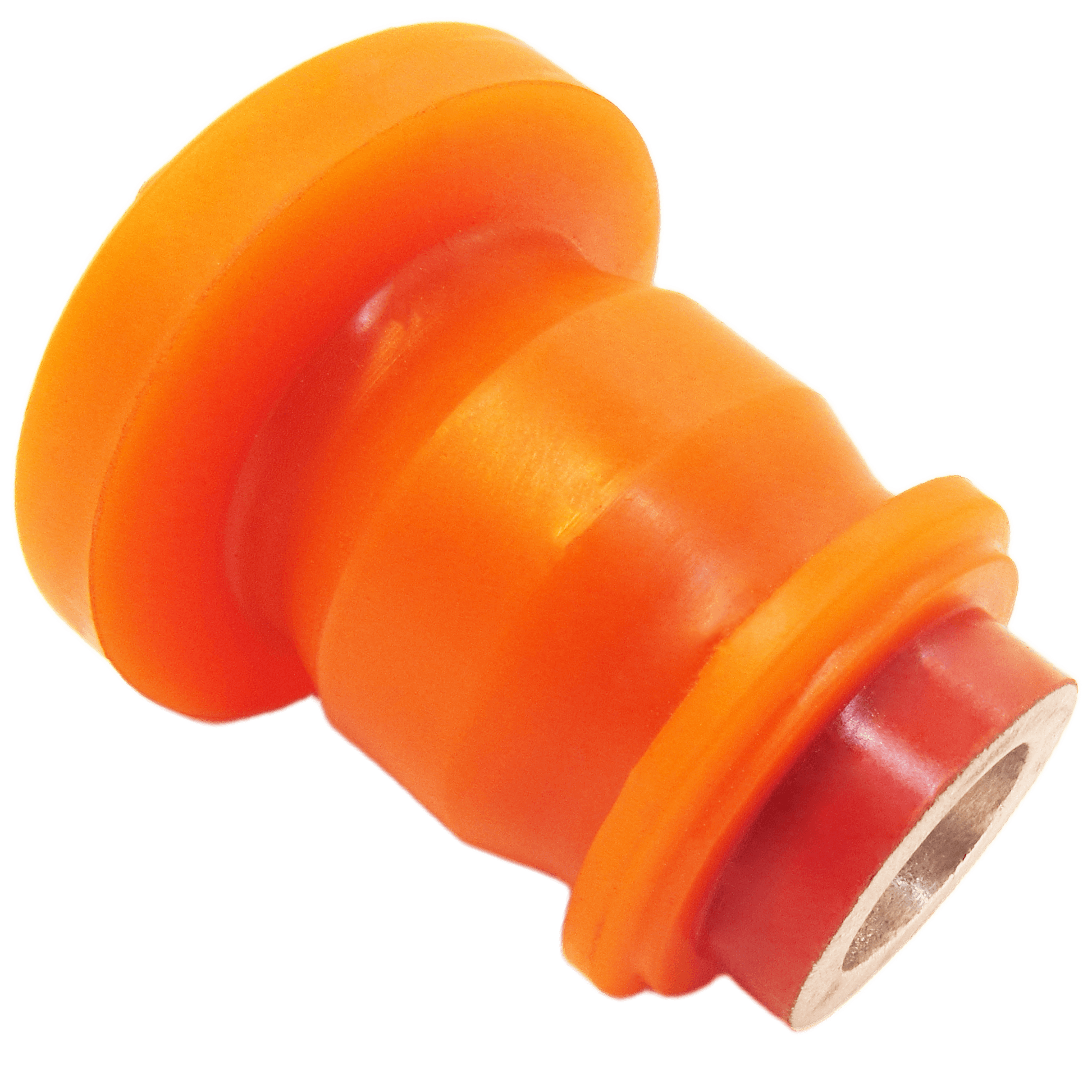
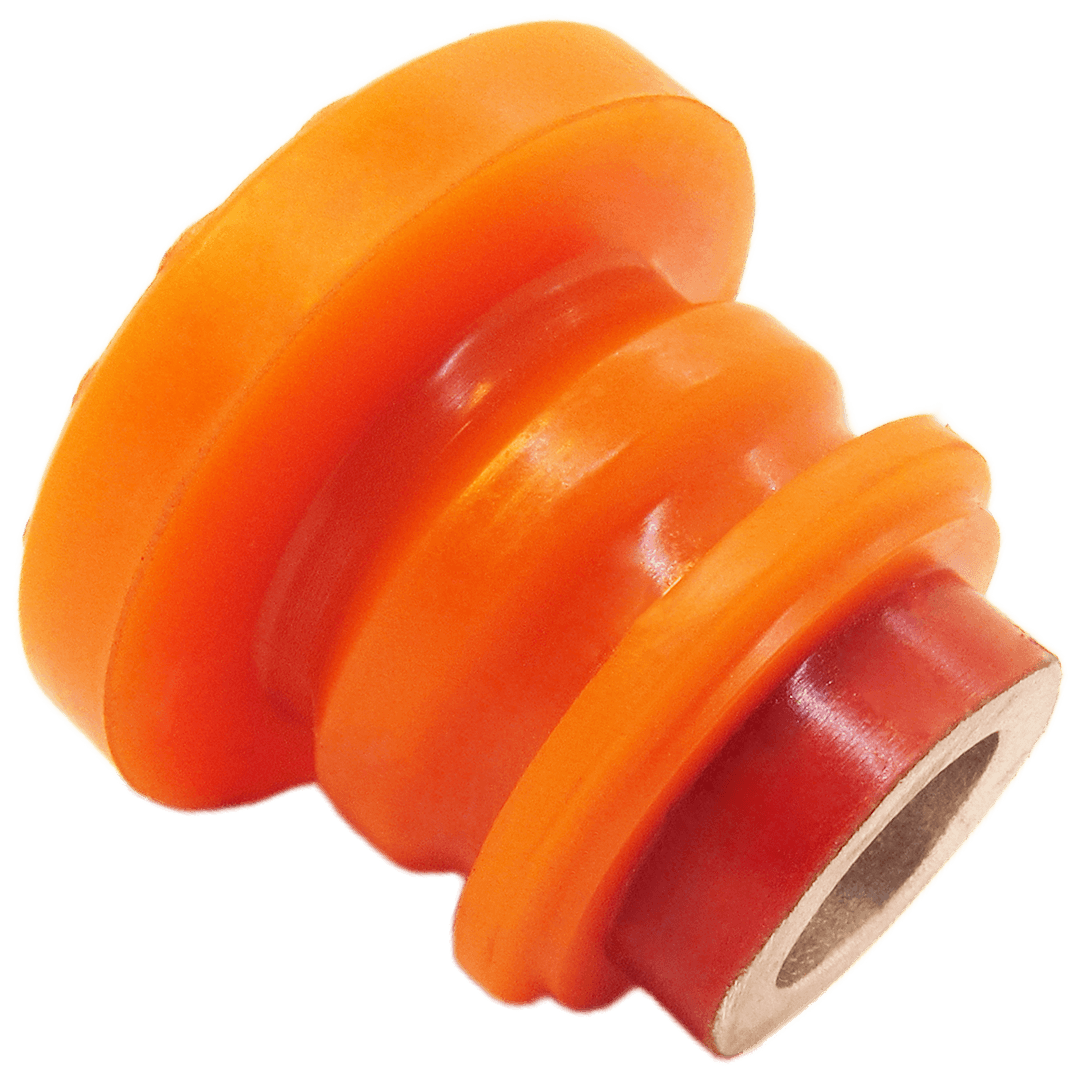
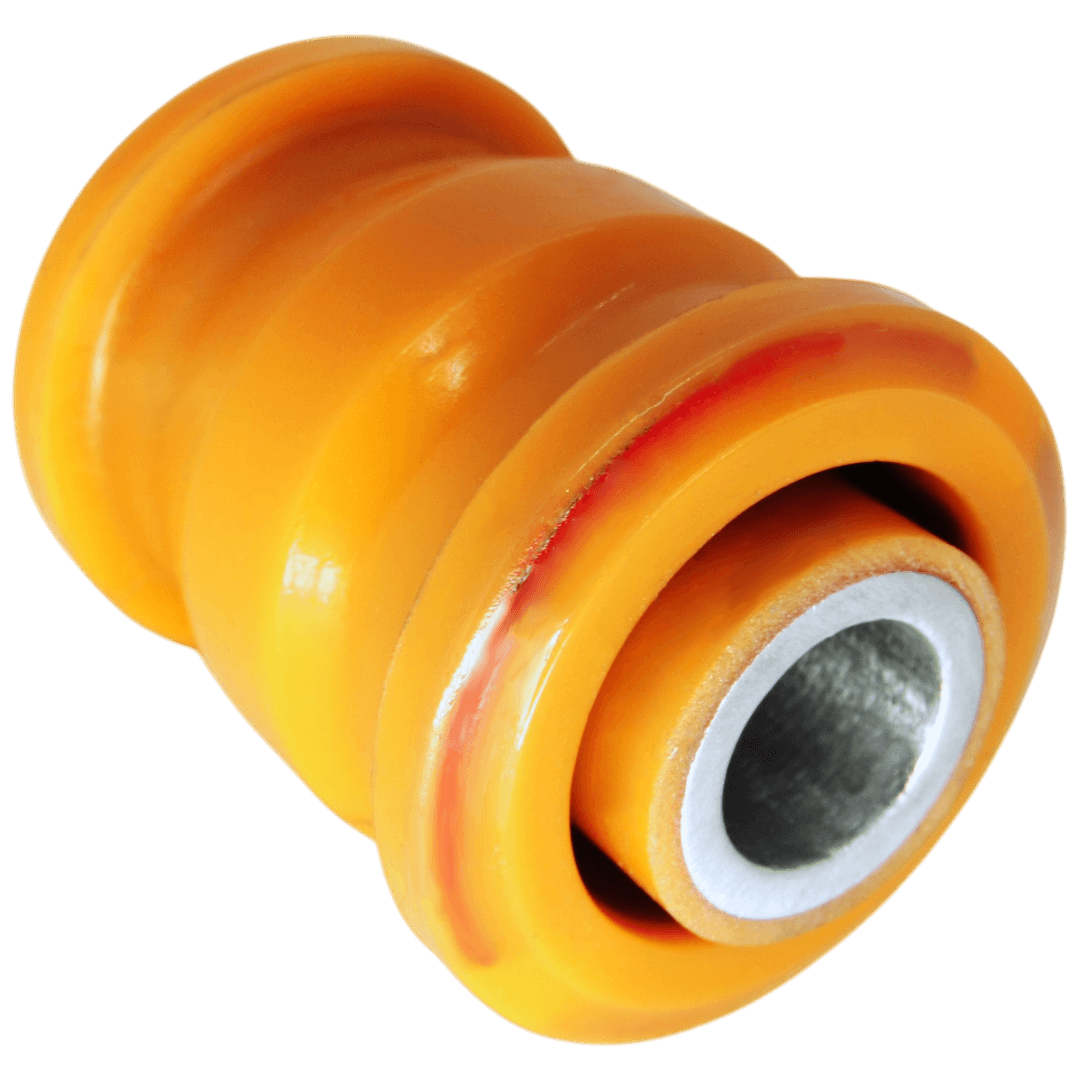
Polyurethane bushing front lower arm Toyota Estima 1990-2000
In stock15 pcs.$13.91Log in as dealer
1 EUR = 51,06 грн1 USD = 43,12 грн

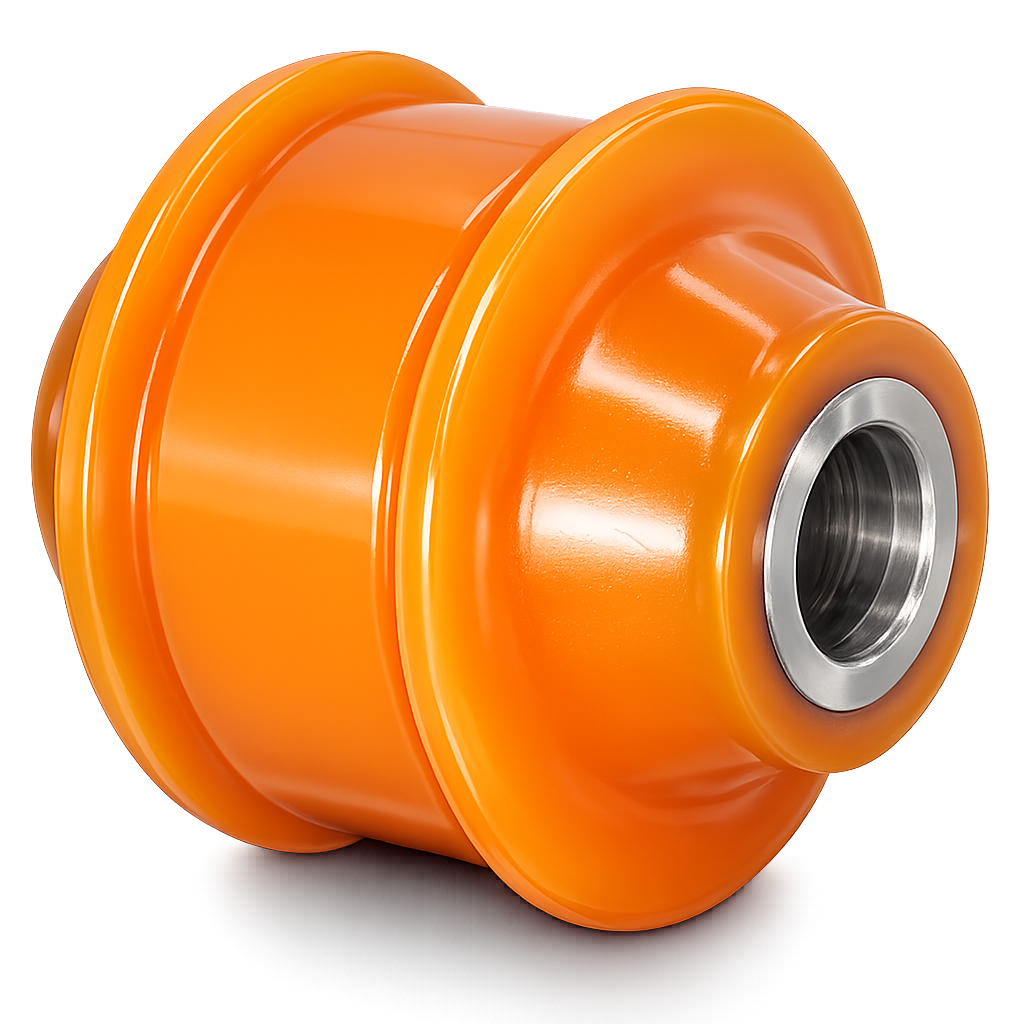
A bushing without an outer shell is a polyurethane insert that mounts with no steel sleeve of its own — either straight into the control arm bore, or inside the original sleeve that stays in the part. This is the version you need when the factory shell is not pressed out and the repair comes down to swapping the worn insert. PolyPro molds these bushings in-house in every common size. See the rest of the range in our polyurethane parts catalog.
Suspension bushings are flexible joints that attach control arms, links and beams to the body or subframe. They hold the part in its plane, absorb road impact and let the joint rotate without metal-on-metal contact. The classic design uses two steel sleeves with a flexible element between them; many joints work without the outer one.
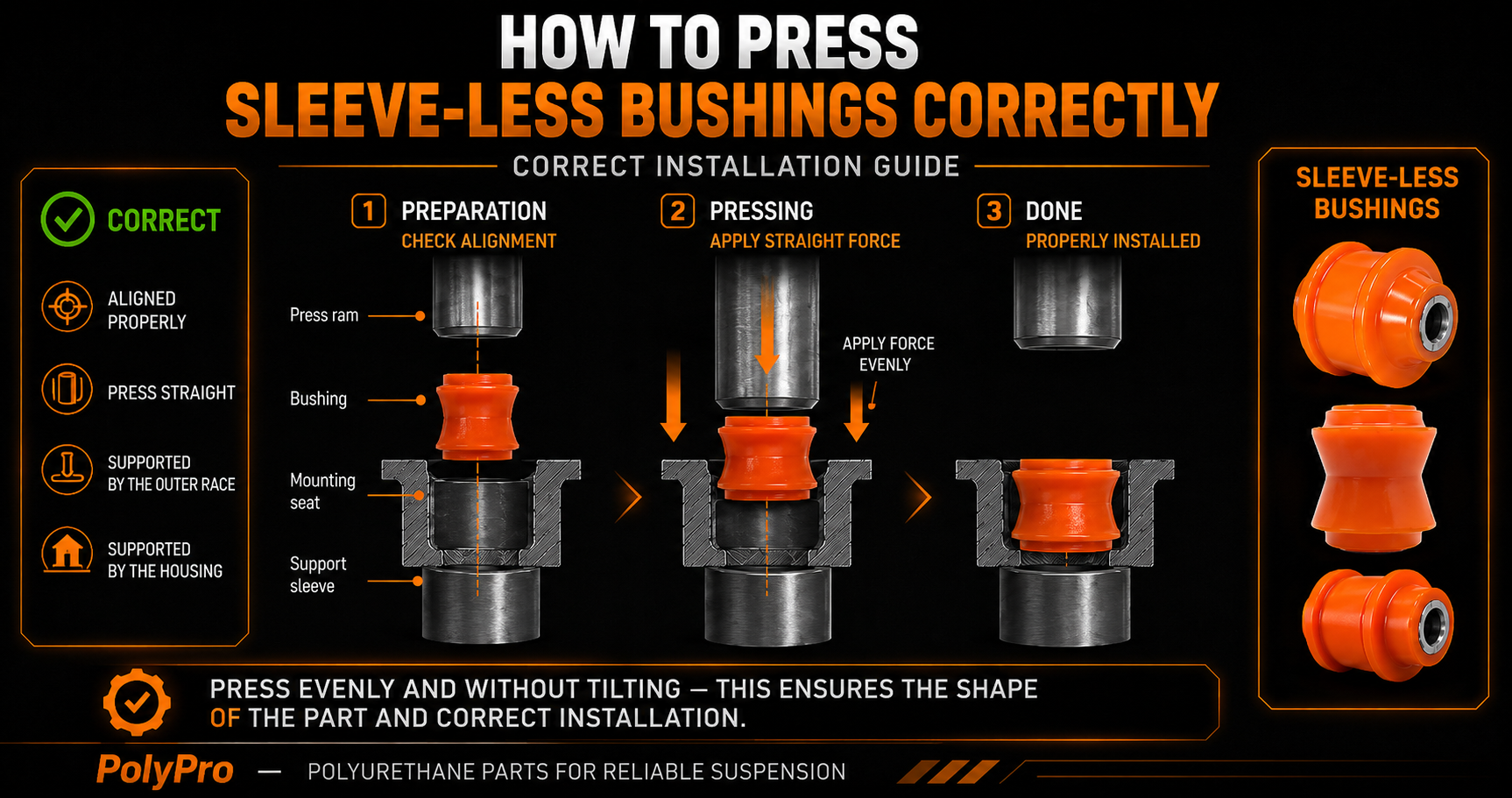
In the sleeveless design the housing itself does that job: the control arm bore, the beam eye, or the factory sleeve left untouched during the repair. The insert goes in with an interference fit, clamped at the faces by bolt torque, while an inner crush tube takes the load — so the urethane works in compression instead of being torn out of its seat. Most sizes ship as split bushings: two halves that go into the bore from both sides by hand, with no press and often without dropping the arm.
The sleeveless bushing wears where the urethane meets the metal of the bore and the inner tube. Inspect it at every seasonal service and after any hard pothole strike.
On a lift, put a pry bar between the arm and the bracket and push sideways: visible movement of the part relative to its bore means the insert is no longer holding. Rust streaks around the factory sleeve mean it is spinning, and an insert alone will not fix that. Wear is rarely isolated: sway bar bushings and shock bushings usually go together, so rebuild the whole corner in one visit.
Material matters more in a sleeveless bushing than in a shelled one — no steel holds the shape for it. Rubber here collapses quickly — it beats out at the faces, swells in oil and road salt, then hardens and cracks in the cold. Once the insert starts spinning it chews out the bore, and an insert swap is no longer enough: you need an oversize part or the shelled version.
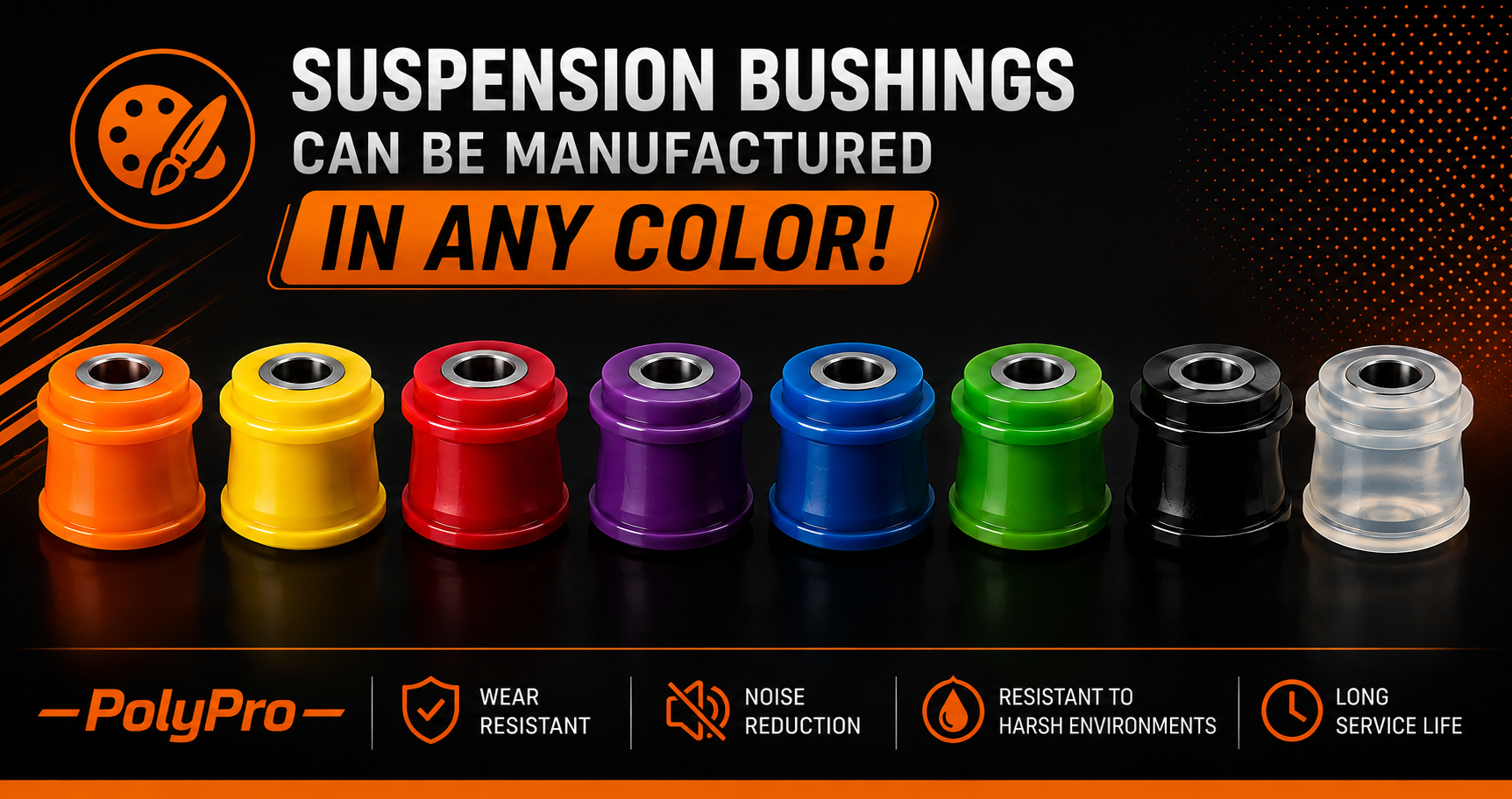
Polyurethane in the same geometry works in compression and holds its dimensions. It ignores oil and salt, works from winter cold to engine-bay heat and does not delaminate. A quality insert lasts 100,000–150,000 km (60,000–90,000 miles) — three to five times the rubber original. On the road that means less parasitic arm movement: the car tracks straighter and alignment stays put until the next service. The trade-off is a firmer response over small bumps.
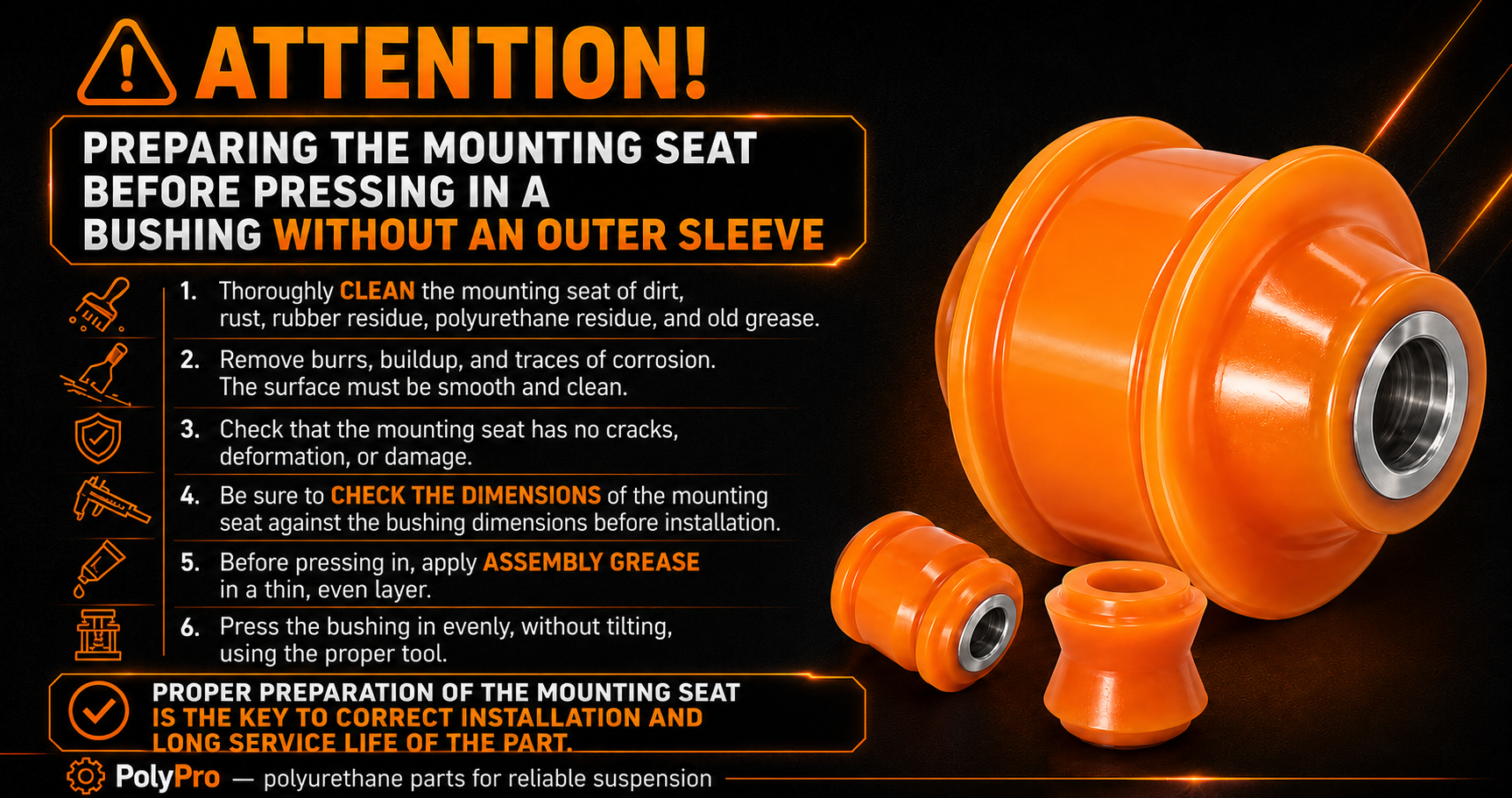
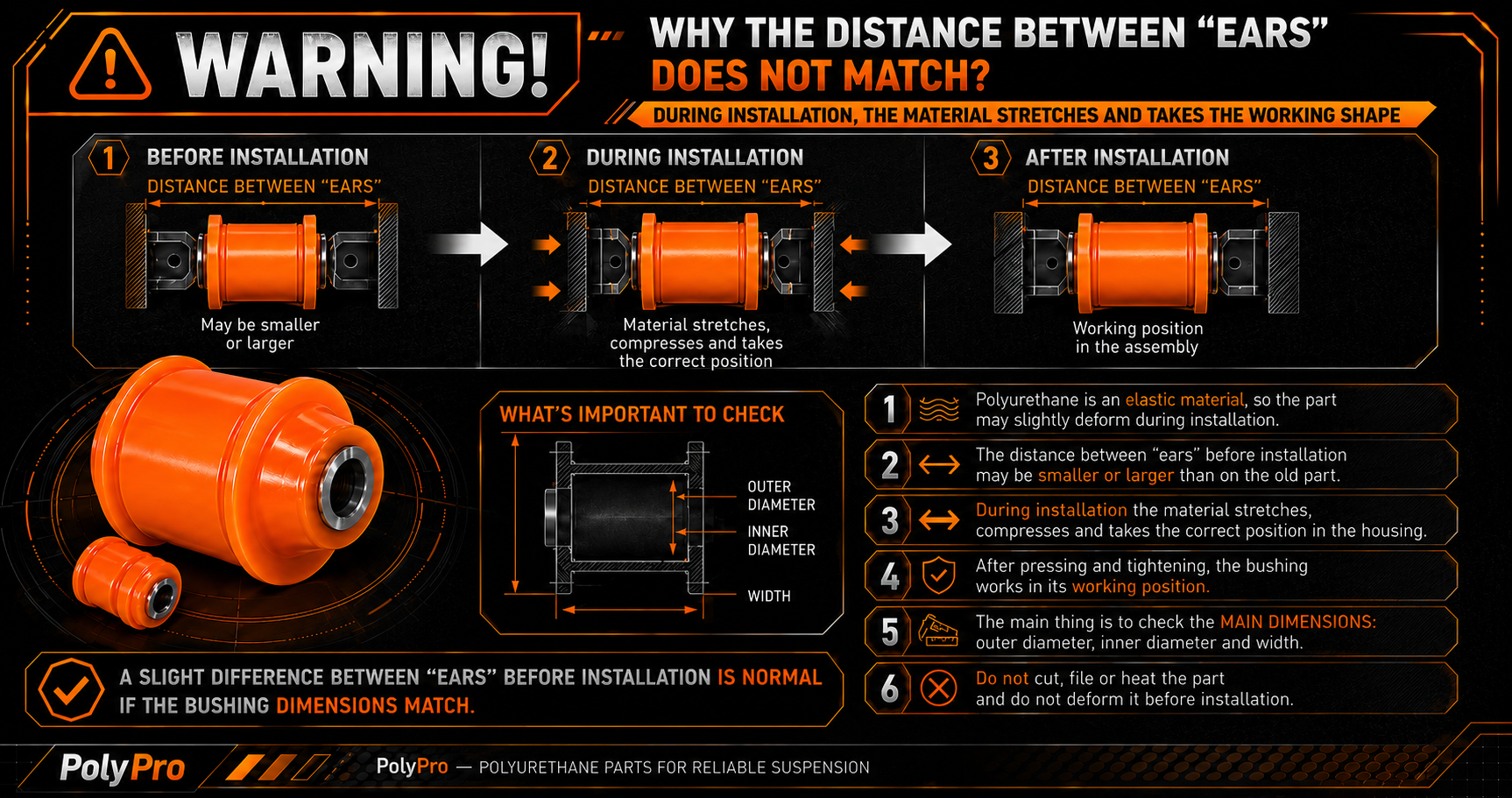
Three measurements: the outside diameter of the insert (equal to the inside diameter of the bore, or of the factory sleeve it drops into), the inside diameter for the bolt, and the height. If the old sleeve stays in the arm, measure that sleeve, not the outer metal of the joint, and check the bore in two planes — load can leave it oval. Nothing left to measure? Send a photo with a ruler and we will match it from our database.
A steel sleeve out with the old rubber, or a chewed-out bore, means a bushing with an outer shell: it presses in as one piece and restores the bore. A lip at the face against axial float means a flanged bushing. A steel plate through the urethane (engine and gearbox mounts) means a bushing with an inner plate.
The sleeveless type fits two cases: no factory outer sleeve, or an intact one left in the arm. Never fit it into a worn bore — it will spin under load.
Standard grade for daily driving: comfort stays close to rubber while service life goes up several times. Firmer grade for spirited driving, off-road use, towing or a loaded vehicle — less body roll and sharper steering, at the cost of more road texture.
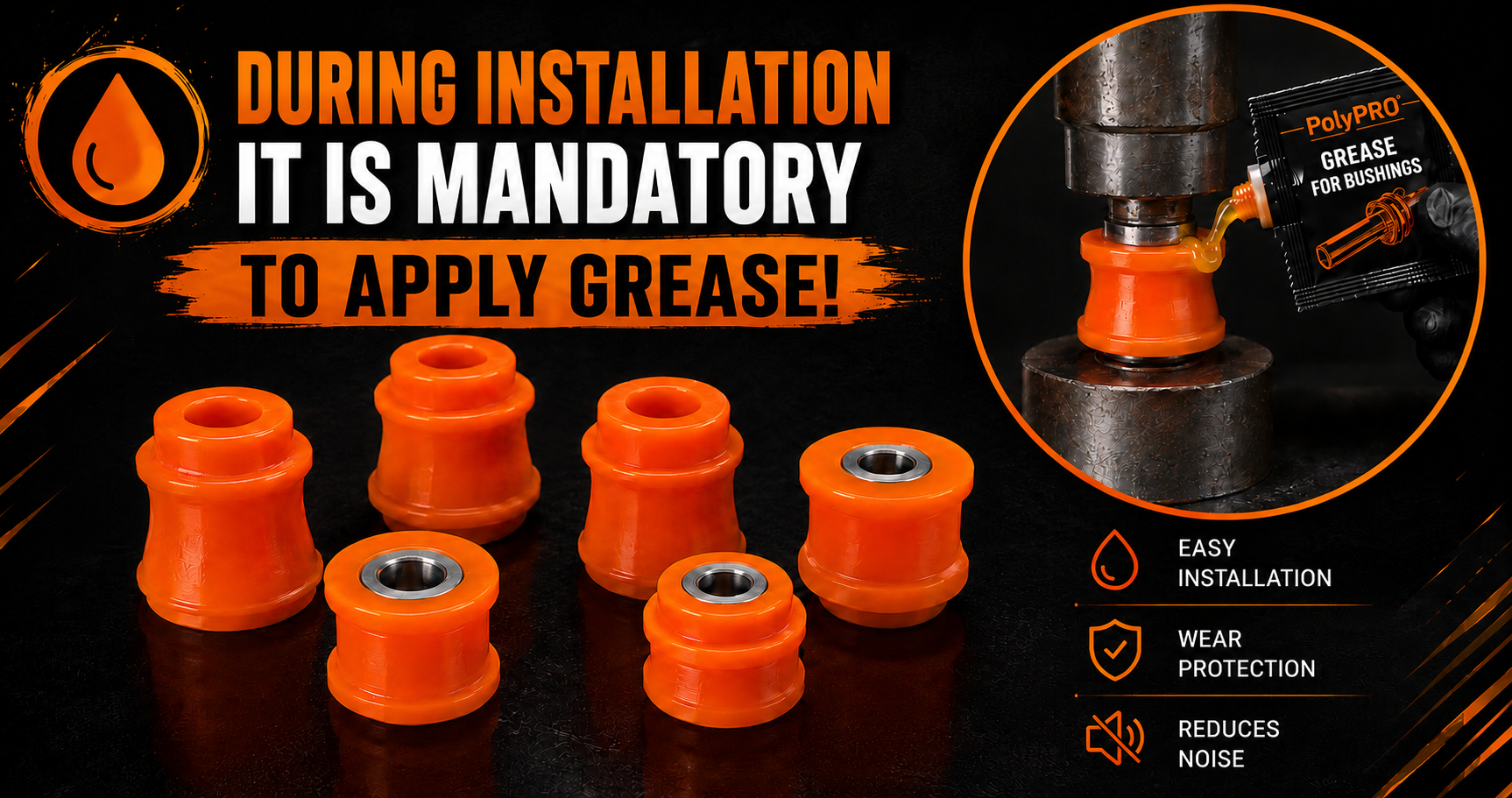
Durometer is listed on every product page; run matching parts on the same axle. Grease the bore on assembly and tighten the bolts at ride height, so the element is not preloaded in twist.
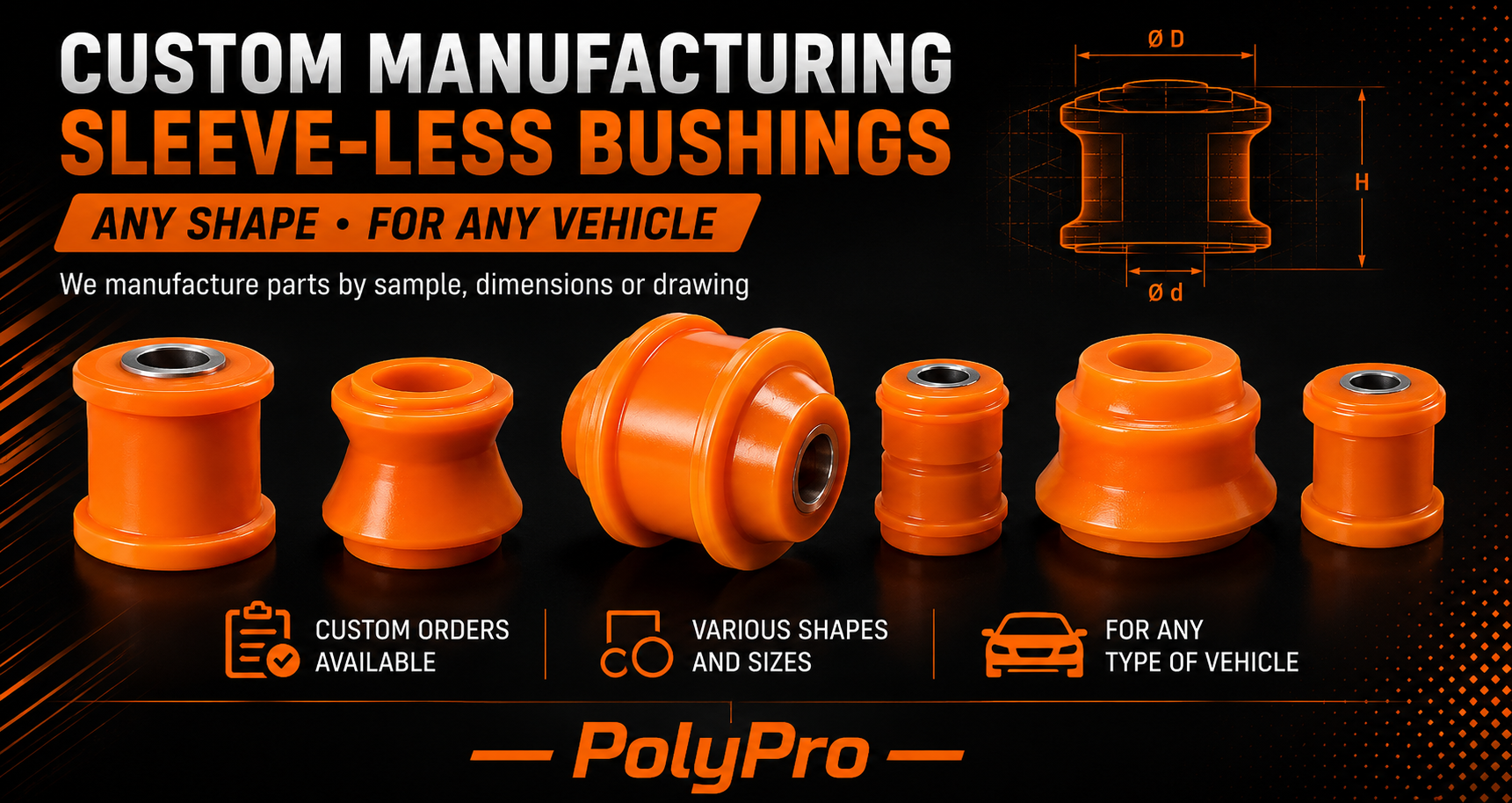
PolyPro is a Ukrainian manufacturer: the molds, the casting shop and dimensional control are ours, so retail pricing carries no middleman markup and shops and fleets buy at wholesale under the partner program. Non-standard parts are made to order from a drawing, a sample or the worn original, starting at one piece — often the only way to keep a discontinued vehicle on the road. Rebuilding a full corner? Polyurethane bushing kits cost less than the same parts one by one. Every order ships with assembly grease and our warranty.
A bushing without an outer shell is the polyurethane insert alone — it drops into the control arm bore or into the factory sleeve that stays in place. The shelled version comes already bonded inside a steel sleeve and presses in as one piece. Go sleeveless when the bore is intact; if the metal is worn or the sleeve spins, use the shelled version.
A bushing is a joint made of two steel sleeves — or none at all — with a flexible rubber or polyurethane element between them. It connects suspension parts, absorbs vibration and road impact, and allows controlled movement. Bushings are what keep the steering precise and the suspension free of clunks.
With a sleeveless insert, usually yes. Split bushings go into the bore from both sides by hand or with light pressure, so no press and no puller are needed, and on many vehicles the arm can stay on the car. You still need to drop the joint where a bracket blocks access to the faces.
Use silicone-based or dedicated bushing grease on the outside of the insert and on the inner crush tube. It eases installation and prevents squeak. Petroleum greases will not destroy PolyPro urethane, but they attack nearby rubber components, so they are best avoided.
About 100,000–150,000 km (60,000–90,000 miles), three to five times longer than rubber. Polyurethane does not dry-rot with age, road salt or temperature swings, so the insert normally lasts until the next full suspension rebuild. One condition: the bore must be sound, otherwise play eats the service life.
One at a time is a normal order: a single insert covers a single repair, and a size that is not in the range is molded to your drawing, sample or worn original from one piece. Batches go to service centres, parts stores and fleets. The parts are identical in both cases; only the buying terms differ.
Wholesale buyers order from the same in-house production, so nothing stands between the casting shop and the counter. The partner program adds bonuses on turnover or on the size of a single order, access to prices, stock levels and shipping dates, and shipment under the partner's own brand.